The Northern Beaches is the hardest environment we work in, and it is not close.
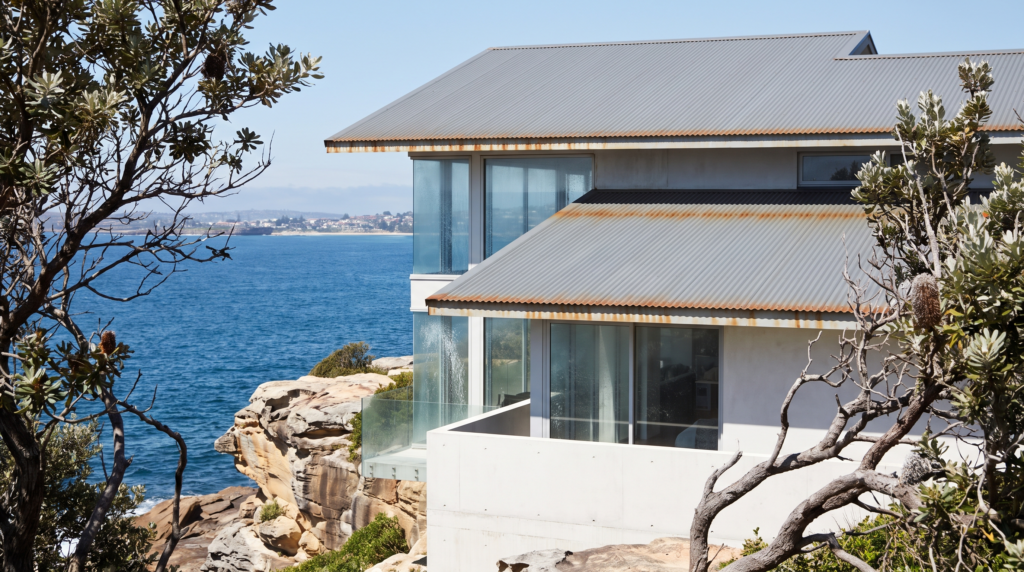
Every property on the peninsula is sitting in an airborne salt load that never switches off. It does not need a storm or a king tide. On an ordinary day, onshore wind carries salt aerosol inland and deposits it on every horizontal and sheltered surface you own. Then the sun bakes it in.
Inland Sydney homes weather. Beaches homes corrode. They are different processes and they need a different maintenance approach, which is what this guide is about.
How far inland it reaches
Further than most owners expect. The heaviest load is on the oceanfront strip — Palm Beach, Whale Beach, Avalon, Newport, Narrabeen, Collaroy, Dee Why, Freshwater, Manly — where properties get direct salt spray as well as aerosol.
But the aerosol carries well beyond that. Homes at Seaforth, Balgowlah, Frenchs Forest and around Narrabeen Lagoon still show a salt signature, just at a slower rate. If your windows spot up within a fortnight of being cleaned, you are in it.
Aspect matters as much as distance. A house two streets back with an unobstructed east-facing elevation can take a heavier load than an oceanfront home that sits behind a headland.
What fails, in order
Glass and window hardware, first
Glass shows it before anything else, which makes it a useful early warning. Salt deposits, then it etches — and once glass is etched, cleaning will not recover it. The window has to be replaced or professionally restored.
Sliding door tracks and window hardware go next. Salt collects in the track where rain never reaches, and rollers, catches and locks seize. We see a lot of expensive doors that could have stayed serviceable with a rinse.
Metal, everywhere
Balustrades, handrails, garage doors, light fittings, gutters, roof fasteners, air conditioning units, pool fencing, letterboxes. Anything metal on a Beaches property is on a clock.
The failure point is almost never the middle of a panel. It is cut edges, welds, fixings and laps — anywhere the protective coating is broken or two surfaces trap moisture. Stainless steel is not exempt: marine-grade stainless still tea stains badly here, and 304 grade close to the ocean will disappoint you.
Render and paint
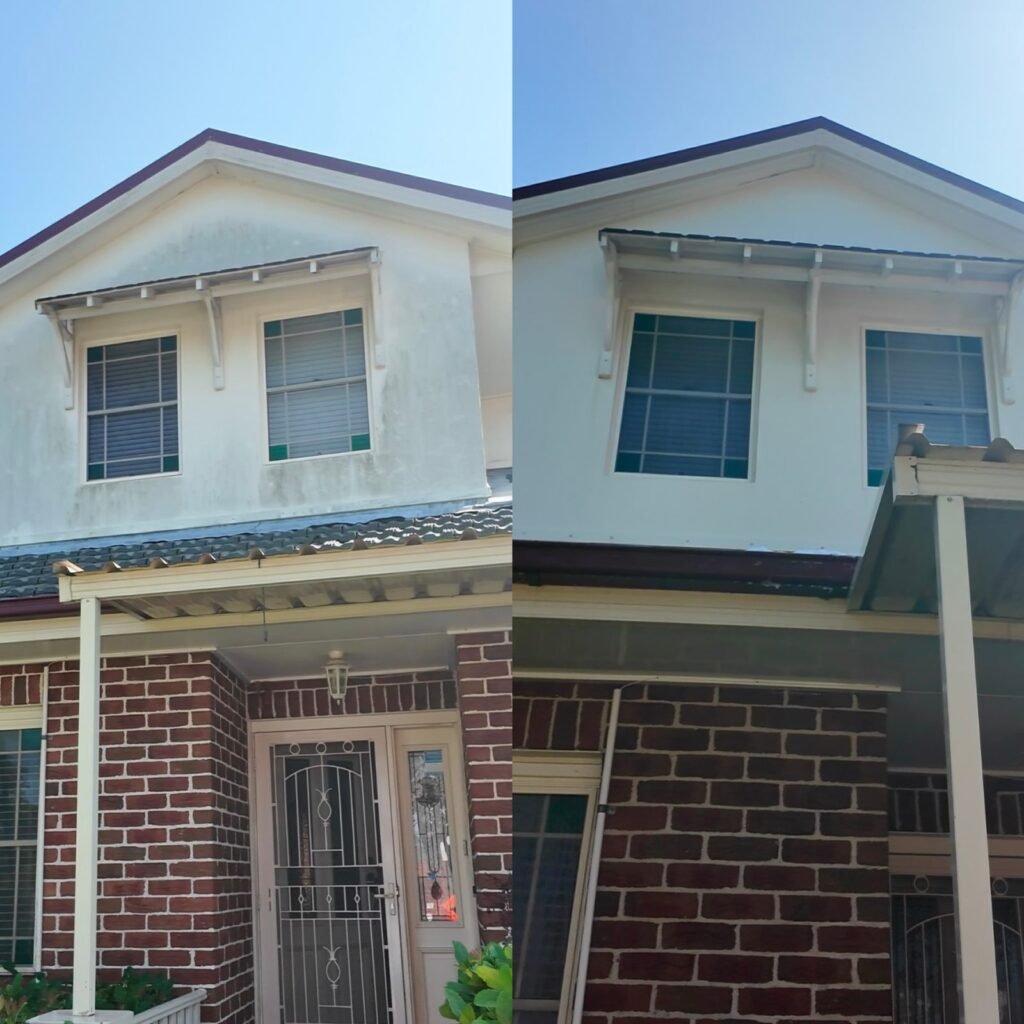
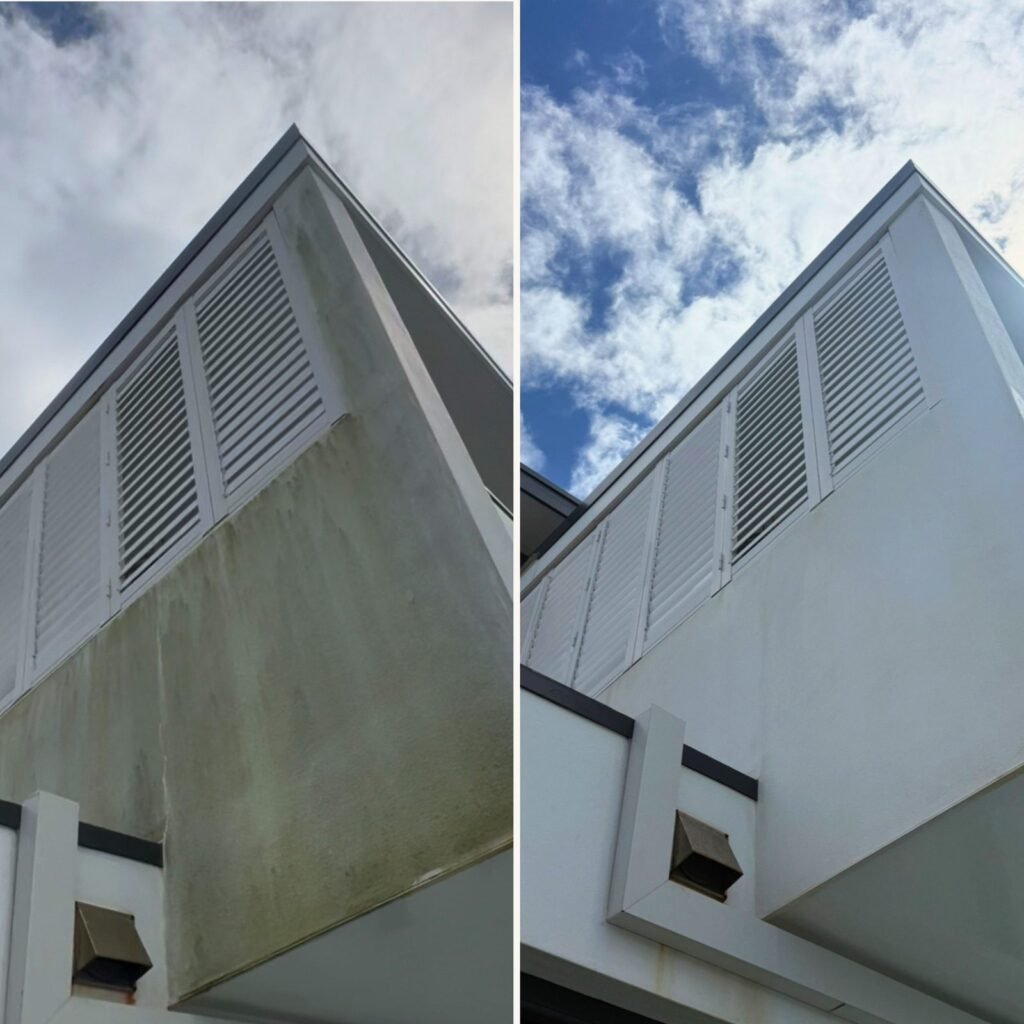
Salt drives into porous render and crystallises inside it. As those crystals grow they push outwards, which is what lifts paint from underneath rather than from the surface. If your paint is failing in patches on the seaward elevation while the sheltered side is fine, that is salt, not a bad paint job.
Sandstone
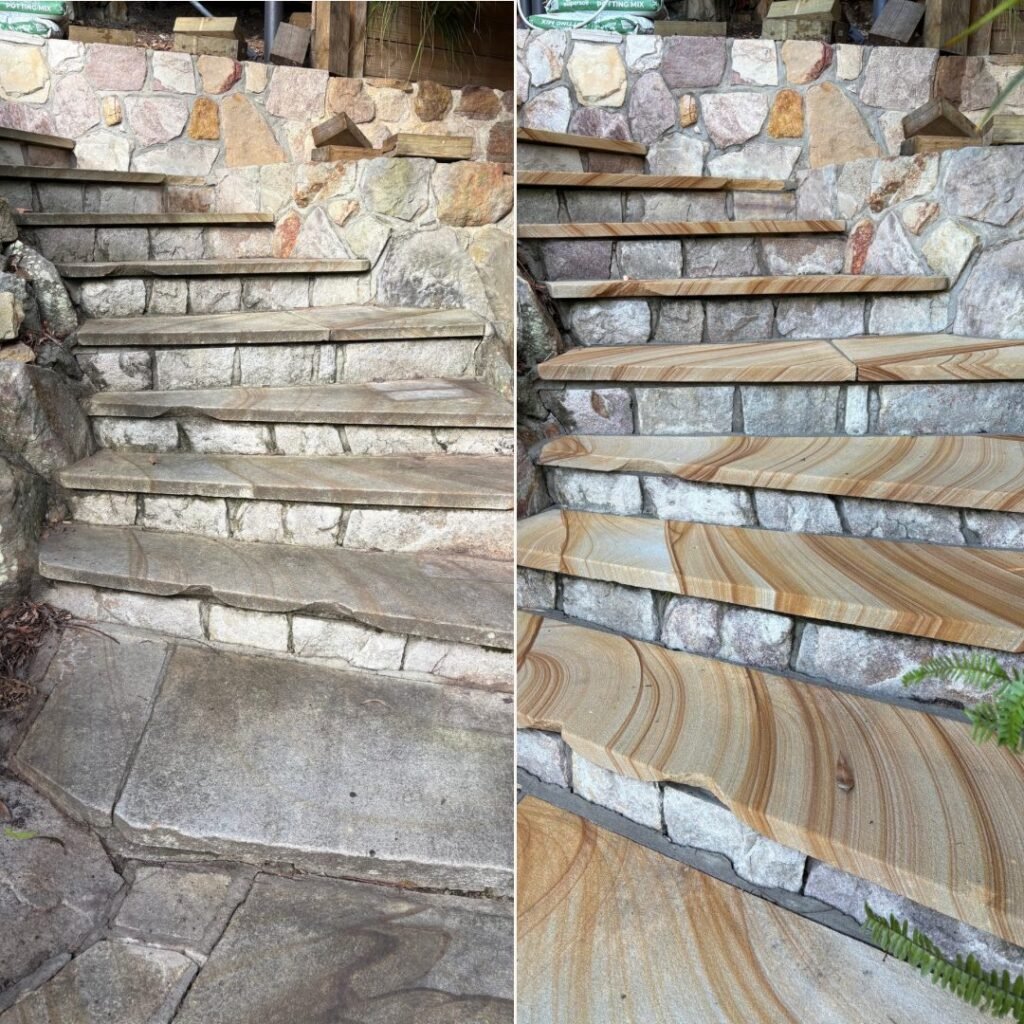
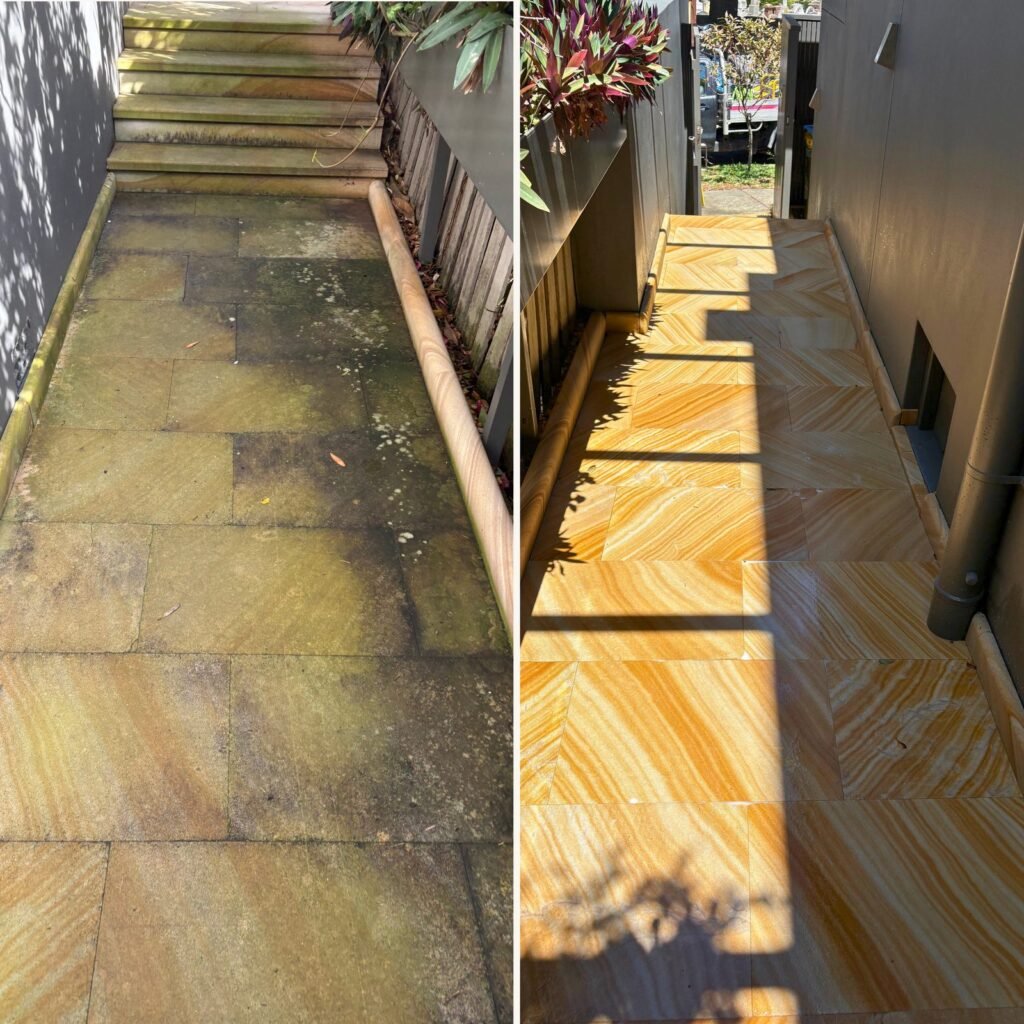
Same mechanism, much worse consequences, because the stone itself spalls rather than a coating. Salt attack on coastal sandstone is the most expensive failure on this list and the least reversible. We have written about how salt destroys harbourside sandstone — the same process runs on the Beaches.
The one thing that matters most
Rinse the areas rain does not reach.
That is the whole game out here, and it is why coastal maintenance is counterintuitive. The parts of your house that stay dry are the parts that fail, because rain is what removes salt. Anywhere sheltered accumulates it indefinitely.
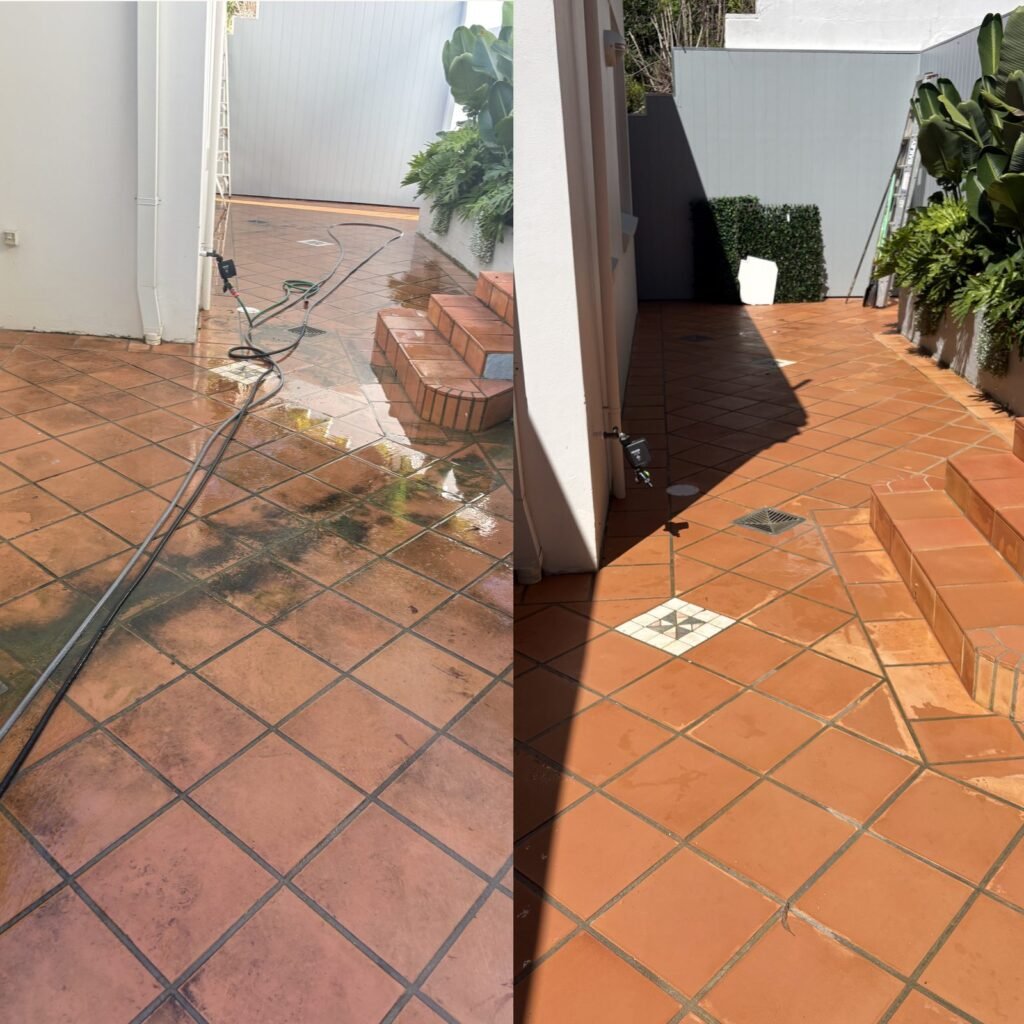
So the priority list is: under wide eaves, beneath balconies and awnings, the underside of the roof edge, sliding door tracks, the sheltered face of balustrades, under solar panels, and the leeward side of anything metal. Those are the places nobody thinks to clean and the places that corrode.
Plain fresh water does most of the work. It does not need to be complicated — it needs to be regular.
What we do differently on a Beaches job
The soft wash method is the same one we publish in full, with three coastal adjustments.
We rinse considerably longer. Residue left on a coastal surface combines with the salt already there and keeps working. On the Beaches, a rushed rinse is worse than not washing.
We treat sheltered zones as the priority rather than the afterthought. If a quote covers the visible walls but not the tracks, eave undersides and balcony soffits, it has missed where the damage is.
And we are more conservative on metal. Chalky Colorbond that would take a firmer approach inland gets a mild detergent and a long rinse here, because the coating is already working harder than it was designed to.
A realistic Northern Beaches schedule
Oceanfront, direct exposure: full exterior wash twice a year, fresh-water rinse of sheltered zones quarterly, windows quarterly. Gutters twice a year — more if you are under banksia or tea tree, which shed constantly.
Within roughly a kilometre: full wash annually, sheltered-zone rinse twice a year, windows two to three times a year.
Further back, lagoon and bushland pockets: full wash annually is usually enough, but gutters become the bigger issue because of tree cover rather than salt.
The best single time for the full wash is spring, before summer. You are clearing the winter salt load ahead of the months when UV bakes whatever is sitting on the surface. Our pre-summer checklist sets out the order to do things in.
Holiday homes and weekenders
A house at the northern end that sits empty five days a week weathers faster than the one you live in, because nobody sees the early signs. A seized door track, a rust bloom starting at a balustrade weld, a gutter overflowing in a storm — all of it goes unnoticed for months.
If you are an absentee owner, a scheduled cycle with photo reports is worth more than the cleaning itself. You are buying eyes on the property. We have set out a maintenance calendar for Palm Beach weekenders specifically.
What I would tell a new Beaches owner
Do not wait until it looks bad. On this coast, visible damage is late damage — by the time glass is etched or a balustrade is bleeding rust, the cheap intervention window has closed.
And be sceptical of anyone who quotes your house the same way they would quote one in Ryde. The salt changes the method, the frequency and the priorities, and an operator who has not accounted for that is going to leave the parts that matter untouched.
We cover the peninsula from Manly to Palm Beach: pressure washing, gutter cleaning and roof cleaning. Request a fixed written quote — 24-hour turnaround, $20 million public liability, photo report on every job.