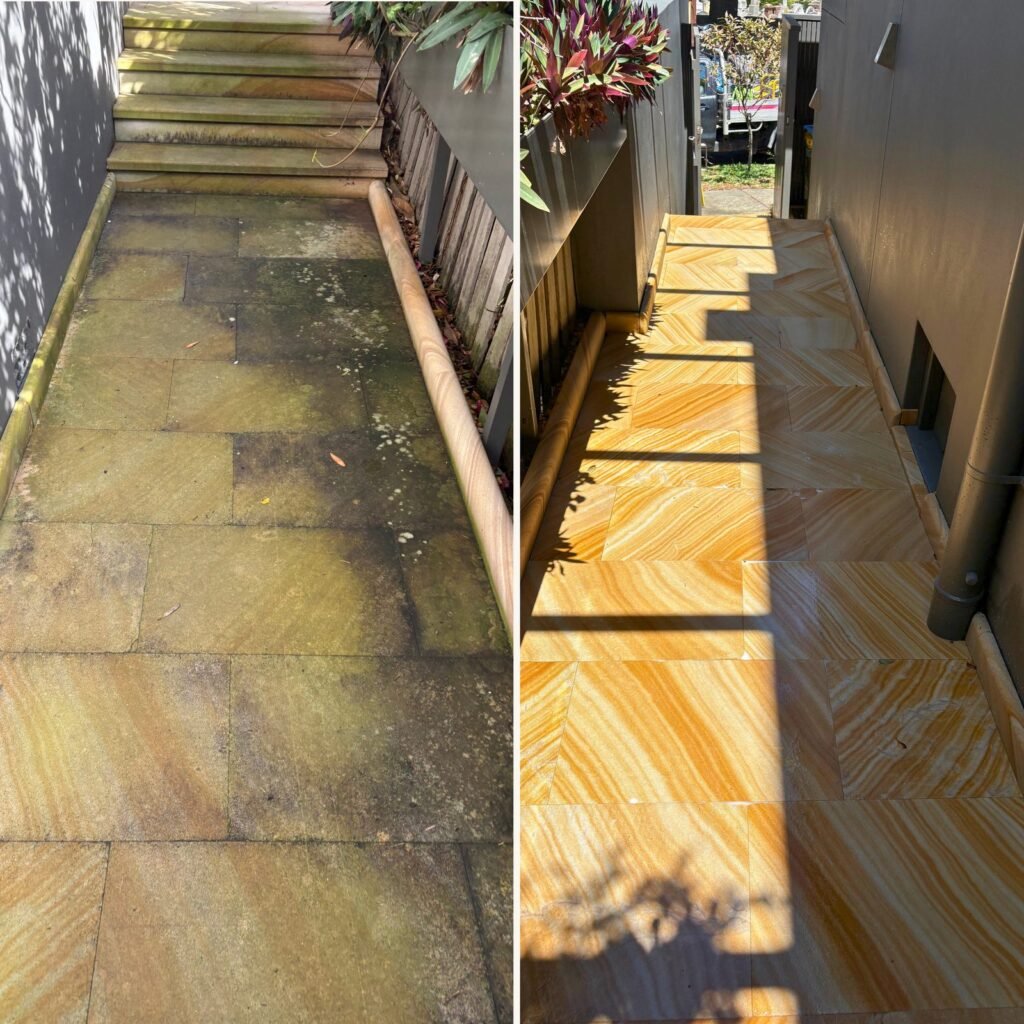
This is the part of exterior cleaning nobody asks about when they get a quote, and it is the part that can land a property owner with a problem.
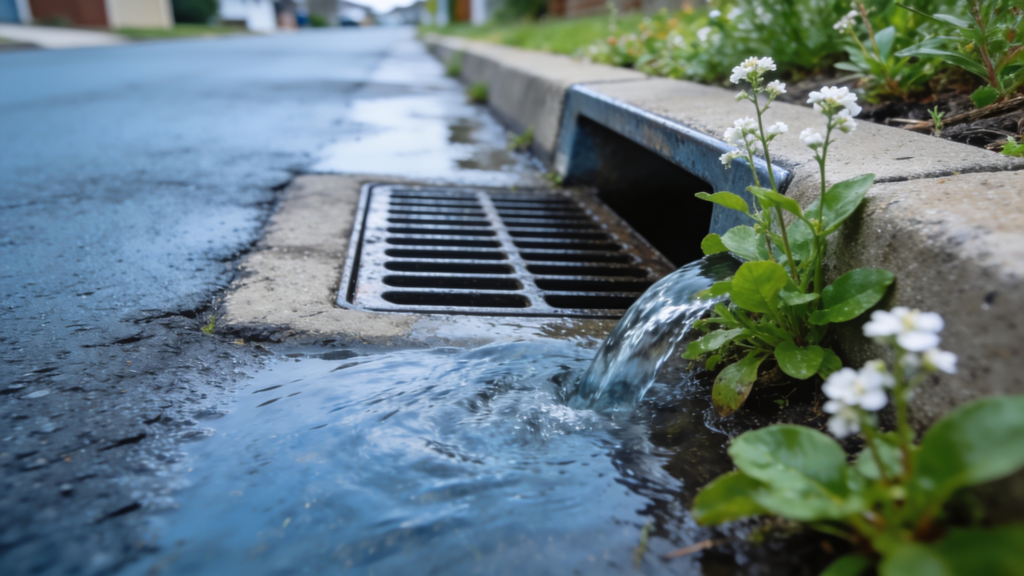
Sydney runs a separated drainage system. The kerbside grate outside your house is stormwater, and it goes — untreated — to a creek, the harbour, or straight out to sea. It is not connected to the sewer and nothing removes contaminants along the way. Whatever enters it arrives in the waterway essentially as it left your driveway.
What the law actually says
Under the NSW Protection of the Environment Operations Act, it is an offence to pollute waters. The definition is broad and it captures placing matter where it is likely to reach waters, which includes the stormwater system.
That covers detergents, chemical residues, oil lifted off a driveway, sediment, paint flakes, and the organic slurry that comes off a mouldy roof. Local councils enforce this, and penalties apply to the occupier as well as the contractor.
Most councils across the Northern Beaches, Woollahra, Waverley and the North Shore publish guidance to this effect. It is worth a glance at your own council’s page rather than taking anyone’s word for it, including ours.
Why this is not academic
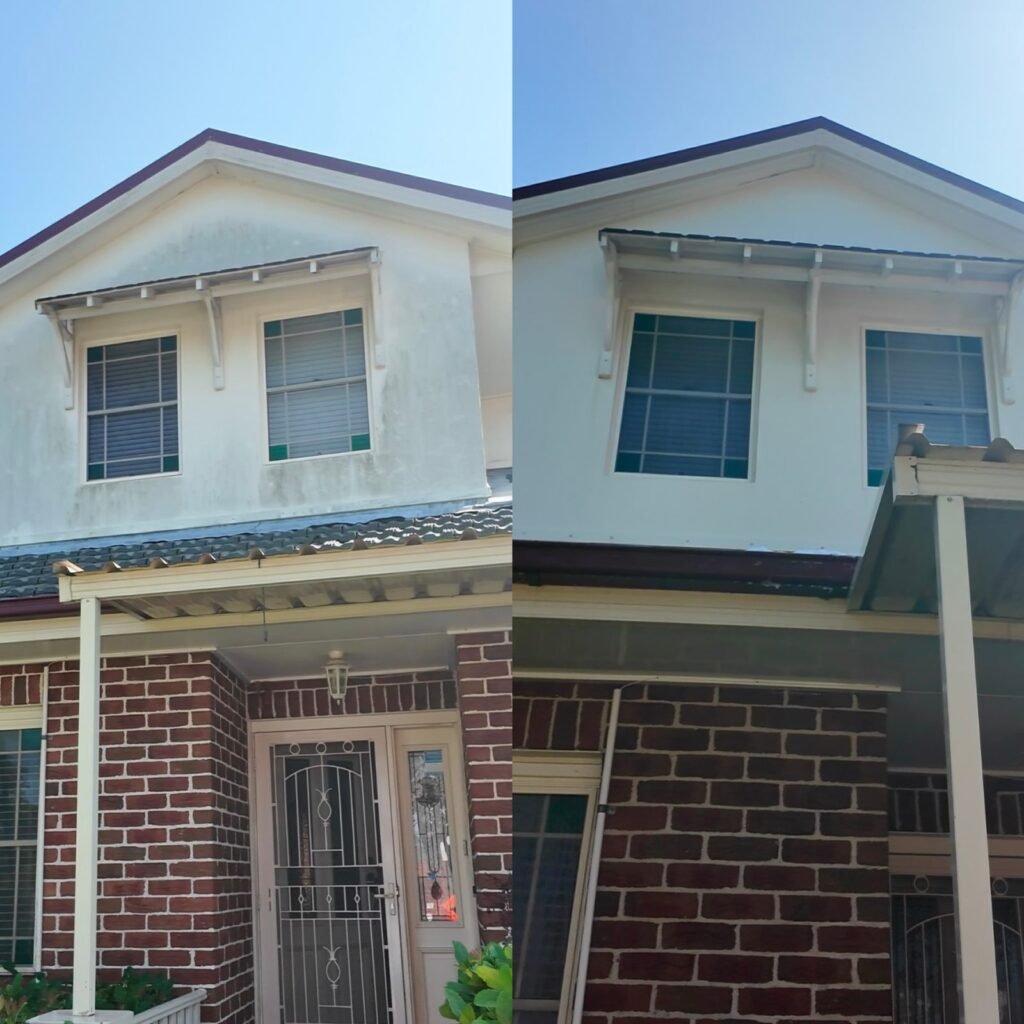
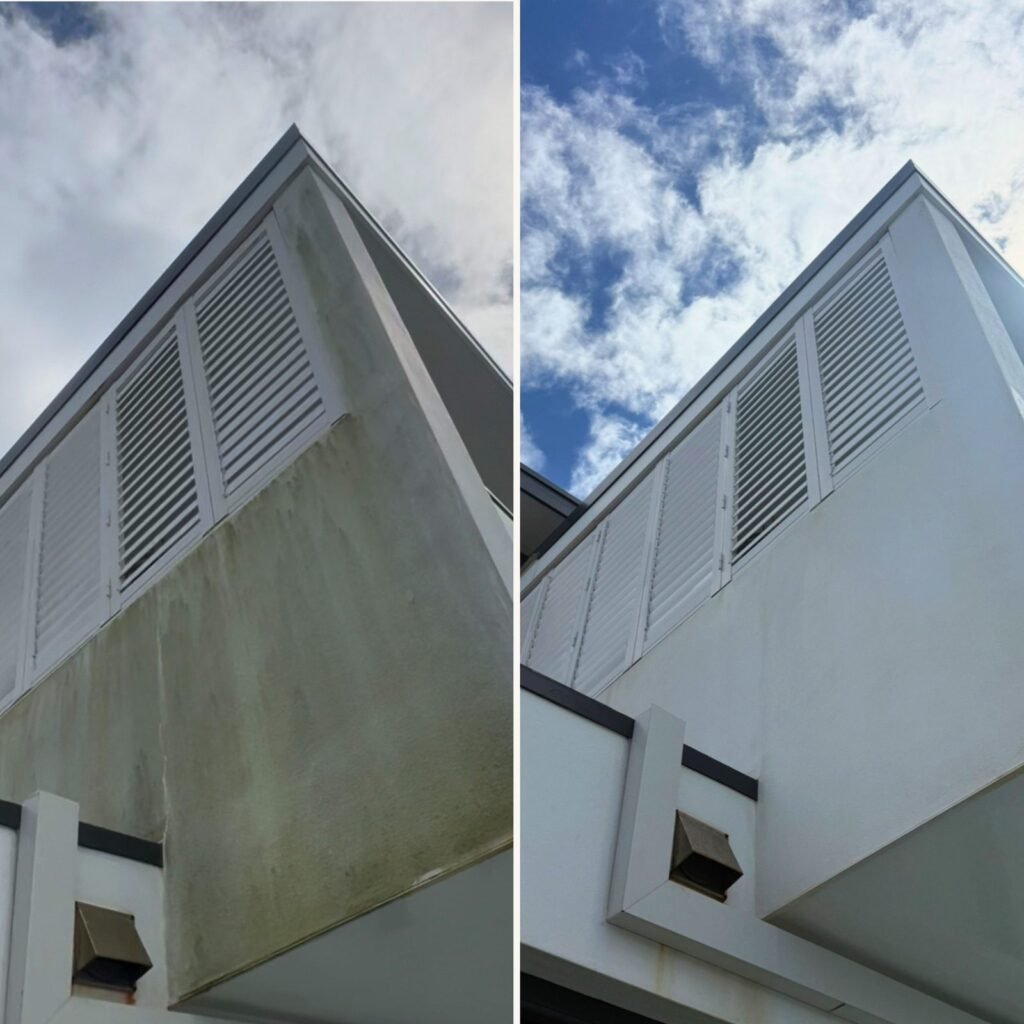
Consider a fairly ordinary job: soft washing a two-storey rendered house that has heavy mould on the southern side.
The runoff contains cleaning solution, dead organic matter and whatever was on the walls. On a sloping block — which describes much of the Eastern Suburbs and the Northern Beaches — that runs downhill to the kerb within a minute or two.
A contractor who has thought about it will have controlled where that water goes before starting. One who has not will discover the problem when a neighbour photographs foam running into the drain.
How it is handled properly
The approaches are not exotic:
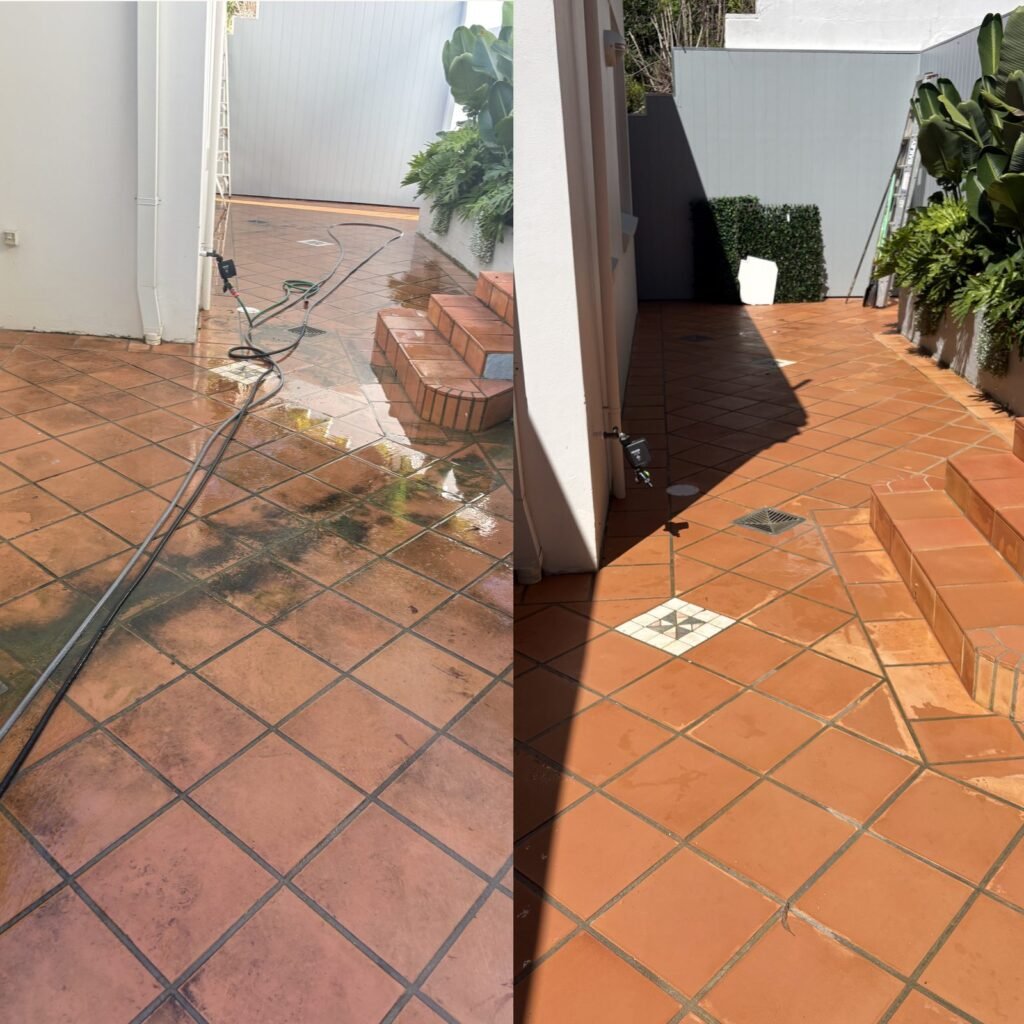
Containment and diversion. Blocking or bunding the drain and directing runoff to a landscaped area where soil and plants filter it. This suits low-toxicity work on a property with somewhere for the water to go.
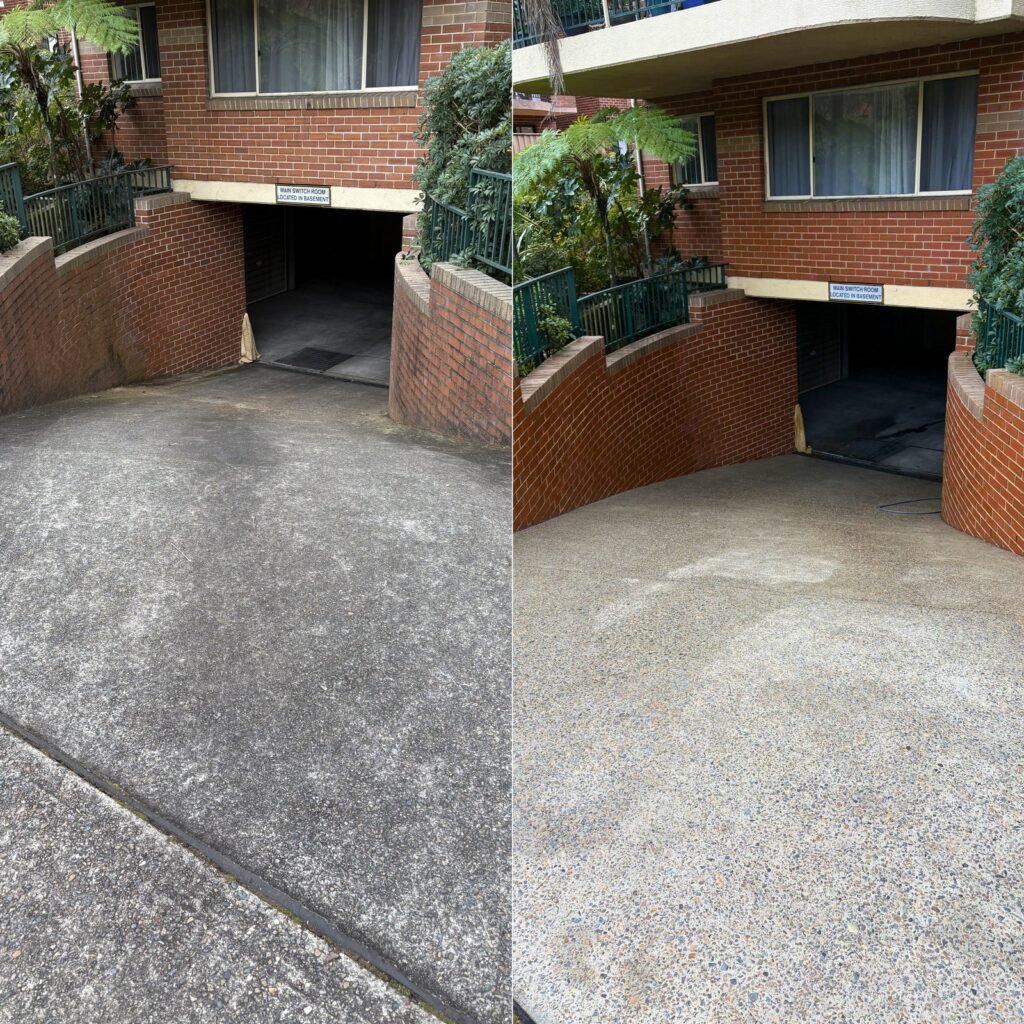
Capture and recovery. Berms and a vacuum to collect wastewater for appropriate disposal. This is standard for driveways and car parks where oil and hydrocarbons are involved, and it is what commercial and strata work generally requires.
Choosing gentler chemistry. Biodegradable, phosphate-free products reduce the harm if some runoff does escape. Worth doing, but not a substitute for containment — biodegradable does not mean harmless to a waterway on the day.
Dry pre-clean. Sweeping and removing loose debris before any water is introduced cuts the sediment load substantially, and it is the step most often skipped.
Sediment counts too
People assume this is only about chemicals. Sediment is one of the most damaging pollutants in urban waterways — it smothers habitat, carries nutrients and clogs the system.
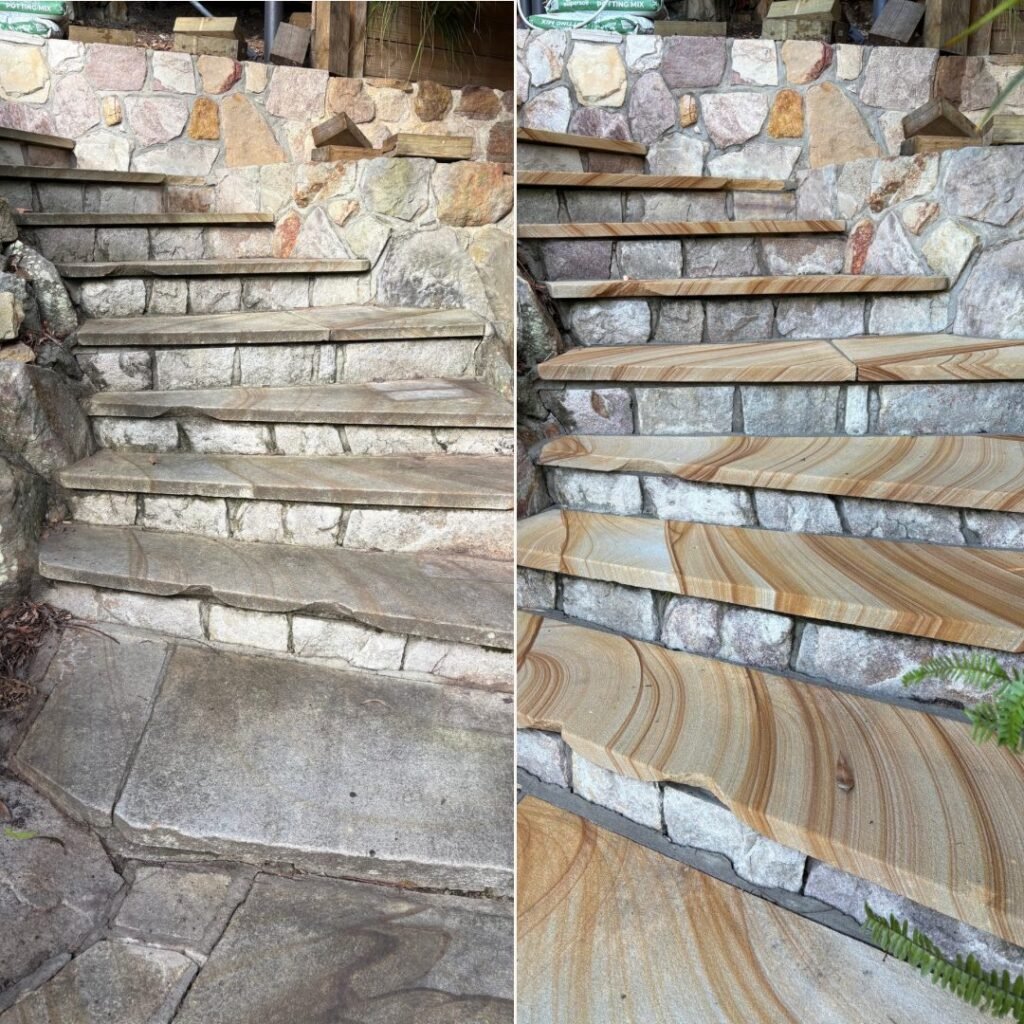
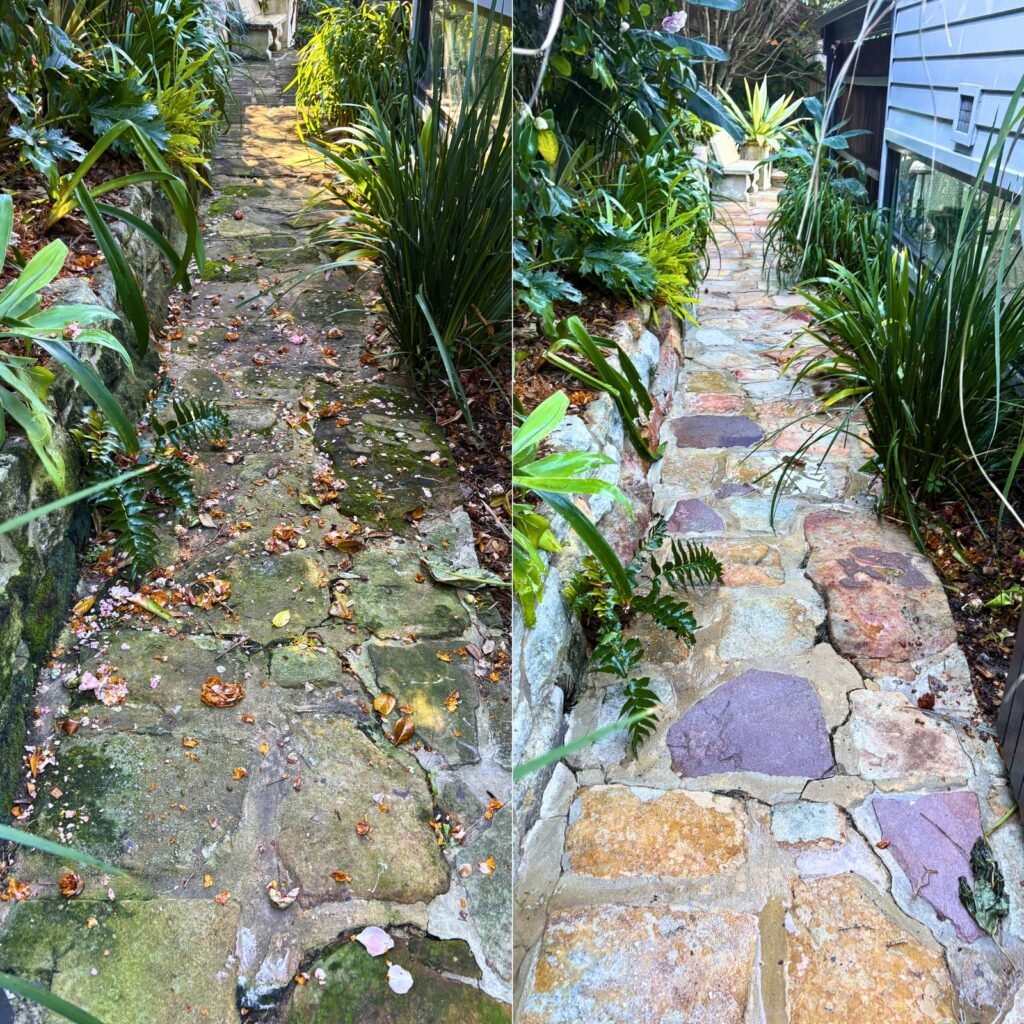
Cleaning a mossy sandstone path releases a surprising volume of fine organic sediment. It is not toxic and it should still not go down the drain.
Questions worth asking a contractor
- Where will the runoff from this job go?
- Will you be containing or capturing it, and how?
- What products are you using, and are they phosphate-free?
- Do you carry public liability insurance, and what does it cover for environmental incidents?
- Have you worked with this council’s requirements before?
A contractor who cannot answer the first question has not thought about it, which tells you something about the rest of their work.
Pool water, while we are here
Related and frequently got wrong: chlorinated or salt pool water should not go into stormwater either. Councils generally direct it to sewer, or to be dechlorinated and dispersed over lawn where it will not run off. Backwash included.
The reasonable position
None of this makes exterior cleaning impractical. It makes it slower and slightly more expensive, and it is one of the differences between quotes that people cannot otherwise account for.
If a price looks notably cheaper than everything else, containment is one of the corners that gets cut, along with insurance and the time spent on surface assessment. The runoff from your property is legally your problem as well as the contractor’s, which is reason enough to ask.