A large share of Double Bay’s housing is in walk-up apartment buildings: two to four storeys, built mostly between the wars and in the decades after, in face brick or render, with timber or steel windows and small balconies. Many are strata schemes with a handful of owners.
Woollahra Council’s heritage controls describe Inter-War flat buildings in the area as usually three storeys in face brick or render. In the heritage areas, they state that original face brickwork, terracotta or decorative concrete panels must not be painted, rendered or coated.
Face brick walk-ups
Inter-War face brick is often a feature: tapestry bricks, decorative patterns, contrasting bands and manganese or clinker bricks. It is also at the age where problems show.
Common issues: efflorescence (white salts), black biological growth on south faces, rust staining from steel lintels, and fretting at the base where damp rises. Pressure strips the fired face; acid attacks the mortar and stains decorative bricks. Low pressure, biocide for growth, and dry brushing for salts are the safe methods. More: efflorescence on brick and brick fretting.
Rust staining from lintels is worth reporting: corroding steel lintels expand, crack brickwork and need repair.
Rendered walk-ups
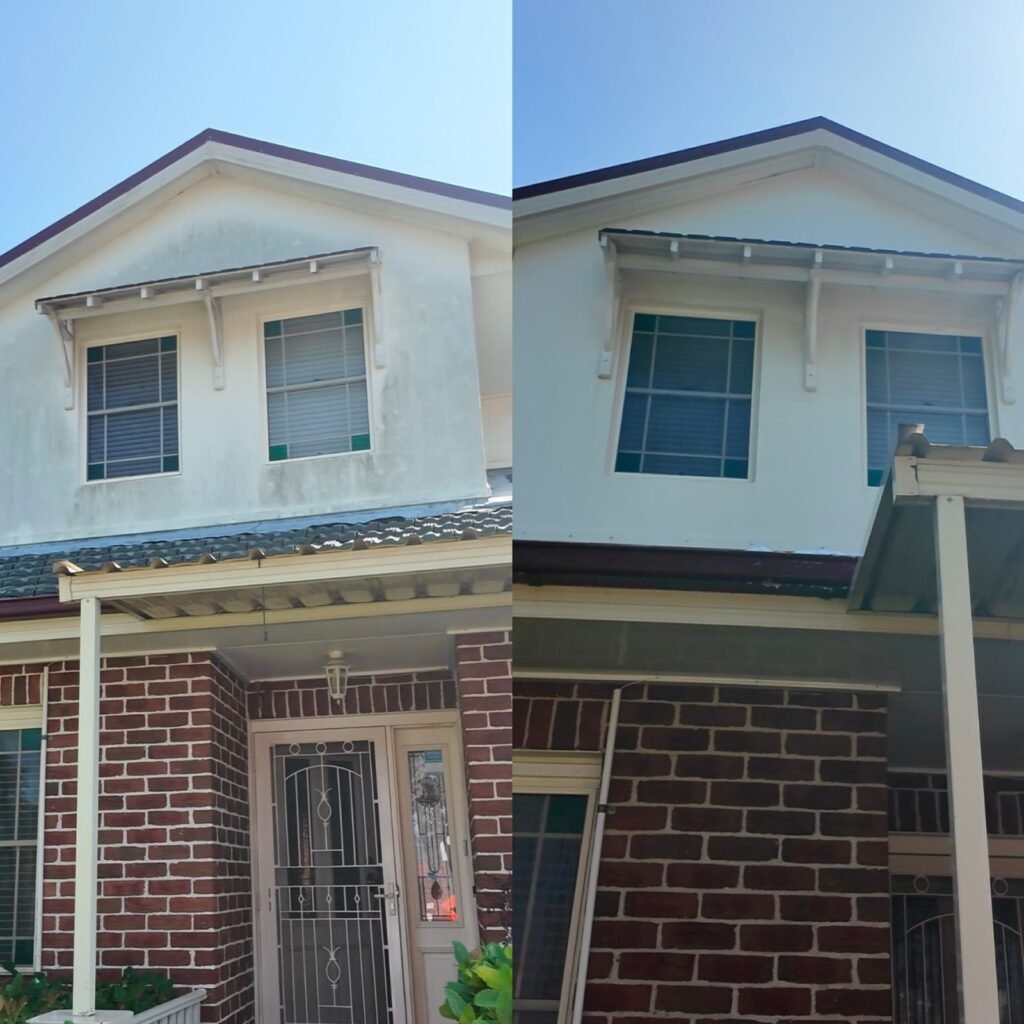
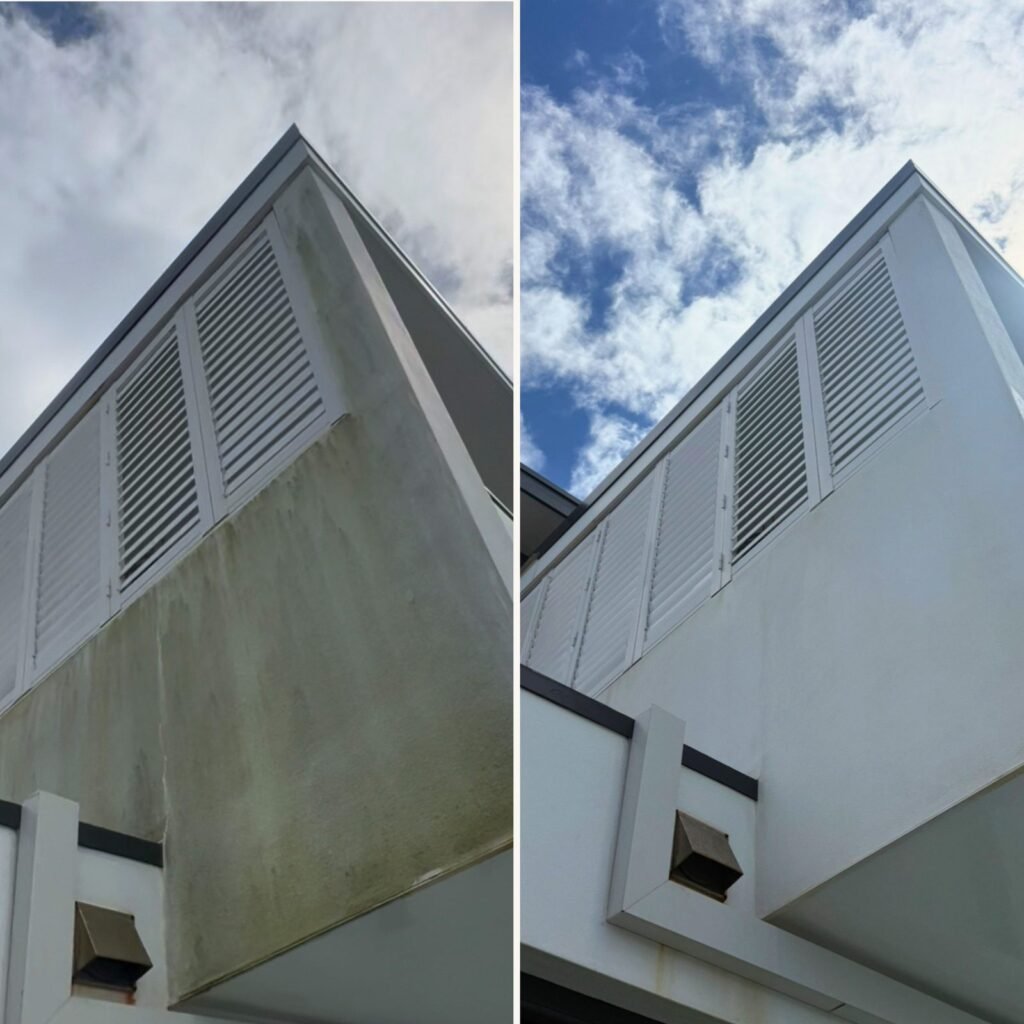
Painted render goes green and black on shaded elevations, especially in Double Bay’s humid basin. Soft washing removes growth without damaging the paint. Tap first: drummy render falls off under pressure. More: how to clean render and cracked render.
Strata decisions
External walls are common property, so washing a walk-up is a strata decision. For small schemes, that often means an owners meeting and a quote. Things to agree: scope (all elevations, or just the worst), access (most walk-ups can be done from ground and ladders or a small platform), resident notice, and who covers what on balconies. More: strata exterior cleaning.
Balconies, stairs and common areas
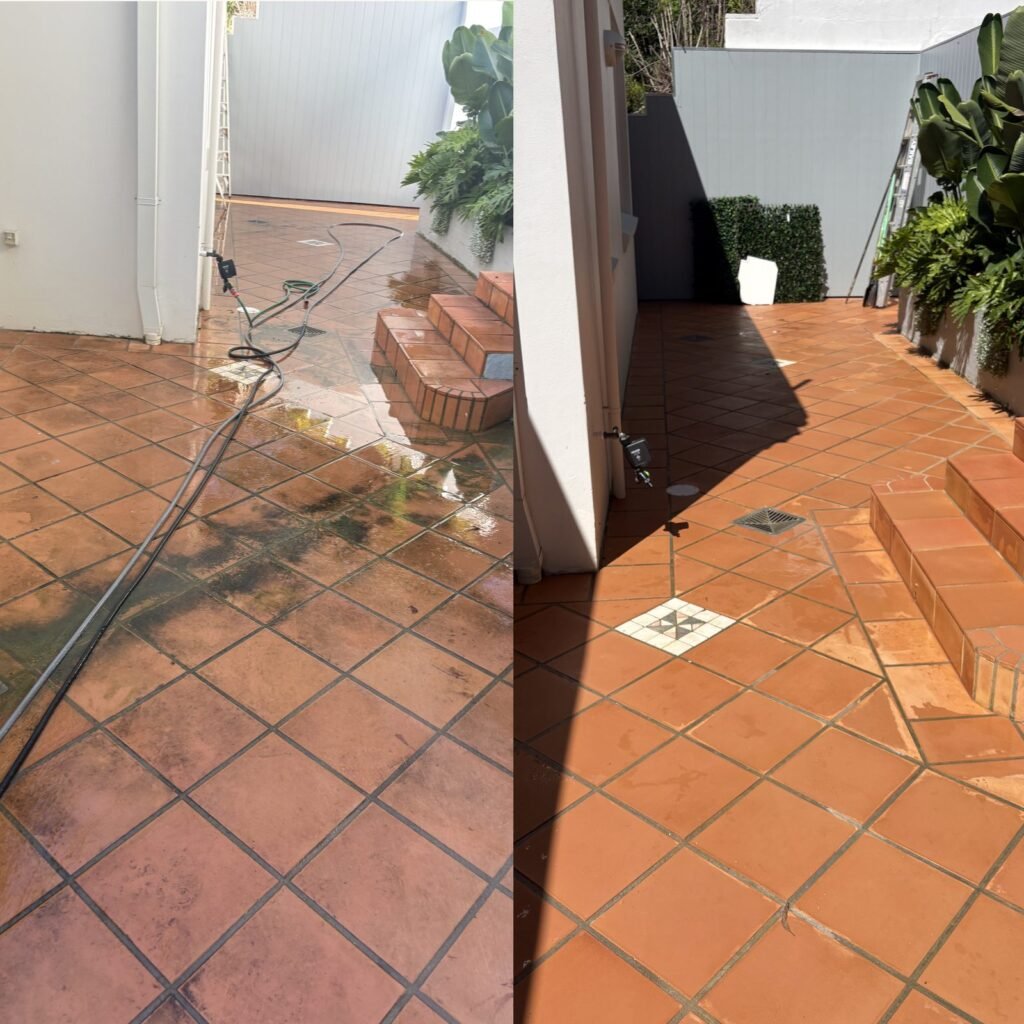
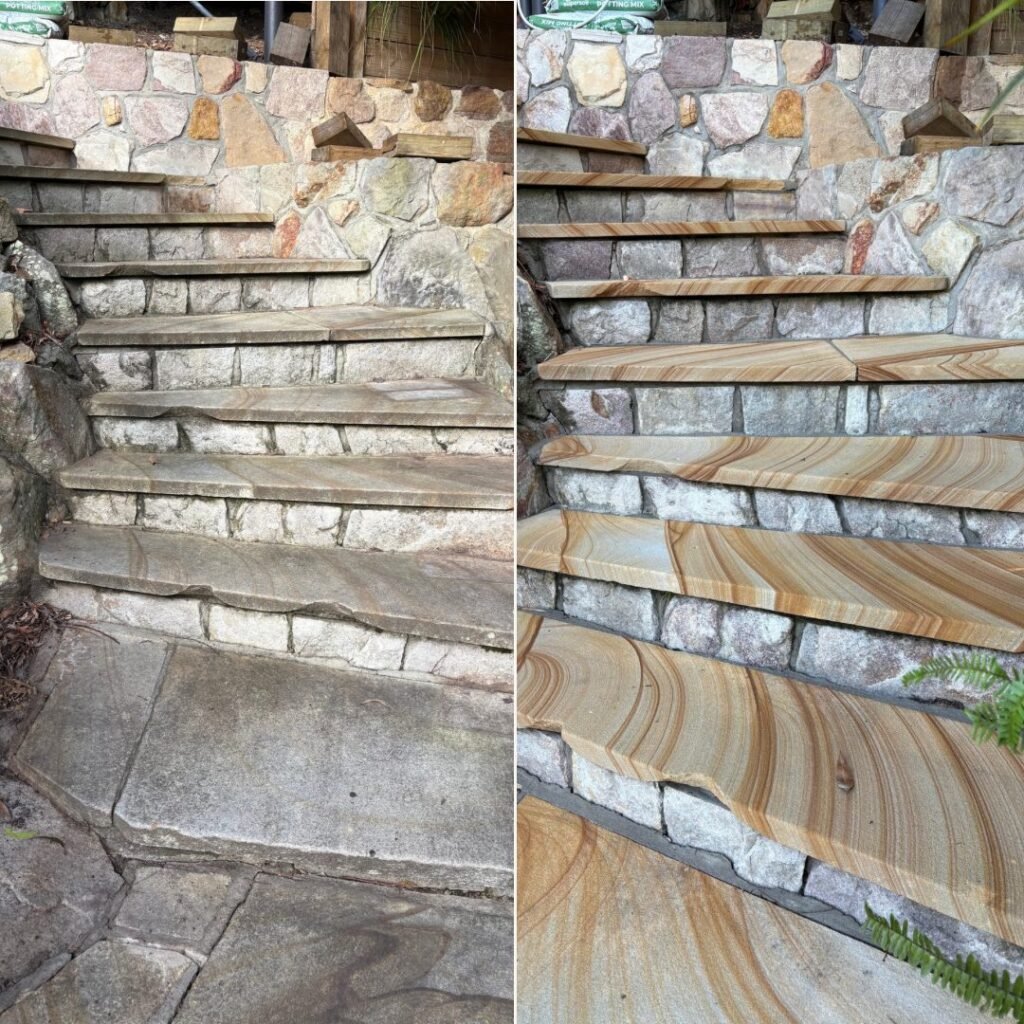
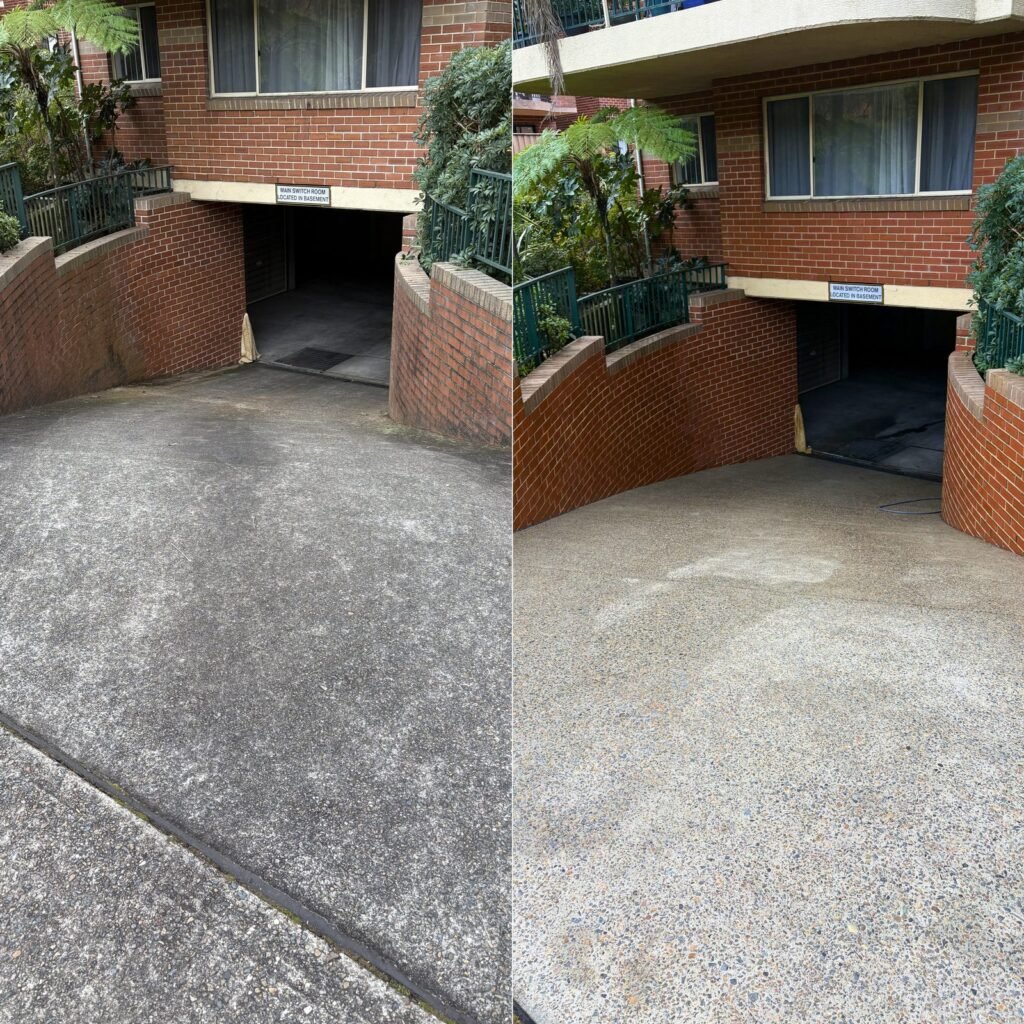
Open stairwells, entry paths and bin areas are common property and the most visible part of the building to buyers and tenants. Small balconies drain onto the ones below or onto the street; clean them carefully. More: balcony cleaning in strata.
Steel windows
Original steel-framed windows rust at the bottom rail and putty fails. Cleaning shows the condition; repair is a joinery job.
Before painting anything
If a building is in a heritage area, painting original face brick is not allowed. If it is not, painting is permitted but rarely a good idea on brick that was designed to be seen: it creates a maintenance cycle forever after. Clean first and see.
What a facade clean usually reveals
Cleaning a walk-up is often the first close look anyone has had at the building in years. Common findings: cracked brickwork around steel lintels, mortar eroded at parapets and window sills, rusting balcony balustrades, failed sealant around windows, blocked weep holes, and gutters rusted through under years of debris.
None of these are cleaning problems. They are worth knowing about because they get more expensive with time, and a photo report gives the committee something concrete to take to the next meeting. More: what is in our photo report.
Keeping costs down for a small scheme
Small strata schemes do not have big budgets. Combine work: a facade wash, gutter clean and common area clean in one visit shares the setup cost. Prioritise the elevations that face the street and the ones with growth. Get two or three written quotes with the same scope so they can be compared fairly. More: how to compare quotes.
See the Double Bay maintenance calendar and our Eastern Suburbs strata maintenance guide.