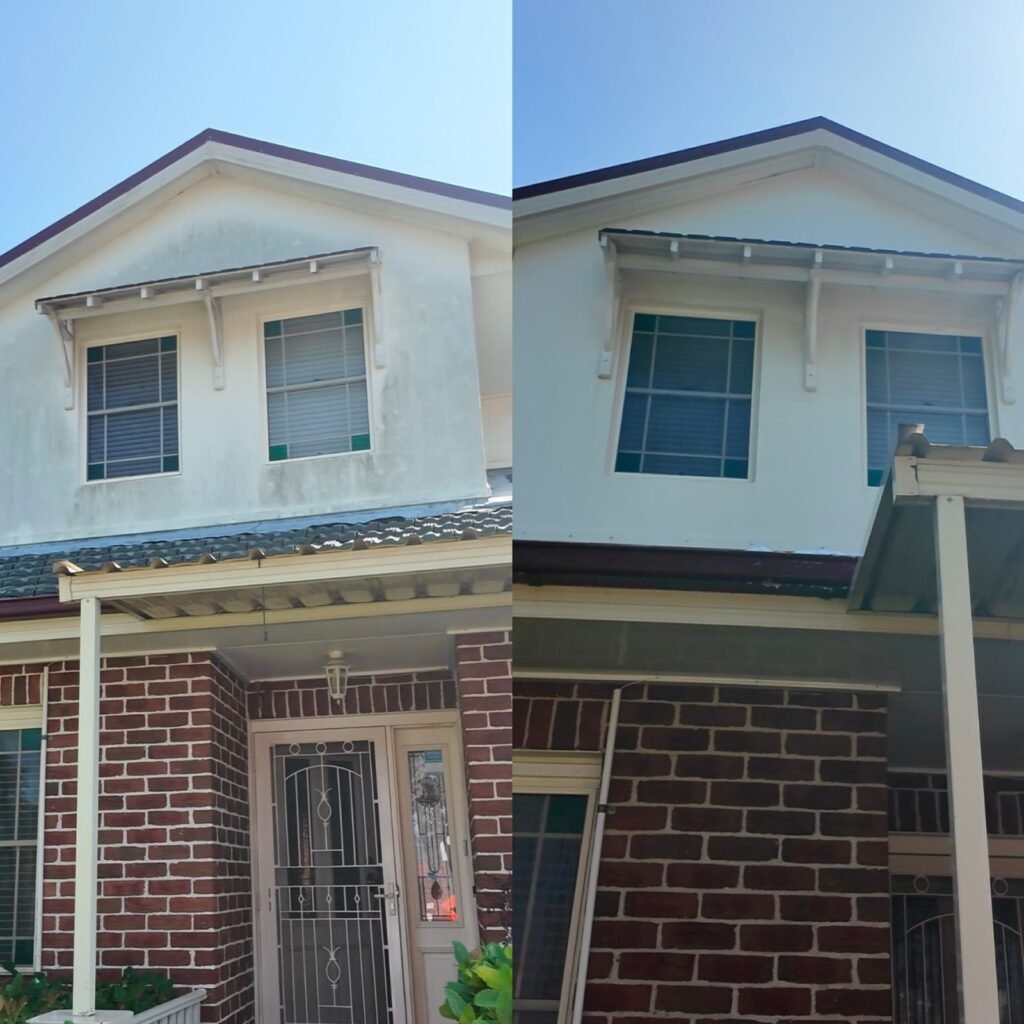
The Eastern Suburbs has a very high density of mid-century and modern apartment stock sitting within a few hundred metres of surf — Bondi, Tamarama, Bronte, Coogee, Clovelly, Maroubra, and the harbour side at Double Bay, Darling Point and Rose Bay.
Those buildings have a maintenance profile that committees often underestimate, because the expensive items are the ones nobody looks at.
The one to budget for first
Concrete cancer. Balcony slab edges, soffits, columns and carpark structure in coastal buildings, particularly those from the sixties and seventies when cover depths were thinner and chloride limits were not what they are now.
Chloride reaches the reinforcement, the steel corrodes, rust expands and pushes the concrete cover off. Remediation on a mid-size coastal block runs into six figures.
The important point for a committee is that this belongs in the capital works fund forecast years before it becomes urgent. Discovering it in the year the balconies start shedding is how schemes end up with special levies.
It is also a duty-of-care matter where it is above a thoroughfare. Full detail in concrete cancer: what it looks like and why washing won’t fix it.
And the related point: a cleaning contractor who agrees to pressure wash a spalling soffit is creating falling debris. If a wash has been declined on your building, that is usually why.
Salt, everywhere, continuously
Unlike a house, an apartment block presents every elevation to the weather, and the sheltered ones are the problem.
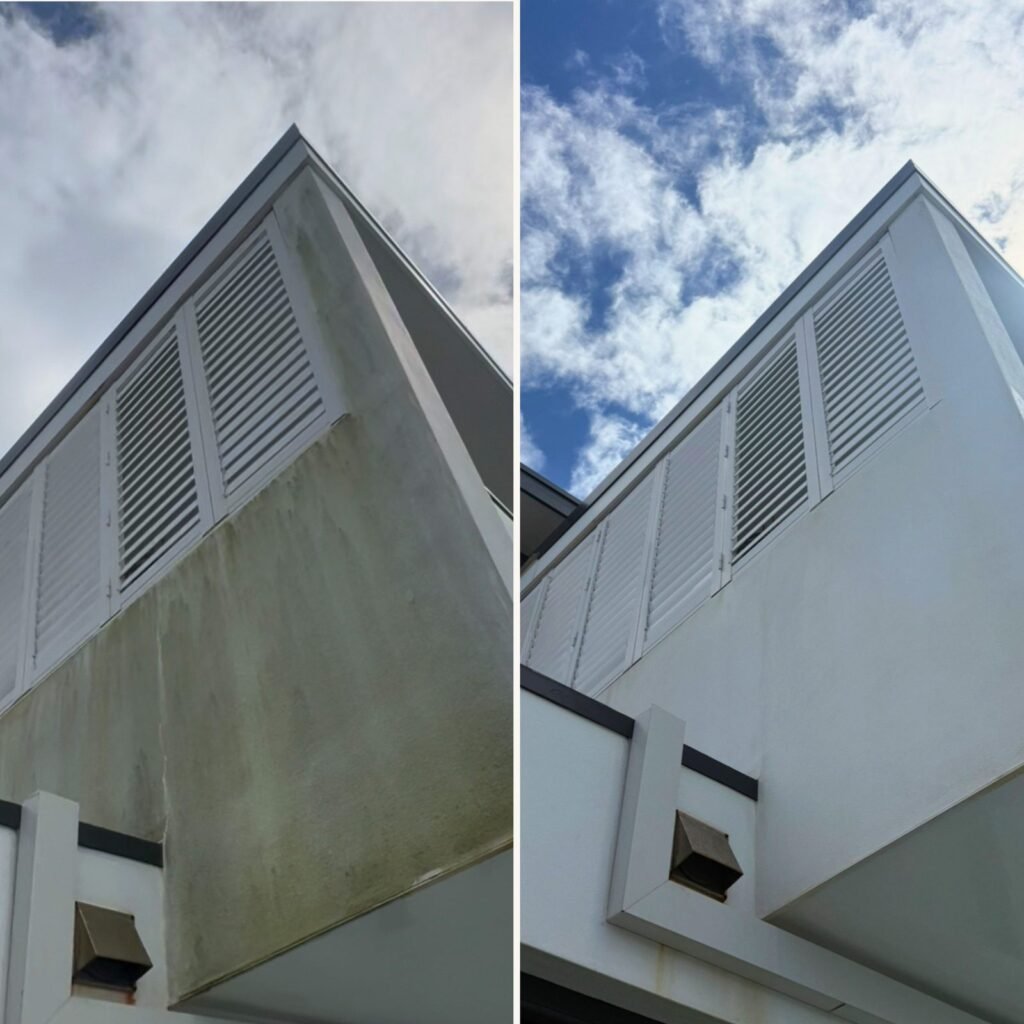
Salt accumulates where rain does not wash it off — under balcony slabs, behind downpipes, in window tracks, on the lee elevation, in carpark entries. That is where corrosion starts on balustrade fixings, window frames, light fittings and handrails.
Routine fresh-water washing of those areas is genuinely preventative maintenance rather than cosmetic, and it is cheap relative to replacing corroded balustrade fixings.
Related: powder-coated aluminium in a salt zone and salt, sun and sea air.
Glass and balustrades
Frameless glass balustrades and large windows are standard in this stock, and coastal glass does not merely get dirty — salt bonds to it and eventually etches it.
A committee paying for the same hazy glass to be cleaned repeatedly is paying for the wrong service. The distinction is in salt film vs hard water staining and glass pool fencing and balustrades.
Frequency beats intensity. Quarterly light cleaning prevents the bonded layer forming; annual heavy cleaning does not remove it.
Balconies and drainage
Balcony drainage is where a lot of inter-lot disputes start. Blocked balcony drains, failed waterproofing membranes, and water tracking to the unit below.
Worth knowing who owns what before anyone cleans anything — the membrane is usually common property, the tiles usually are too in older schemes, and the furniture is not. We cover it in cleaning an apartment balcony: drainage, neighbours and who actually owns it.
Carparks
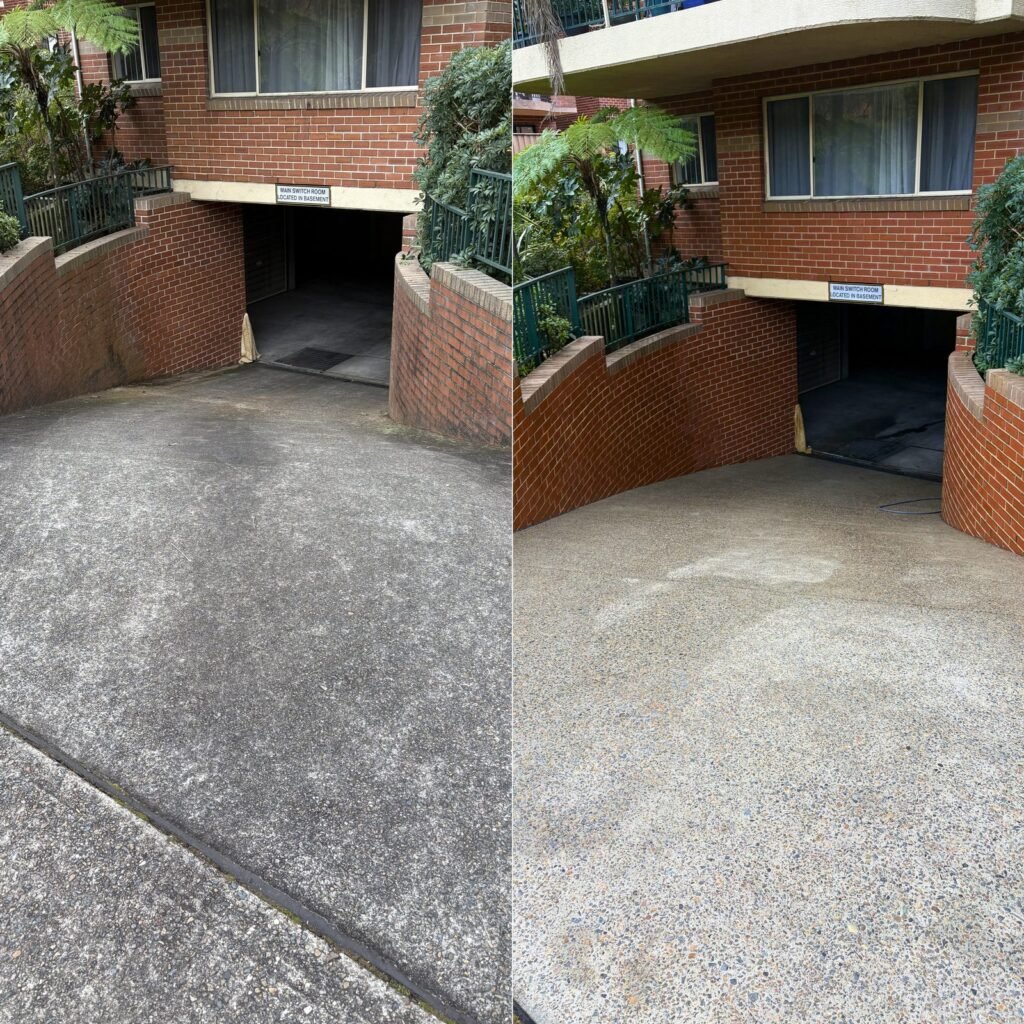
Basement carparks in coastal buildings combine damp, salt carried in on cars, and oil contamination.
Cleaning them is a trade-waste job — the runoff carries hydrocarbons and heavy metals and cannot go to stormwater. Ask any contractor how they are containing and disposing of it, because the cheap quote is the one that hoses it to the drain. See what commercial pressure cleaning involves.
Also the place where concrete cancer shows up first, so the clean is a good opportunity for a condition inspection.
Access and parking
The practical constraint in this area. Narrow streets, no loading zones, permit parking, and buildings right on the boundary.
Bondi and Tamarama and Double Bay and Darling Point are both covered separately — in both, where the truck goes is a real part of the quote.
A sensible cycle
- Quarterly: entry, common areas, glass on exposed elevations
- Six-monthly: gutters and drainage, balcony drains checked
- Annually: full building wash, carpark, condition photos
- Every three to five years: an independent condition inspection of balcony structure and soffits, feeding the capital works forecast
That last item is the one that saves money, and it is the one most commonly skipped.
General guidance for committees is in strata exterior cleaning: a guide for committees, and for a scoped quote see strata pressure cleaning.