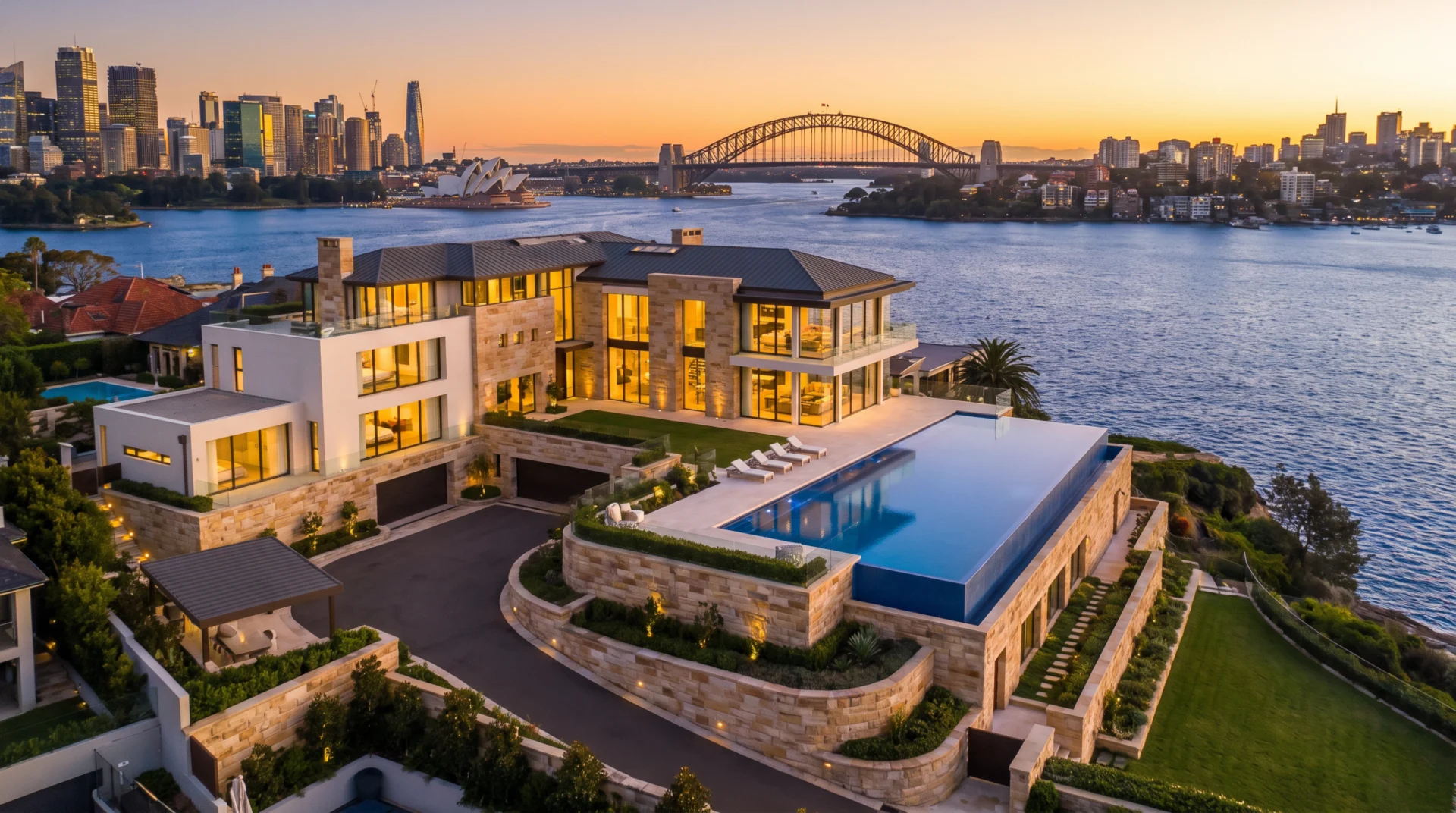
A large share of Vaucluse homes have a pool, and the pool usually sits within a wider outdoor living area: stone or tiled terraces, coping, glass fencing, an outdoor kitchen, furniture and planting. Travertine cleaning searches in Sydney spike in October, as owners get these areas ready for summer.
Each surface has its own needs, and salt or shade changes them depending on which side of Vaucluse the property is on.
Terraces and paving
Travertine and limestone are popular and acid-sensitive. Any acidic cleaner, including many rust removers and tile cleaners, will etch them permanently. Porcelain is far more forgiving. Sandstone needs low pressure and no acid. Know which you have before cleaning. More: travertine around pools and how to clean outdoor tiles.
Harbour-side terraces in shade grow black biological staining in grout and along edges. Ocean-side terraces collect salt, which crystallises at the surface as the stone dries.
Coping
The coping is the hardest-working stone around a pool: pool chemistry, sun, bare feet, and salt. Look for drummy or loose coping stones before cleaning. Calcium scale at the waterline and on coping needs a stone-safe treatment, not acid. More: pool coping cleaning and sealing and pool waterline scale.
Pool tiles
The waterline band of tiles collects scale and body oil. Cleaning is usually done with the water lowered slightly or from the water line, with care for the grout. More: pool tile cleaning.
Glass pool fencing
Pool fencing glass gets splashed with chlorinated water, which dries to a film, and on the ocean side it also takes salt. Spigots and clamps collect water and stain. Clean the glass with purified water, rinse and dry the fittings, and check the gate and latch while you are there: a pool gate that does not self-close and latch is a compliance problem. More: glass pool fencing.
Outdoor kitchens and furniture
Stainless benches and barbecues tea-stain, especially on the ocean side. Clean with a stainless-specific product and rinse with fresh water regularly. Cushions grow mould in harbour-side humidity; dry them thoroughly, and treat the whole panel rather than the spot. More: tea staining and mould on outdoor cushions.
Sealing
Penetrating sealers suit pool surrounds; film-forming sealers trap moisture, cloud and go slippery around pools. Seal in a dry spring spell with the stone dry through. More: outdoor tile sealers.
Timing
Clean and seal in spring, before the pool season. Rinse terraces and glass regularly in summer. A late-autumn clean of shaded harbour-side terraces stops growth taking hold over winter.
Doing it yourself between professional cleans
Most of what keeps a pool area looking good is light and frequent rather than heavy and rare. Sweep leaves off pale stone before they sit wet overnight, because tannin from fig and eucalypt leaves stains within a day or two on travertine and limestone. Rinse terraces with fresh water after a big day around the pool, which takes off sunscreen and chlorinated splash before it dries in.
What to leave alone: anything acidic, including vinegar and the general-purpose bathroom and tile cleaners that seem harmless. Hardware-store pressure washers on stone and grout. And bleach mixed at home, which marks dark stone and burns the garden beds that border most Vaucluse terraces.
If a stain does not move with water, a soft brush and a neutral cleaner, it needs a specific treatment rather than more effort. Rust, organic, oil and scale stains each need different chemistry, and the wrong one sets them. More: hard water stains on tiles.
What a quote for a pool area should cover
The stone type identified, the method for each surface, how stains are treated and which ones may not fully come out, whether sealing is included and with what product, how the pool and equipment are protected, and where the wash water goes. A pool area quoted as a single square-metre rate has usually not been looked at closely.
For everything else, see the Vaucluse maintenance calendar and pool surrounds in the Eastern Suburbs.






