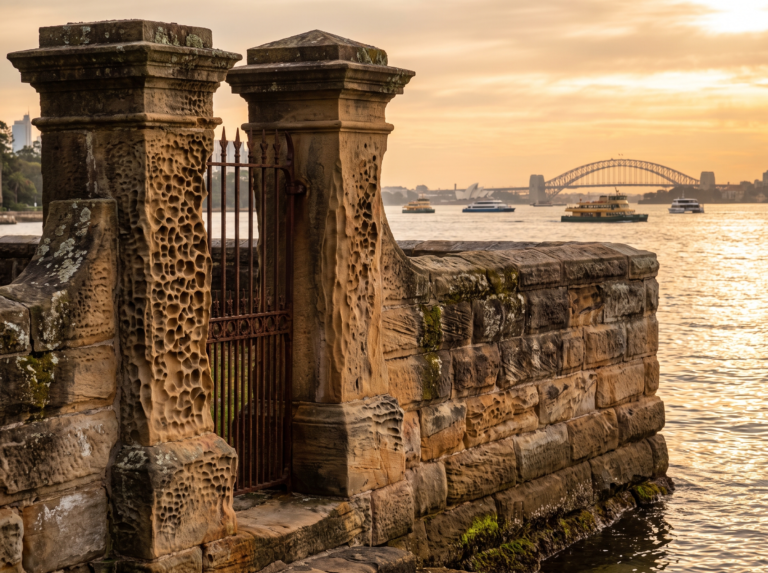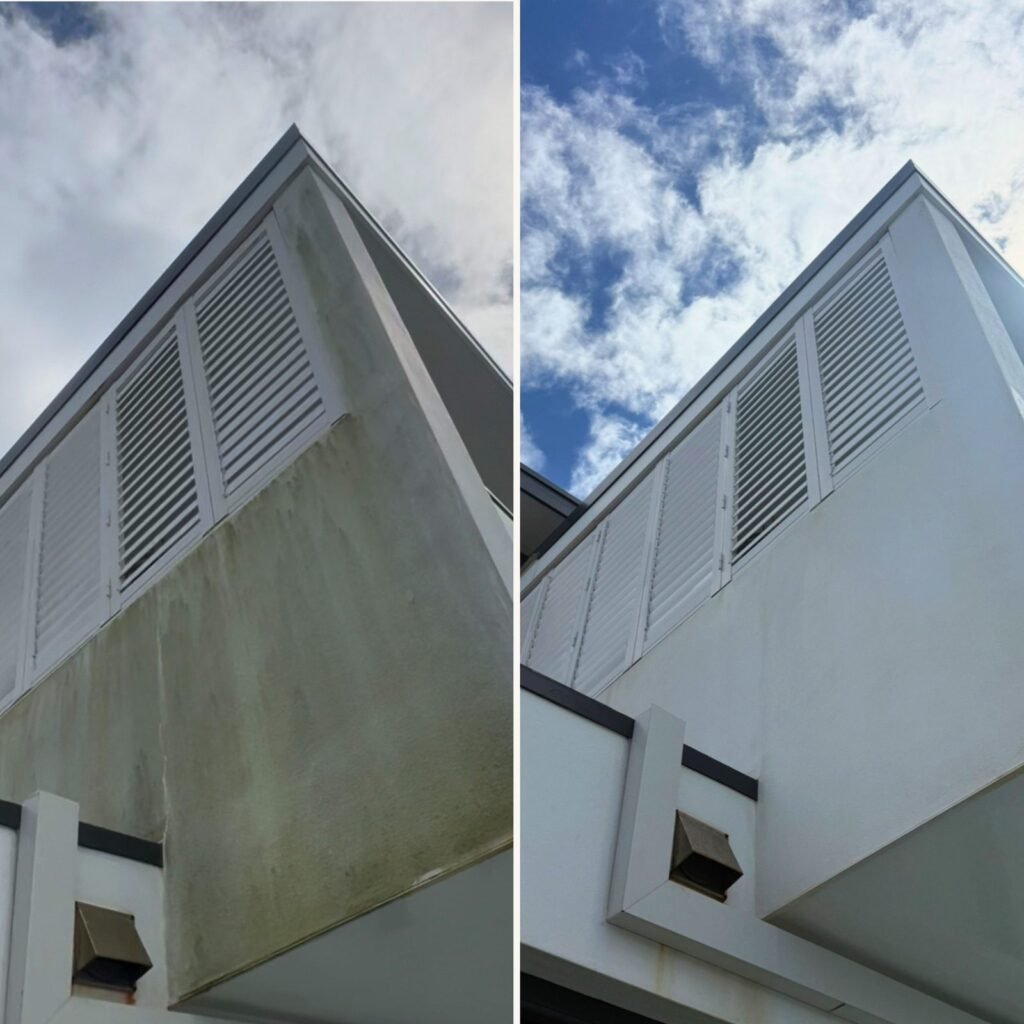
Sandstone is written into Sydney — in retaining walls, steps, paths, foundations and heritage facades from the harbour to the inner suburbs. It’s also one of the easiest surfaces to ruin with the wrong cleaning approach, because the very thing that makes it beautiful is what makes it vulnerable.
Why sandstone needs special care
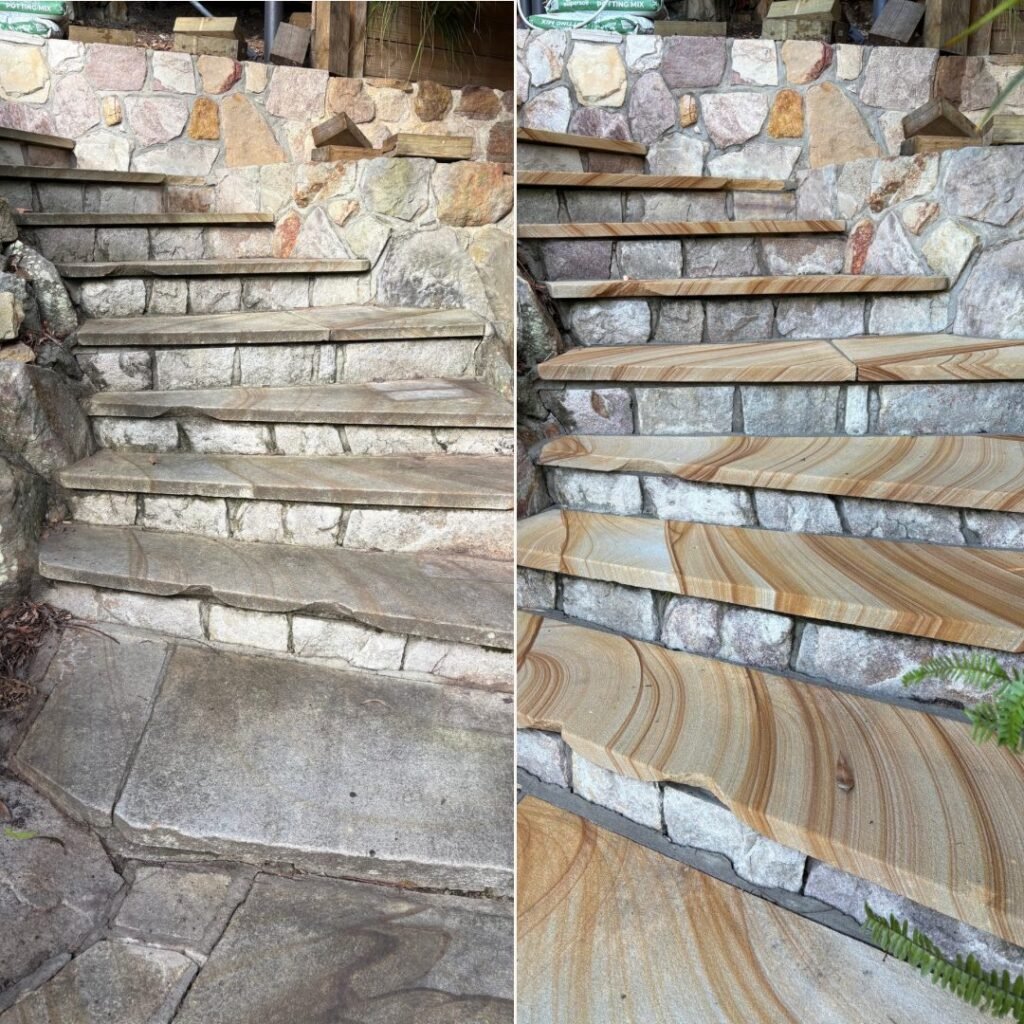
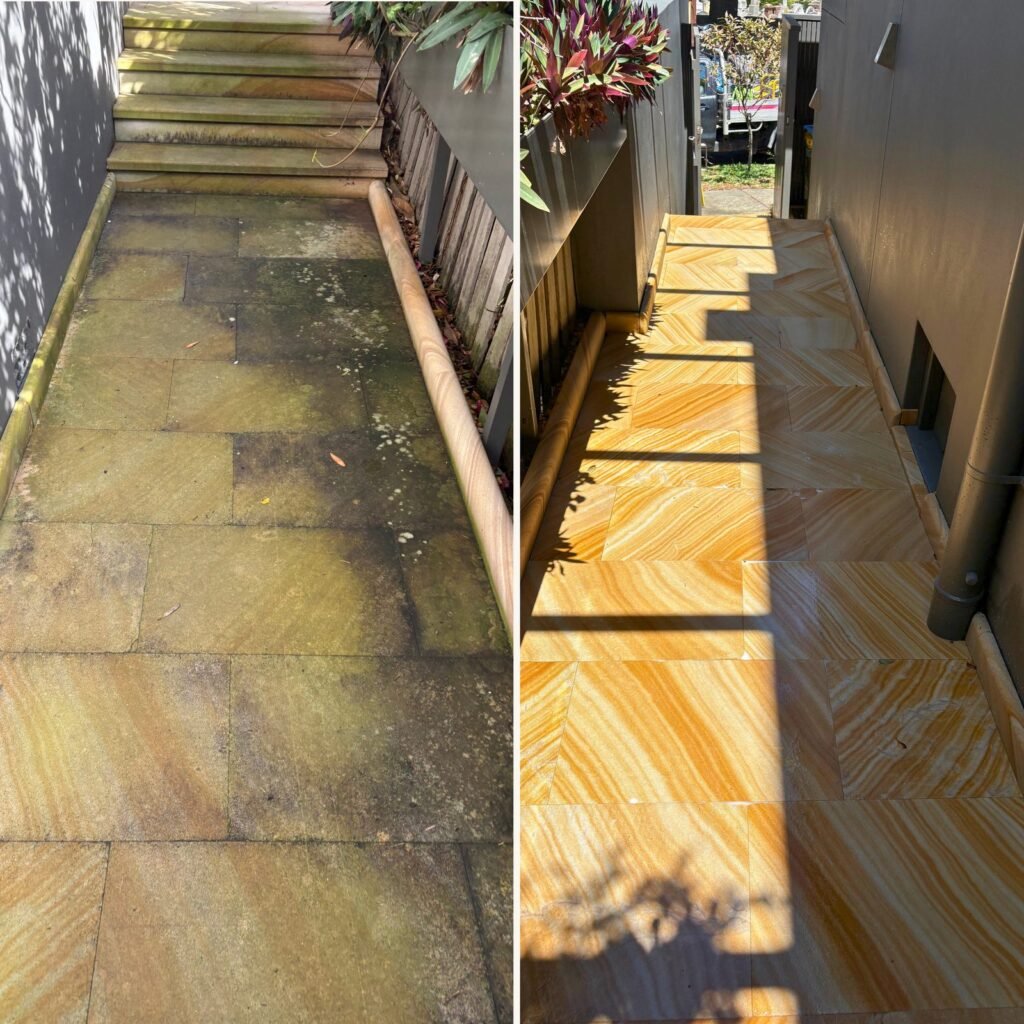
Sandstone is soft and porous. It soaks up water, and with it the moss, algae and organic staining that darken and green the surface over time. That porosity also means it scars permanently under high pressure — pit it or gouge it and there’s no undoing it. Acidic or harsh cleaners can burn and discolour it just as badly.
The right cleaning method
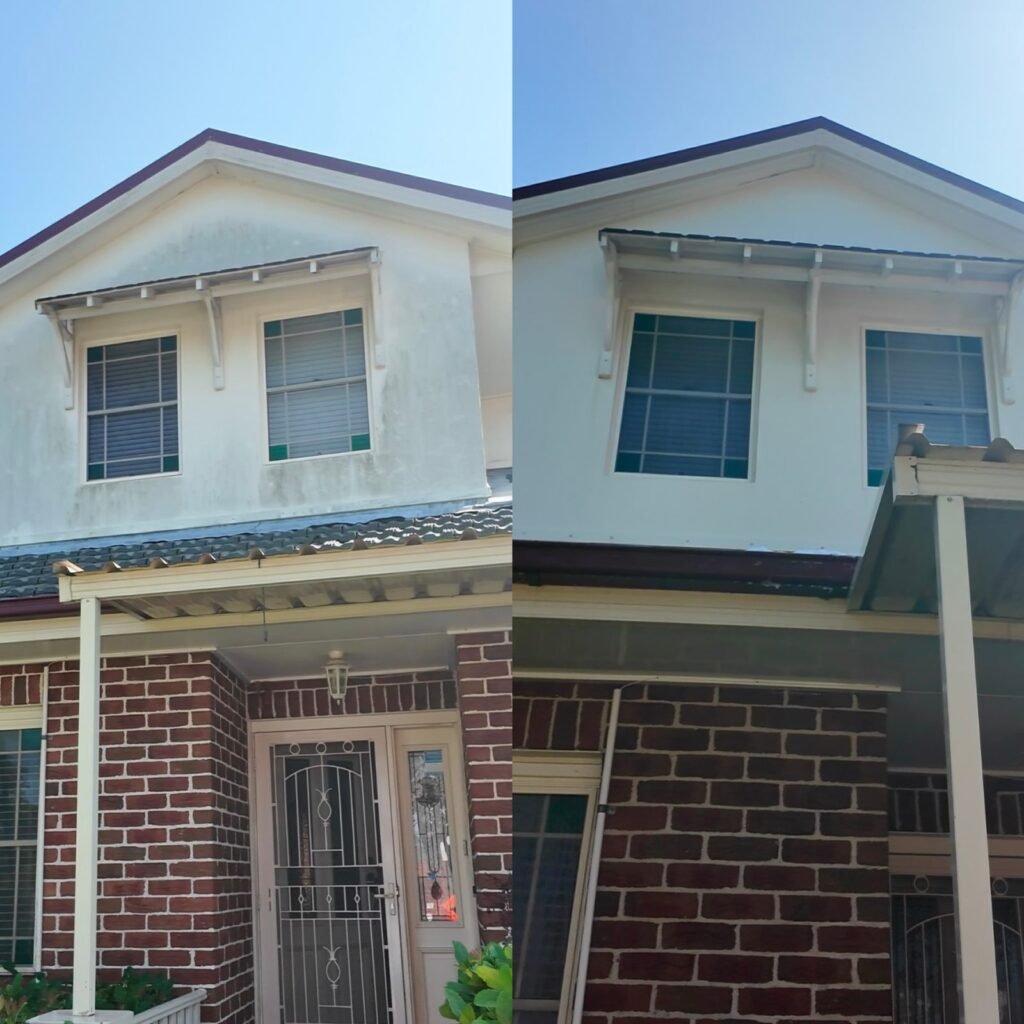
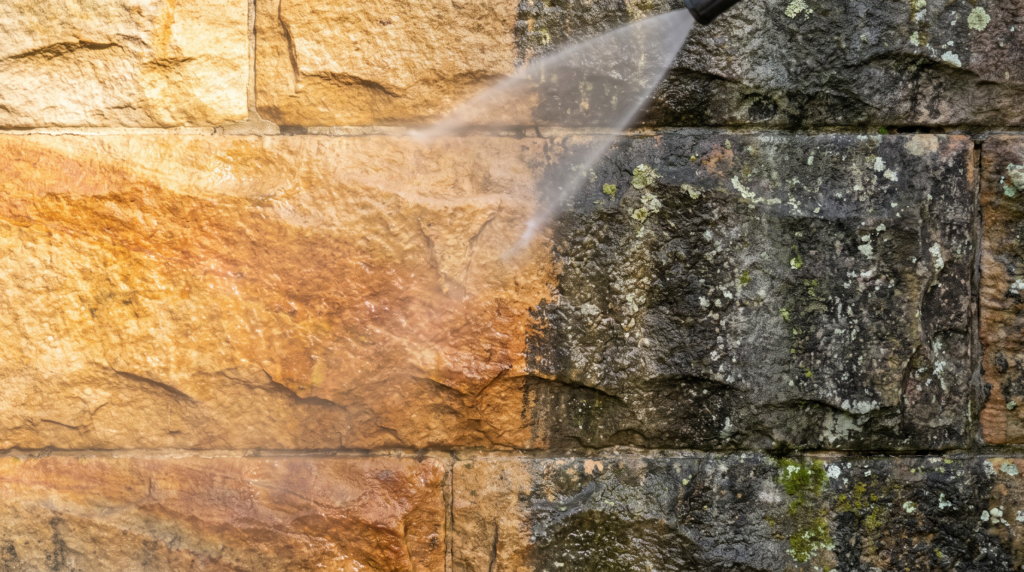
Heritage and feature sandstone should be cleaned with pH-appropriate products and low pressure, matched to the condition of the stone. The goal is to lift the biological growth and staining without opening up or abrading the surface. On older or crumbling stone that means an even gentler touch again. This is patient work, not a quick blast.
Why sealing matters
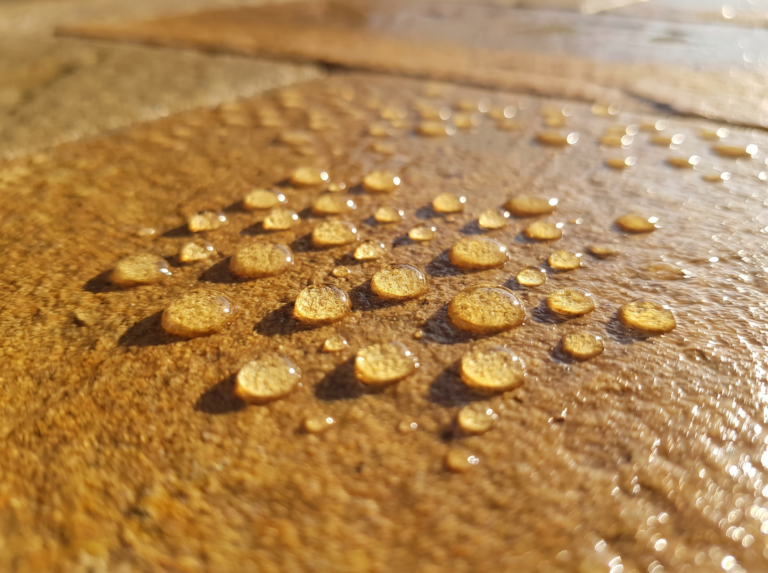
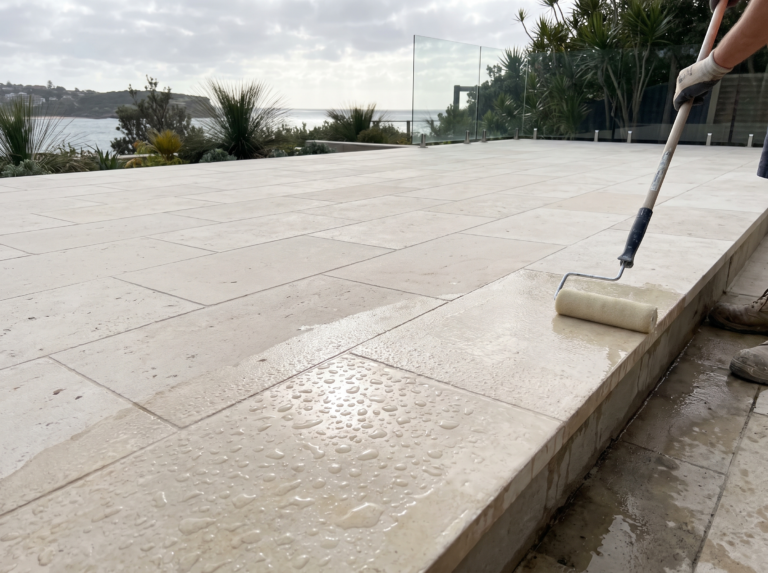
Once clean, sandstone is worth sealing. A breathable sealer lets the stone release moisture while resisting water, oil and staining getting back in. That means slower regrowth, easier future cleaning, and protection against salt damage — which matters a great deal on harbourside and coastal properties where salt is constantly working into the stone.
Retaining walls, steps and paths
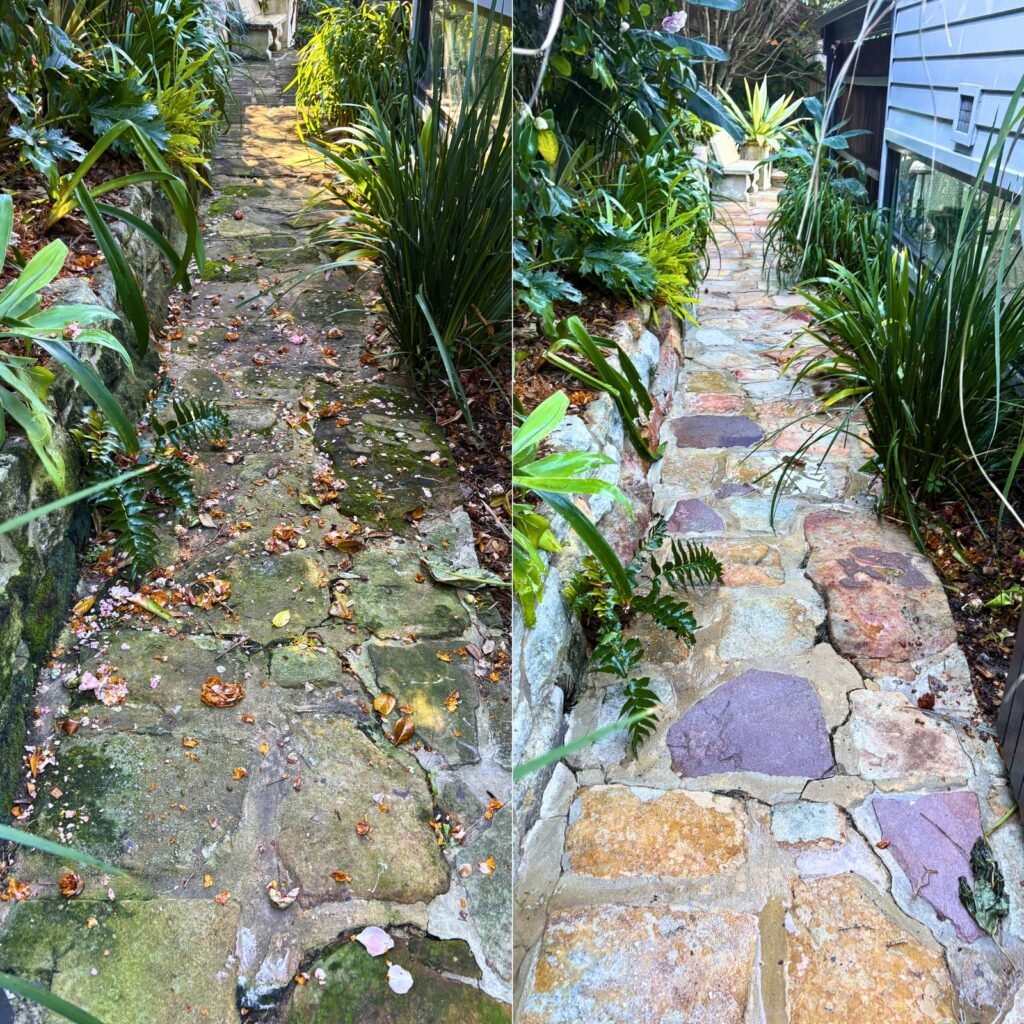
Sandstone retaining walls and steps that stay shaded and damp are the usual problem areas — they green over and get slippery, which is a genuine safety issue on a stairway. Cleaned and sealed, they shed water, stay lighter, and are far safer underfoot.
Protect your stone properly
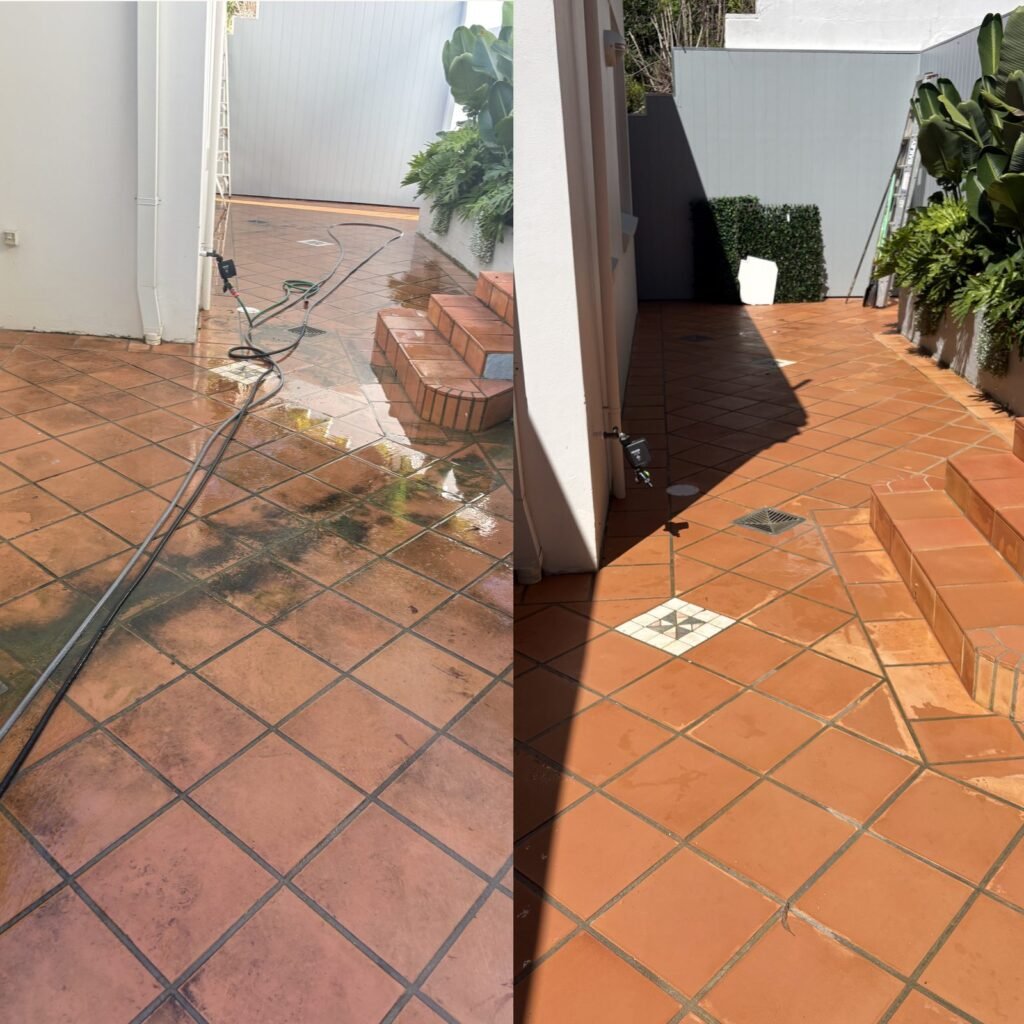
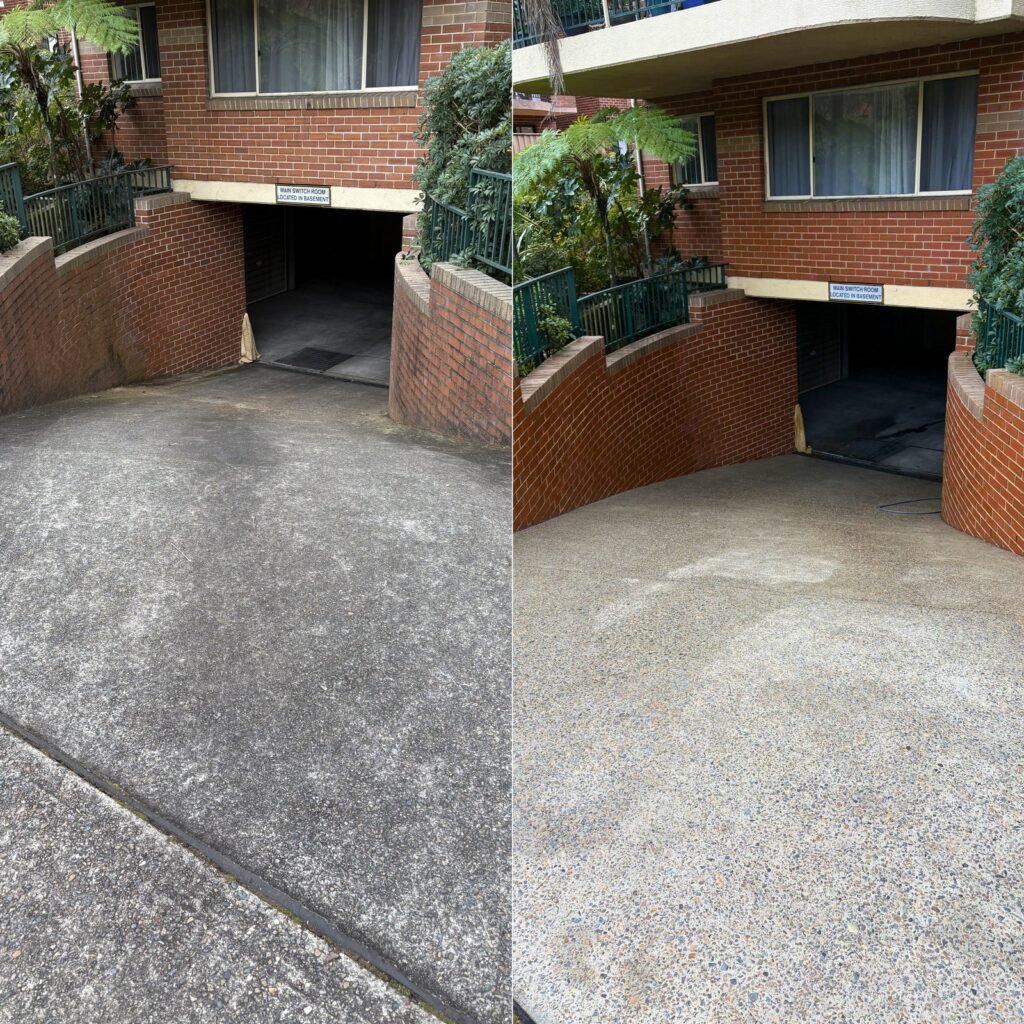
Our sandstone cleaning and sealing is built around protecting soft Sydney stone, and we handle related paver cleaning and sealing too. Request a fixed written quote — 24-hour turnaround, $20 million public liability.