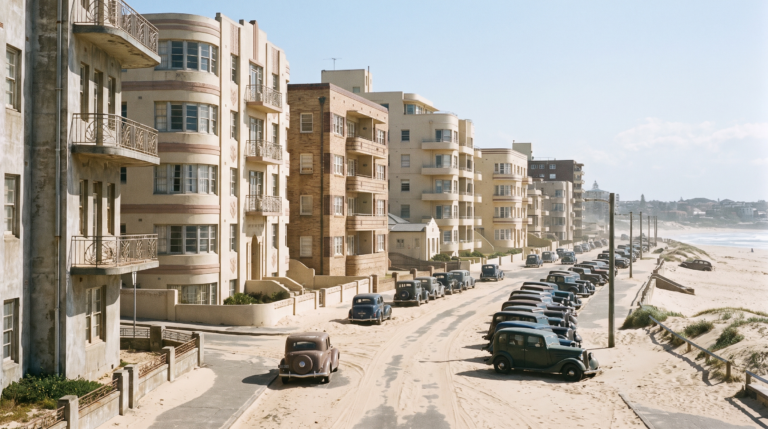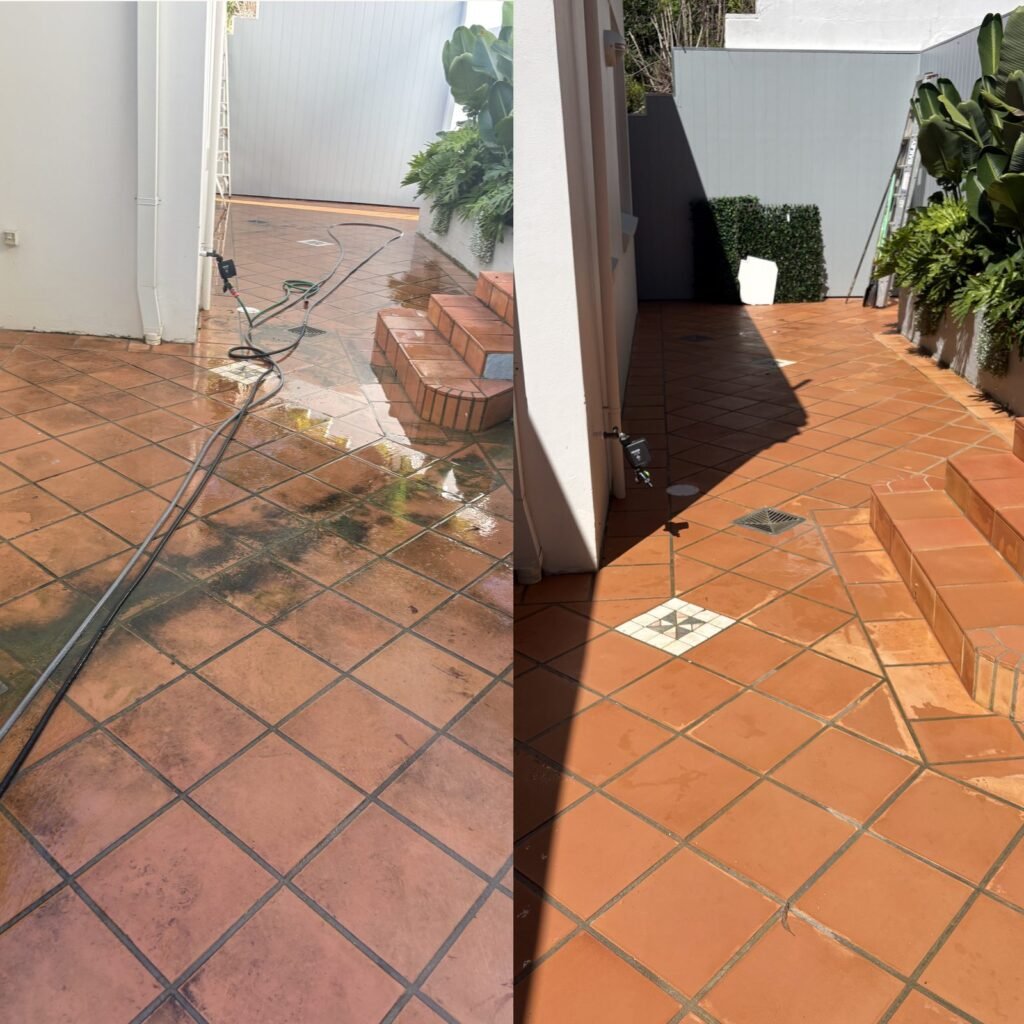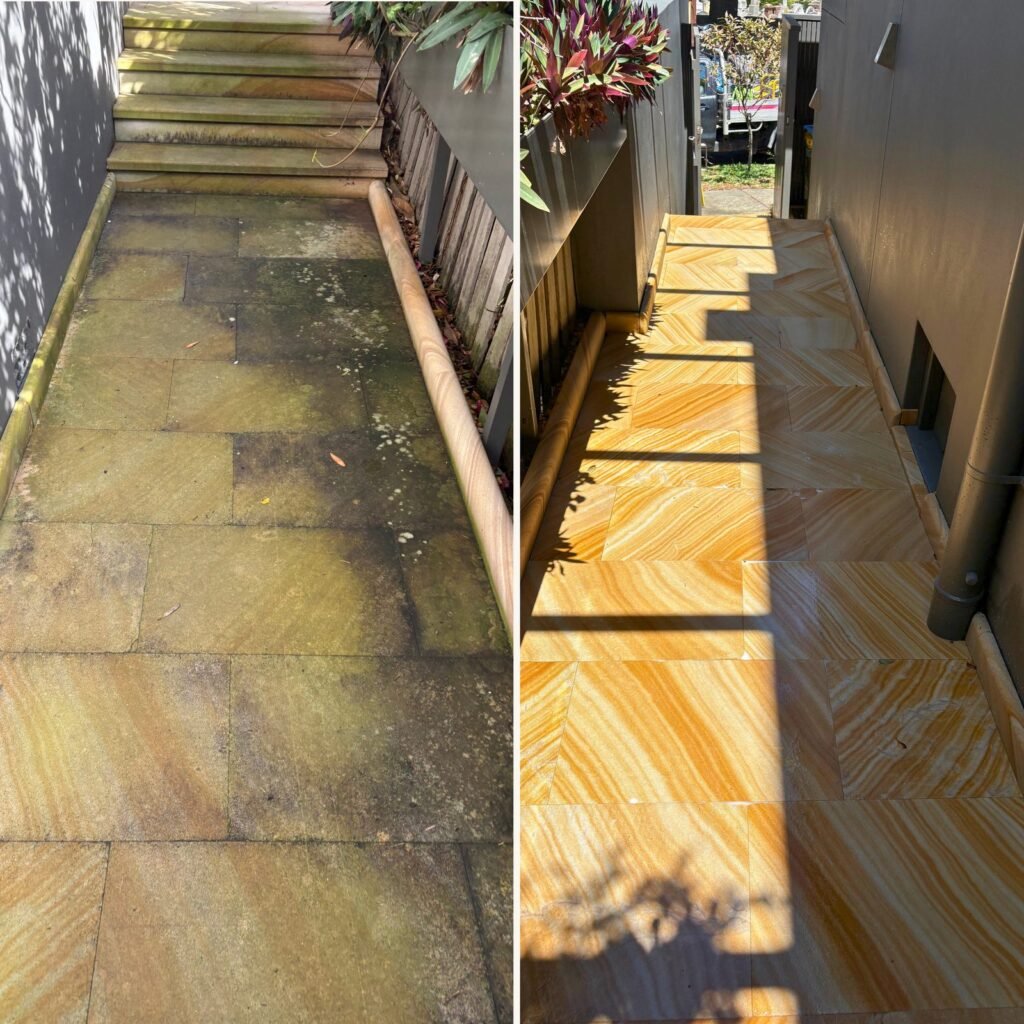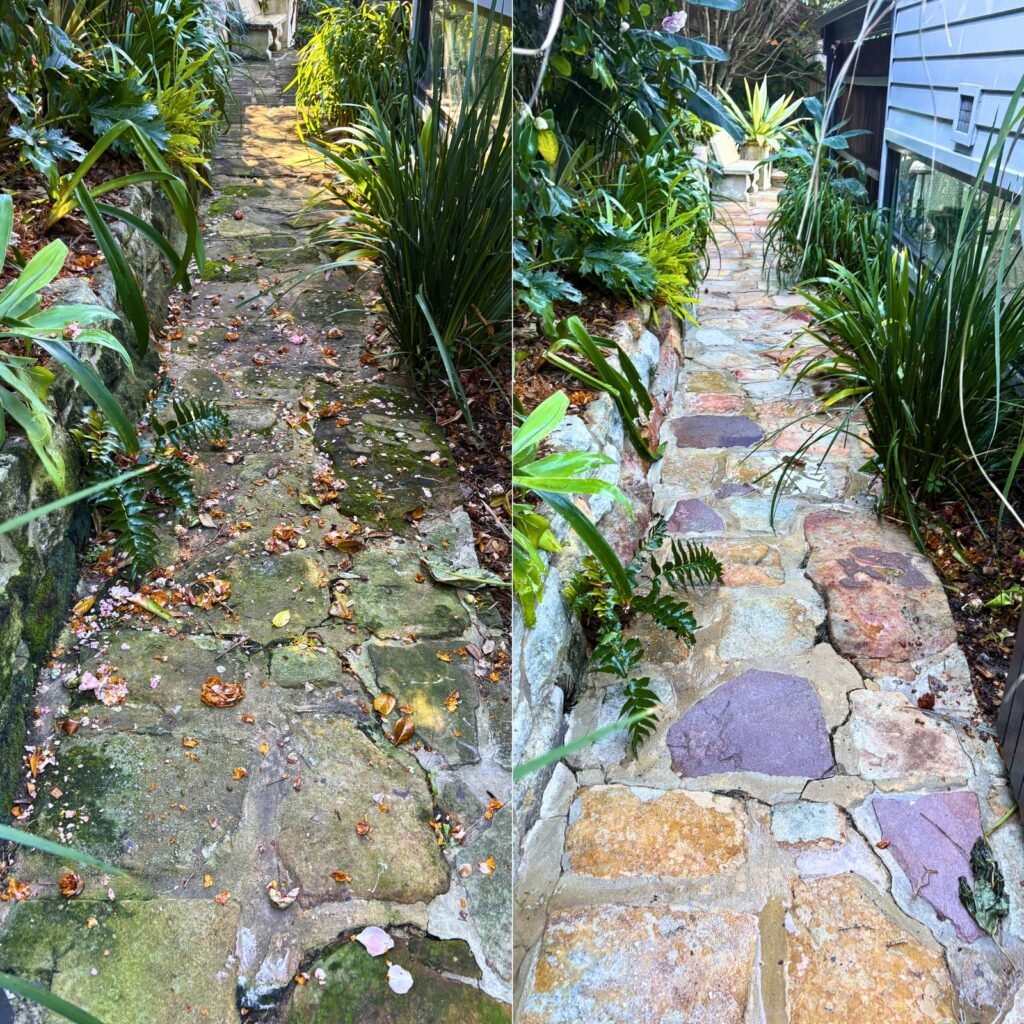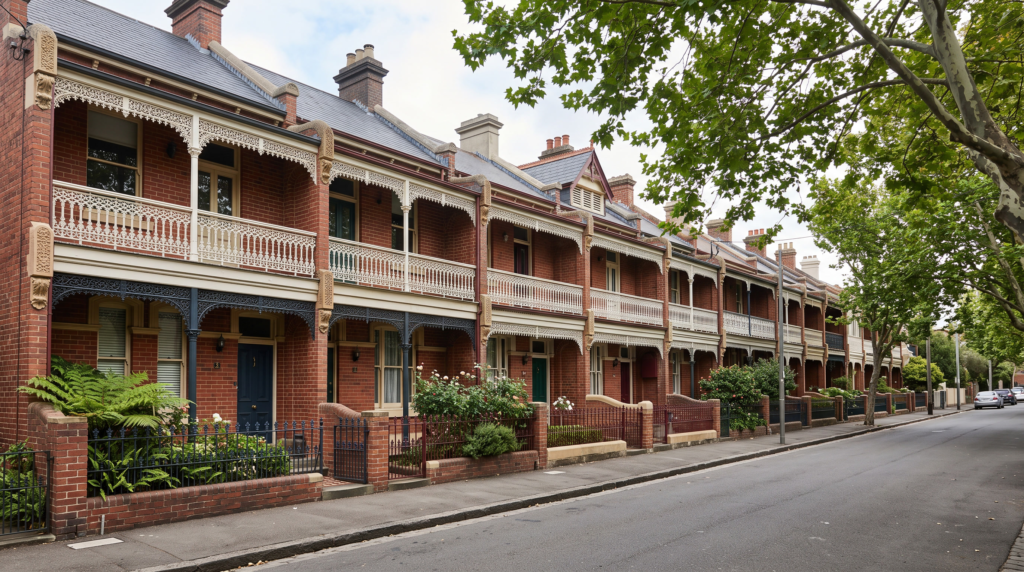
Woollahra and Paddington contain one of the most intact Victorian terrace precincts in the world. Rows of 1870s to 1890s terraces, lane access at the rear, cast iron lacework, slate roofs, and original brickwork that has been standing for well over a century.
This is the part of the Eastern Suburbs where doing the wrong thing causes irreversible damage. Not damage that looks bad for a season — damage that removes original fabric and cannot be put back.
Acidic cleaners are the defining mistake
Hydrochloric-based masonry cleaners, brick cleaners and “heritage” acid washes are widely sold and routinely used. On these buildings they are destructive.
Victorian brickwork is bedded in lime mortar, which is deliberately softer than the brick so the mortar sacrifices itself instead of the masonry. Acid dissolves it. It also leaves chloride salts behind in the wall, which then crystallise and push the brick face off from the inside over the following years.
Tuckpointing — the fine ribbon of contrasting mortar on better facades — is the first thing to go. It is decorative, skilled, expensive to reinstate, and one acid wash destroys it across an entire frontage.
If a quote for a Paddington facade mentions acid, that is the end of the conversation.
Pressure is the second mistake
Original Victorian brick has a fired outer skin that is denser and more weather-resistant than the body of the brick. Remove that skin with pressure and you expose a soft, absorbent core that then weathers rapidly.
The result is fretting — crumbling, powdering brick faces that get visibly worse each year. It is common in these suburbs and it is almost always the legacy of a previous clean.
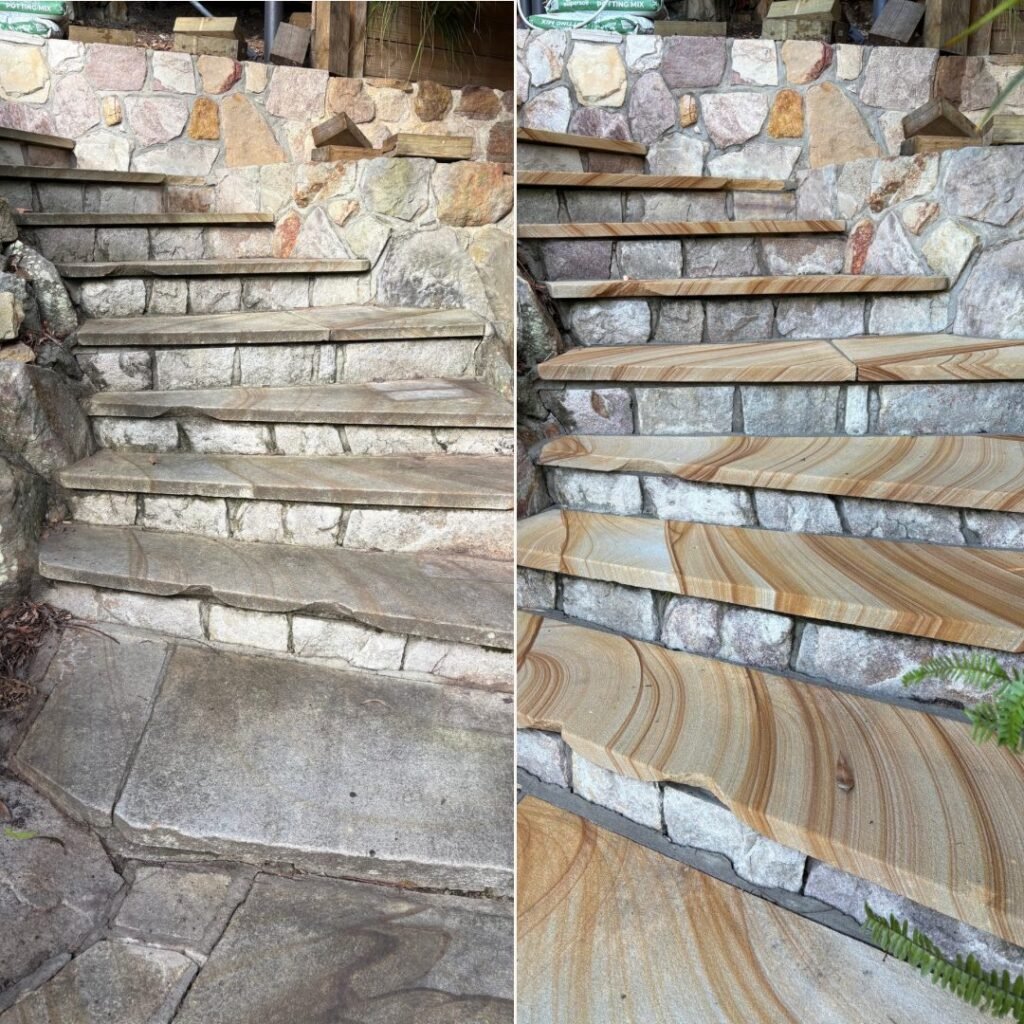
Sandstone plinths, steps and window sills behave the same way. So does original render.
Lead paint is a real constraint
Anything painted before 1970 in these suburbs is likely to have lead paint somewhere in the stack — window frames, doors, iron lacework, rendered walls.
Blasting a painted Victorian facade with pressure aerosolises lead-containing paint into the street, the neighbours’ open windows, and the soil. That is a health issue, not just a heritage one, and it changes how the work must be done and contained.
It is worth asking any contractor how they handle it. Most do not have an answer.
No setbacks, no side access, shared walls
Terraces have party walls on both sides and frequently no side access at all. Equipment comes through the house or down a rear lane, if there is one.
Overspray control stops being good practice and becomes a requirement — the neighbour’s window is a metre away. Anything applied to a party wall is a conversation with the adjoining owner before it is a job.
Rear lanes in Paddington are narrow and often congested. Where the lane is the only access, that has to be established before quoting.
Parapets, box gutters and slate
Most of these terraces have a parapet at the front with a box gutter behind it, draining internally rather than over an eave.
This is the highest-risk drainage arrangement in residential building. A blocked box gutter does not spill into the garden — it backs up over the internal flashing and into the roof cavity, then down the wall, often into a neighbour’s property as well.
Box gutters, rainheads and outlets should be checked as standard on every visit. On these houses it is more valuable than anything cosmetic.
Original slate roofs need care of their own. Slate is walkable only where it is properly supported, individual slates are brittle with age, and the copper or lead flashings around parapets are frequently the actual point of failure.
Heritage controls apply
The Paddington and Woollahra heritage conservation areas are extensive, and many individual properties are separately listed. Paddington is split between Woollahra Council and the City of Sydney depending on which side of the boundary a property sits.
Cleaning generally does not require consent, but repointing, rendering, paint removal and any change to original fabric frequently does. Confirm before, not after.
What we’d prioritise
- No acidic cleaners on lime-mortared or tuckpointed brickwork, under any circumstances
- Low pressure only — removing the fired brick skin causes permanent fretting
- Assume pre-1970 paint contains lead and contain the work accordingly
- Check box gutters, rainheads and internal outlets before anything cosmetic
- Agree party wall work with the adjoining owner first
- Establish access — through the house or via the rear lane — before quoting
- Confirm conservation area and listing status, and which council applies
Related: the Eastern Suburbs exterior cleaning guide, cleaning heritage homes in the Eastern Suburbs, fretting brickwork and when cleaning makes it worse, exterior cleaning in Woollahra and Paddington.