A pool surround is the one part of an Eastern Suburbs property that takes almost every kind of exposure at once: chlorinated or salt water, sunscreen, UV, foot traffic, garden litter, and in a lot of Vaucluse, Dover Heights and Bellevue Hill homes, salt-laden air off the water as well.
It is also the surface most often cleaned as though it were a driveway. That is where the damage starts.
Salt chlorination is doing something to your coping
Salt-water pools are the default now, and they are easier to live with than the chlorine systems they replaced. They are not gentler on stone.
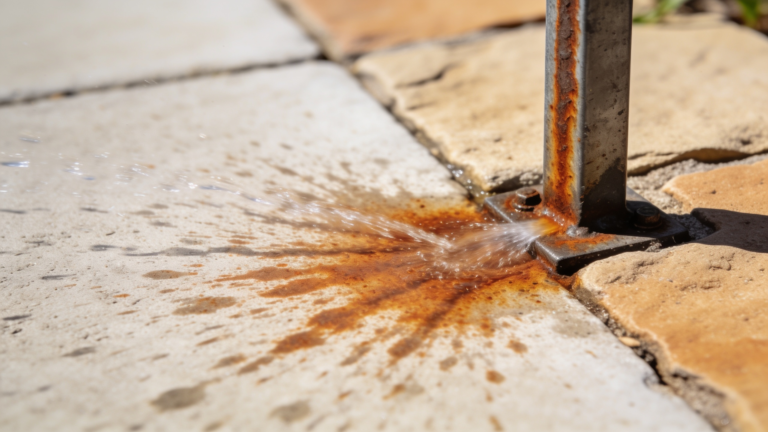
Splash-out carries saline water onto the coping. It evaporates, the salt stays behind, and it recrystallises inside the pores of the stone. That crystal growth exerts real pressure — enough, over years, to break down the surface from within. On sandstone coping it shows as fretting or a powdery surface that brushes away. On limestone and travertine it shows as pitting.
You cannot pressure-wash this away, because the problem is subsurface. Blasting a fretting surface removes the failing layer and exposes fresh stone to do the same thing faster.
The realistic management is regular rinsing with fresh water — genuinely the single most effective thing an owner can do — plus an appropriate impregnating sealer, and accepting that coping in constant splash contact is a wear item.
Sunscreen is the stain nobody expects
Modern sunscreens contain oils, silicones and mineral filters, principally zinc and titanium dioxide. They transfer onto stone from wet feet, towels and loungers, and they are stubborn.
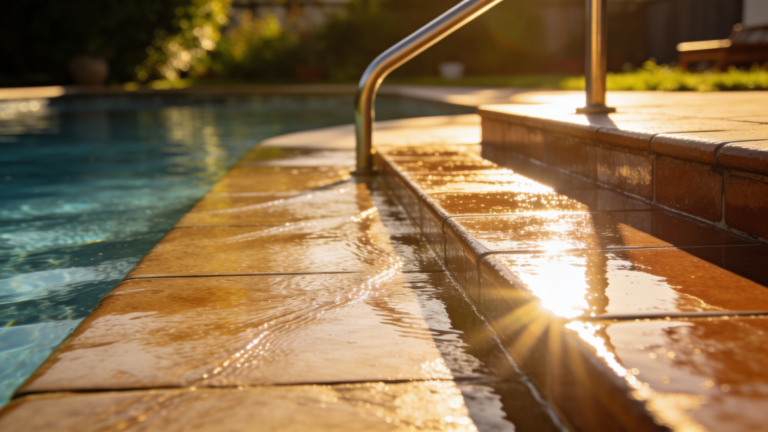
On a light travertine or limestone surround the result is a grey-yellow shadow in the high-traffic band around the pool edge and the steps. It is not dirt sitting on the surface, so ordinary washing barely touches it. Oil-based staining has to be lifted out of the stone rather than scrubbed off it, usually with a poultice or a solvent-based degreaser suited to the material.
Reaching for a stronger acid at this point is the common mistake, and on calcareous stone it will etch the surface while leaving the stain more or less intact.
Southern aspects and the green problem
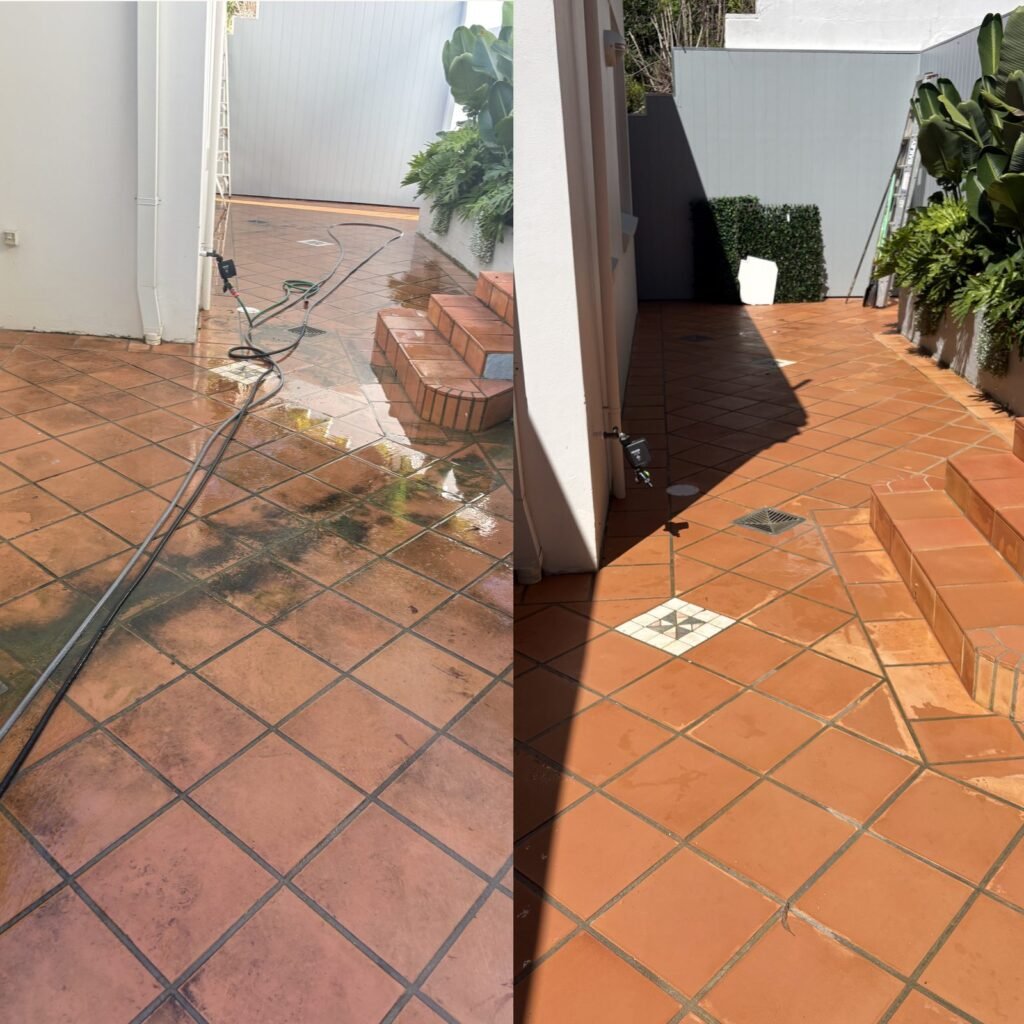
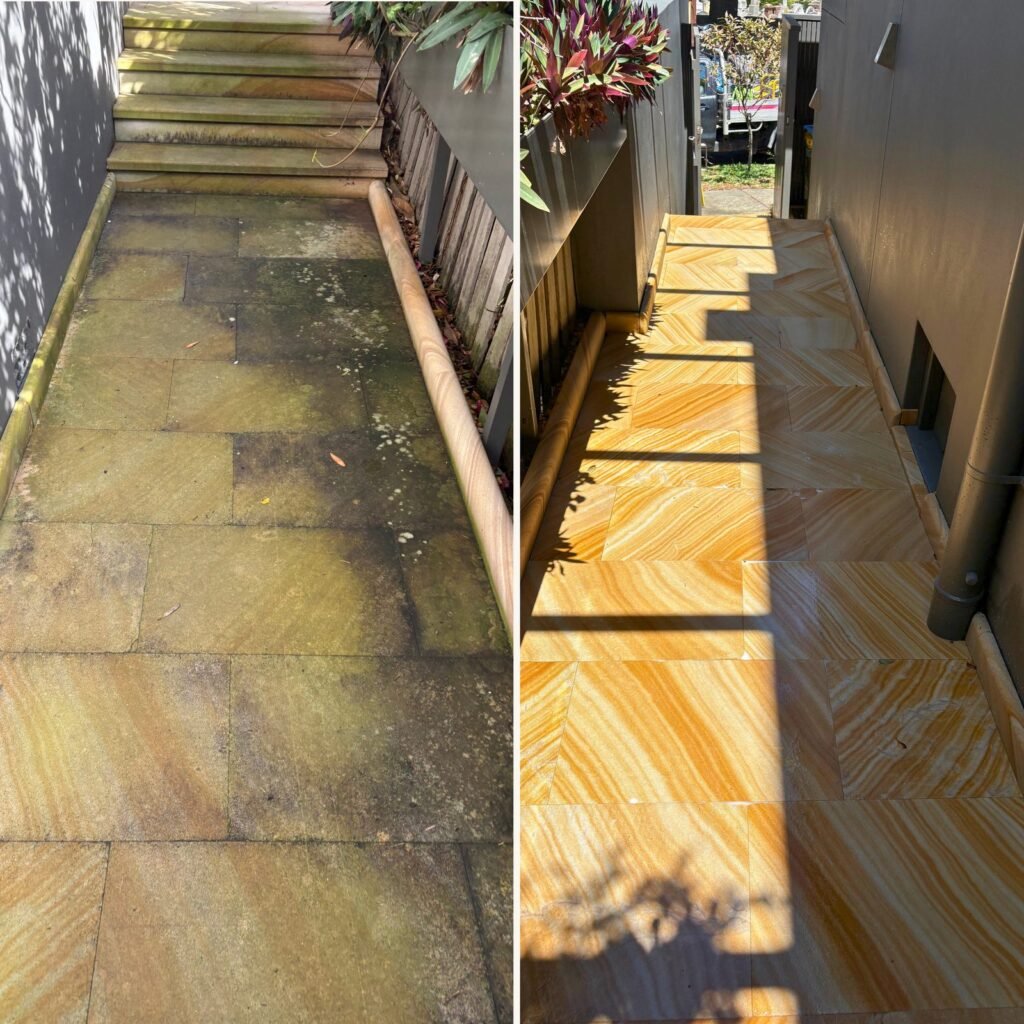
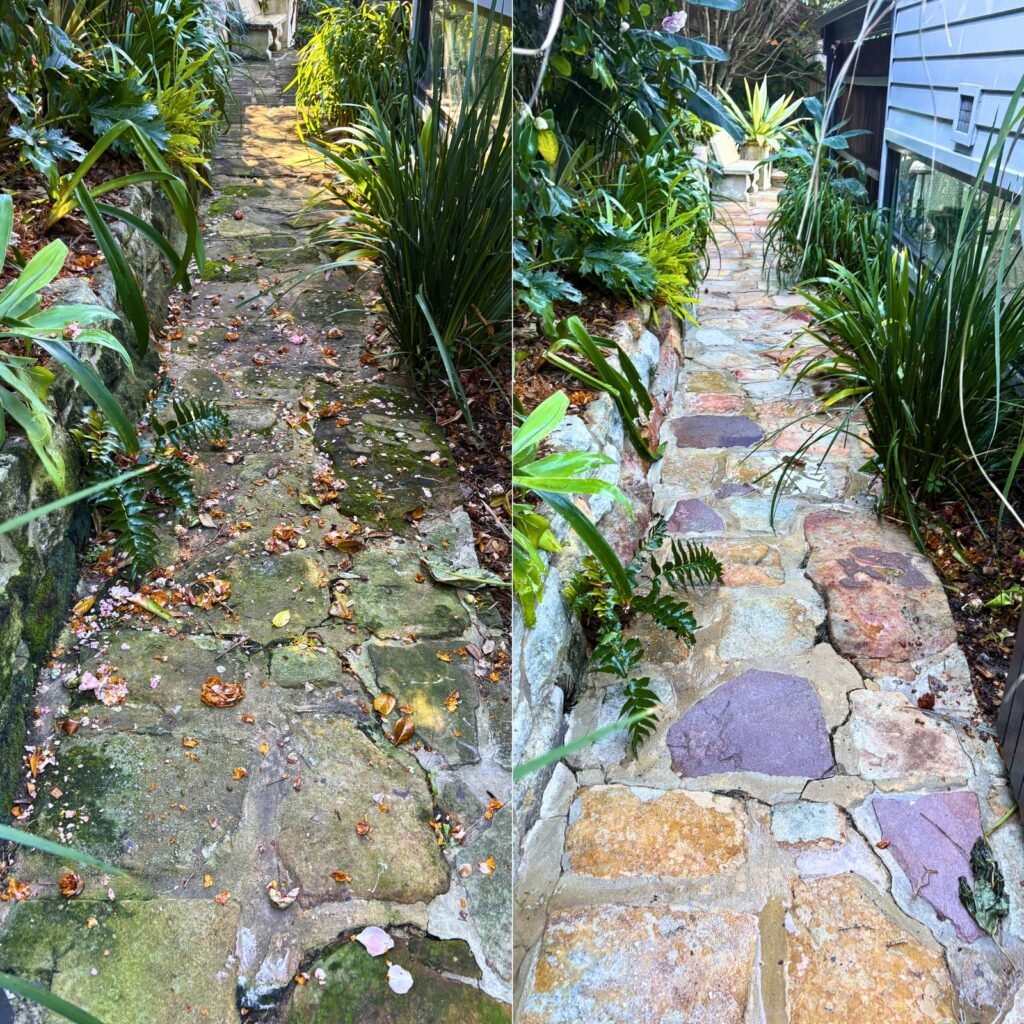
A lot of Eastern Suburbs blocks are steep, with pools tucked against a boundary or below the house. A surround that gets four hours of winter sun and stays damp will grow algae, mould and lichen regardless of how often it is swept.
Travertine holds this particularly well because its natural voids give organic growth somewhere to sit. High pressure will clear it visually and open those voids further, which means it returns sooner each time.
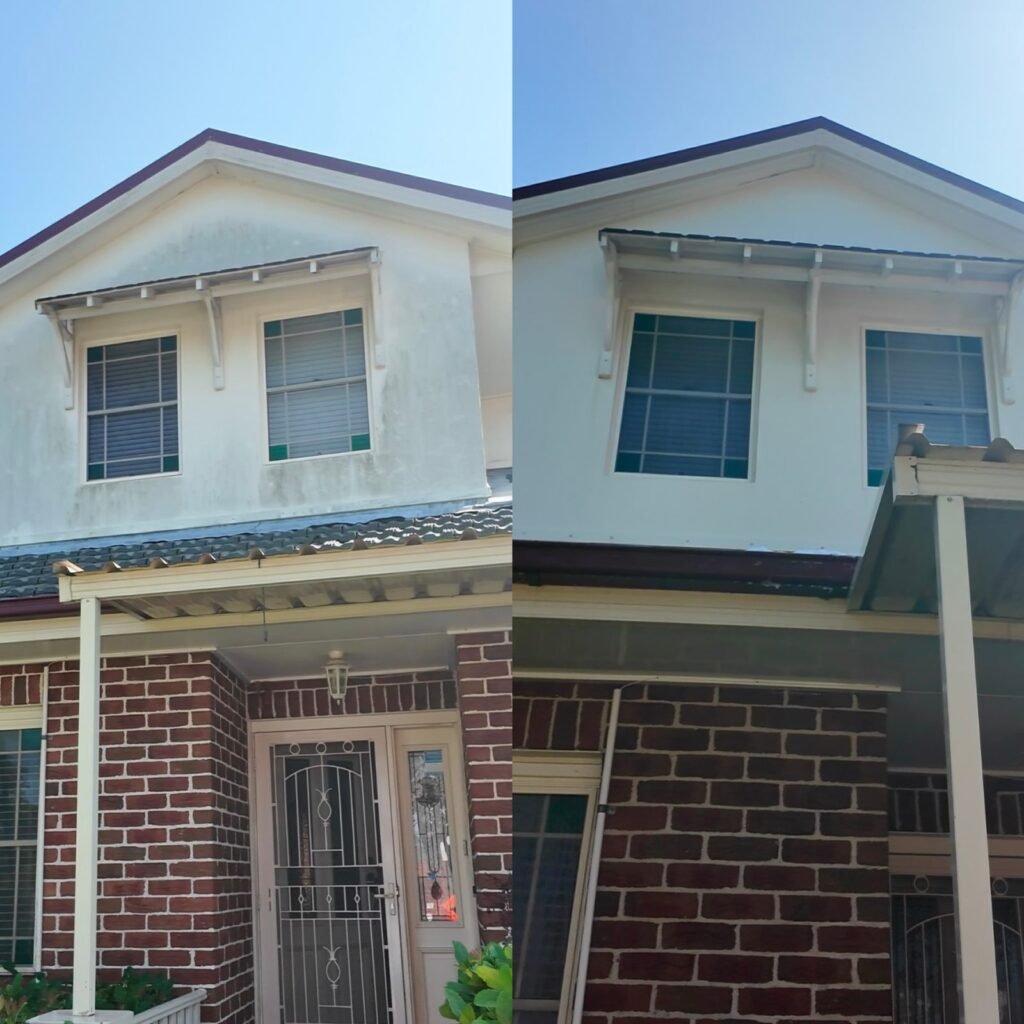
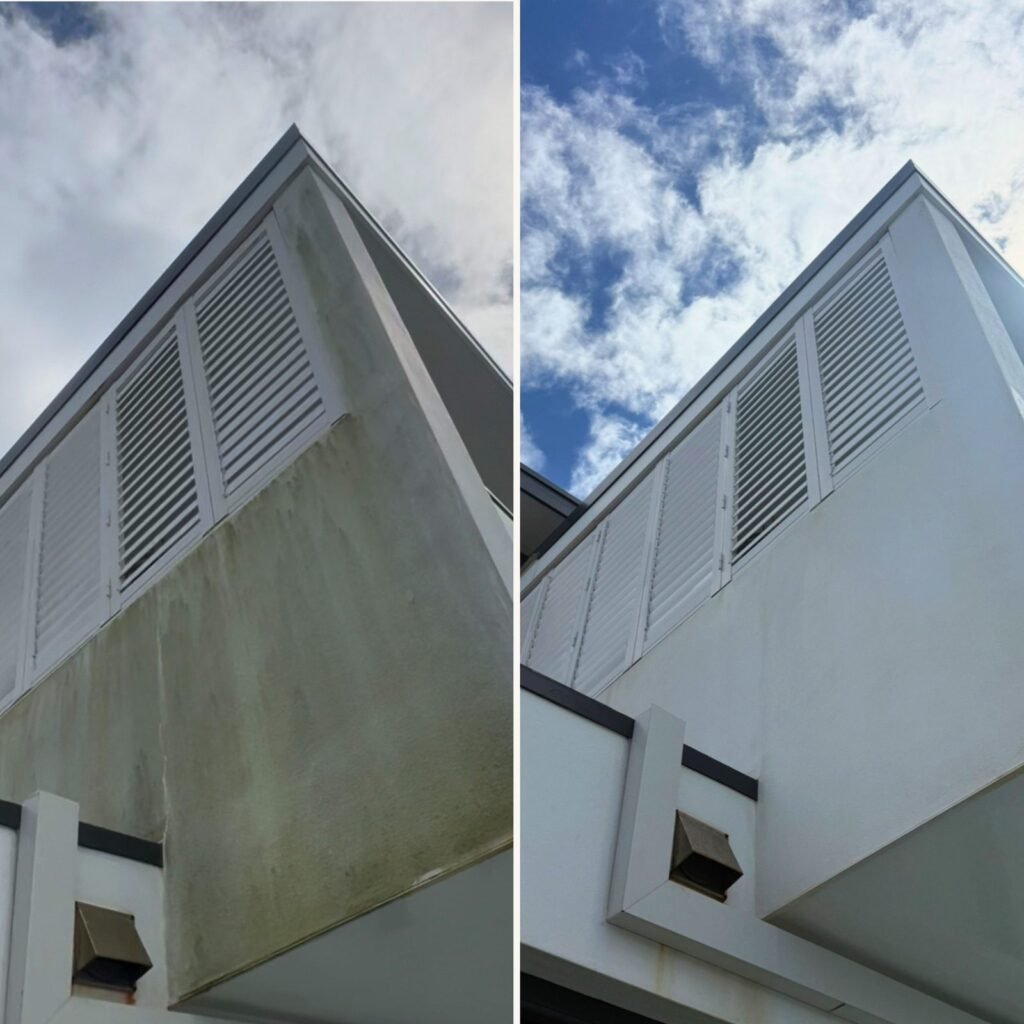
Soft washing with an appropriate treatment kills the growth at the root rather than removing the visible layer. The difference is measured in how long the surface stays clean — months versus a season or more.
Where a surround is genuinely never going to dry out, the honest answer is sometimes drainage or planting rather than cleaning.
Different stone, different rules
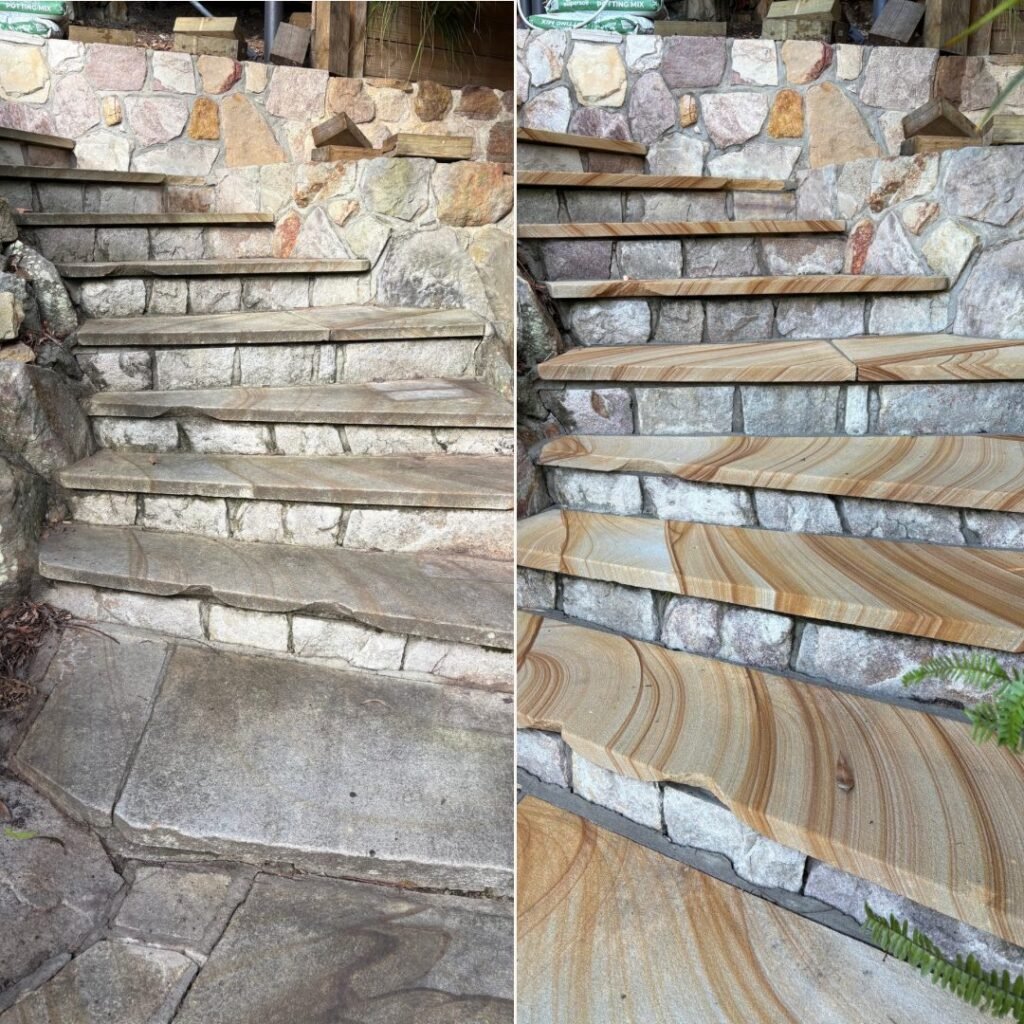
Sandstone is porous and soft. It scars under concentrated pressure and shows fretting where salt has been working on it. Low pressure, wide fan, and patience.
Travertine is calcareous and filled. Aggressive cleaning blows the fill out of the voids, and once that has happened the surface holds dirt permanently. Acids etch it.
Limestone is the softest of the common choices and the least forgiving of acidic products.
Exposed aggregate and concrete tolerate far more pressure, but the salt problem does not disappear — it shows as surface scaling instead.
Tiled surrounds usually fail at the grout rather than the tile, and grout is where the organic growth lives.
The bit that costs people money
Sealing a pool surround that still holds salt does not lock the problem out. It locks it in.
Salt already in the stone continues to crystallise under the sealer, and the result is a seal that lifts, blisters or goes cloudy in patches — plus stone that has kept deteriorating out of sight. Any worthwhile seal on a salt-exposed surround follows a proper flush and a full dry, not a quick wash on the same day.
What owners can reasonably do
- Hose the coping with fresh water after heavy use, especially on a salt system
- Deal with sunscreen marks early, before they oxidise into the stone
- Keep leaf litter off shaded sections rather than letting it sit and stain
- Check whether the seal still beads water once a year
- Treat fretting or pitting as a signal to stop cleaning harder and get the stone looked at
If your surround has gone patchy, green on one side, or chalky at the waterline, a couple of photographs are usually enough for us to tell you whether it needs cleaning, sealing, or neither. Related reading: sandstone cleaning and sealing in the Eastern Suburbs, should sandstone be sealed after cleaning, and what that white powder on your stone actually is.