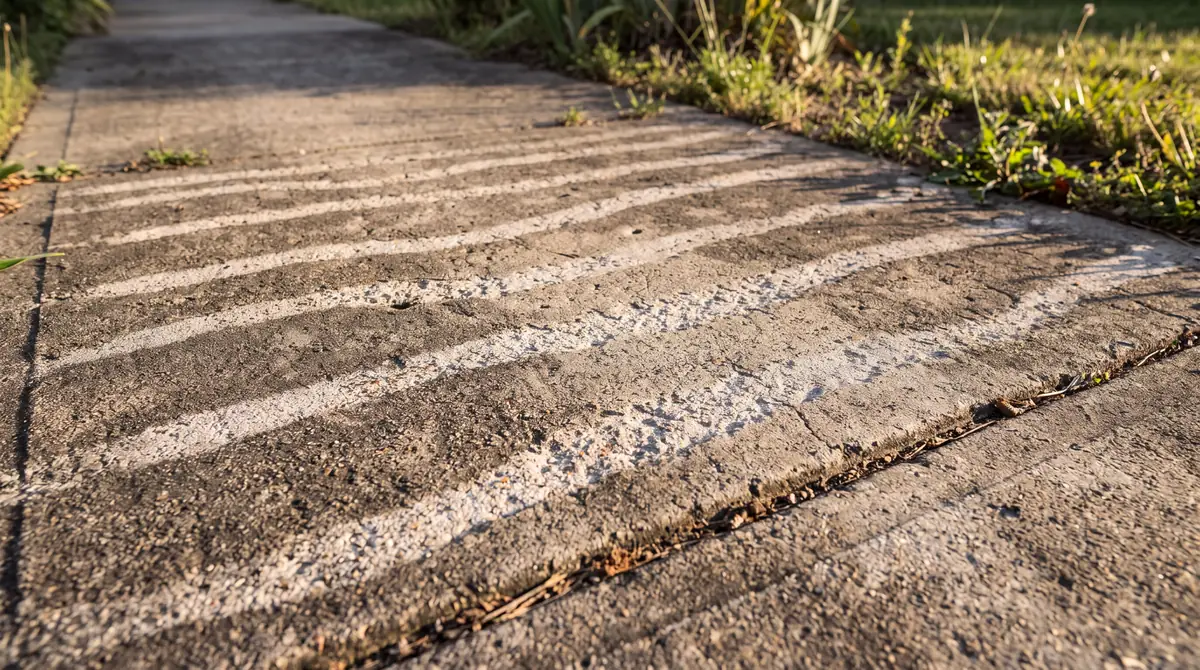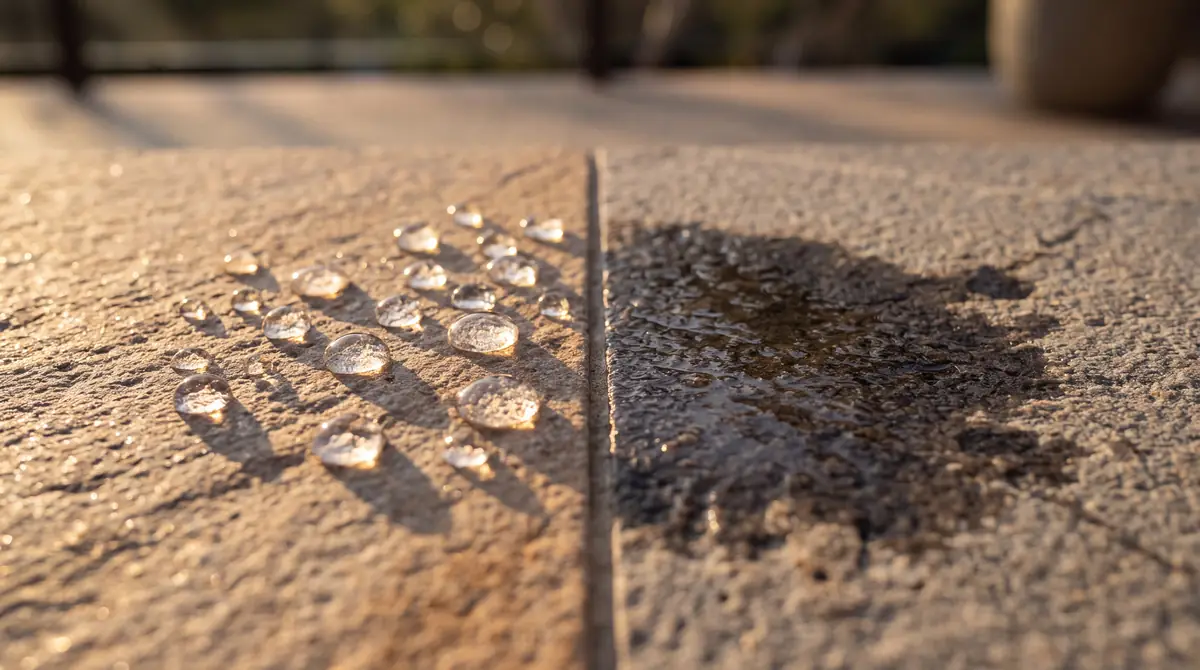
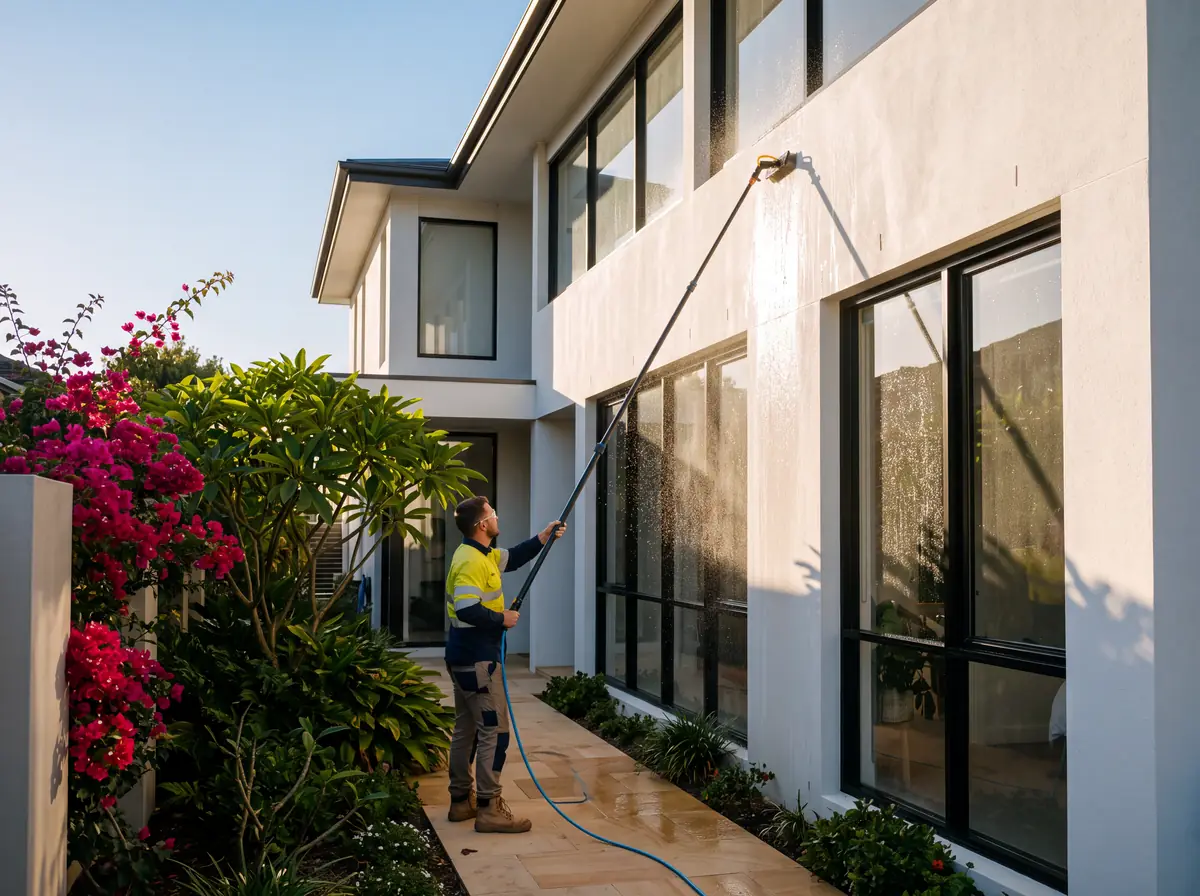
Black mould on rendered walls in coastal Sydney is a surface colony of fungi and cyanobacteria feeding on moisture, airborne dust and the salt film that settles on every building near the ocean. It takes hold on the shaded, damp elevations first and spreads across the texture of the render. It is removed with a low pressure biocide soft wash, never with a pressure washer, and it stays away longest when the moisture source is dealt with at the same time.
We clean rendered homes and apartment blocks every week from Palm Beach down through Bondi to Maroubra, and the black south wall is the single most common reason people call. This article explains what the growth is, why coastal homes get it worse, how to tell it from a leak, and exactly how we treat it.
What is the black growth on rendered walls?
It is usually a combination of three organisms. Mould and mildew fungi produce the sooty, speckled black that spreads from the top of a wall downwards. Cyanobacteria, the same organisms that blacken roof tiles, create a smoother dark film that follows the water runs below sills and gutters. Green algae often sits underneath both on the dampest sections near the ground.
All three need the same things, which are moisture that lingers for hours after dawn, a food source in the form of dust, pollen and salt, and a surface with enough texture to hold onto. Acrylic and cement render, particularly the heavier textured finishes popular on 2000s builds in Freshwater and Maroubra, offer a perfect surface.
Salt is the coastal multiplier. Sodium chloride settles on the wall from sea spray carried on the breeze, and because it attracts moisture from the air, a salt-coated wall is damp every evening even when it has not rained. We measure surface moisture on south walls in Curl Curl at 7 am and routinely see readings double those of the north wall of the same house.
Why do coastal Sydney homes get black mould worse than inland homes?
Coastal homes sit in higher humidity, carry a salt film that holds moisture, and are more often built with minimal eaves, which leaves the render fully exposed. A home in Maroubra or Collaroy will show black growth on its south wall within two to four years of painting, where the same house in Pymble might go eight years.
The construction trend matters more than people think. Modern coastal homes have parapet roofs, no eave overhang and box gutters that overflow in a southerly storm. Water sheets down the render instead of being thrown clear, and the wall never gets a chance to dry. Older brick homes with 600 mm eaves in the same streets look fine.
Irrigation and planting add to it. Hedges planted hard against a rendered wall block airflow and sun, and drip lines wet the base of the wall every night. The strip of black growth that stops exactly at hedge height is one of the most recognisable patterns we see in the Eastern Suburbs.
How do you tell surface mould from a leak or rising damp?
Surface growth sits on top of the render and follows shade and runoff patterns, while a leak shows as a defined stain that starts at a fixed point and darkens the render itself. If the black lifts off with a biocide test patch and the render beneath is uniform in colour, it is surface growth. If a tide mark, blistering, salt crystals or soft render remains, water is coming through.
The checklist we run before quoting a render clean:
- [ ] Growth is heaviest on south or south-east elevations and lightest on the north
- [ ] Pattern follows sills, gutter overflow points and the hedge line, not a single source
- [ ] Render is hard when pressed with a key and sounds solid when tapped
- [ ] No white salt bloom or bubbling paint within the black area
- [ ] No damp smell or staining on the inside face of the same wall
- [ ] Growth starts above the damp course, not from the ground up in a band
- [ ] Biocide test patch clears the colour within 15 minutes
If any of the last four fail, we recommend a builder or a leak detection specialist before we wash the wall. Cleaning a wall that is wet from behind gives you a clean wall that is black again by Easter, and we would rather tell you that upfront.
Need this done properly? Request a quote or call 0494 810 609. We service the Eastern Suburbs, Northern Beaches and North Shore.
How do we soft wash black mould off render?
We apply a sodium hypochlorite based biocide with a surfactant at low pressure, let it dwell, and rinse at under 500 psi. The chemistry kills and lifts the growth; the water simply carries it off. A two-storey rendered home of around 300 square metres of wall takes two technicians five to six hours.
- Protection (45 minutes). Every plant within 3 metres is soaked with fresh water and covered where needed. Stormwater pits are bunded and the runoff is directed to lawn or collected. Councils along the coast, including Northern Beaches Council and Waverley Council (accessed October 2026), prohibit wash water and detergents entering the stormwater system because it drains directly to the beach.
- Application (60 minutes). Biocide mixed at 2 to 3 percent sodium hypochlorite for typical growth and up to 4 percent on heavy cyanobacteria, applied from the bottom up to avoid streaking, through a soft wash pump at around 60 psi.
- Dwell (15 to 20 minutes). The wall is kept wet the whole time. In a 30 degree north-easterly we work one elevation at a time so nothing dries.
- Rinse (2 hours). Fresh water at 300 to 500 psi through a 40 degree tip from 500 mm away, top to bottom. Pressure that low is enough because the growth is already dead and loose.
- Second treatment on stubborn sections (30 minutes). Window reveals and the band below the parapet often need a second application.
- Final rinse of glass, frames and paths (30 minutes). Nothing is left to dry on the glass or the Colorbond.
Water temperature stays ambient. Hot water on acrylic render softens the coating and is not needed when the biocide is doing the work. NSW Health (accessed October 2026) publishes guidance on mould and moisture in homes that is worth reading if the problem is appearing indoors as well.
What does a render soft wash cost on the coast?
We price every job on request after measuring the surfaces, and the figure is fixed in writing before we start; call 0494 810 609 for a quote. A 12 month biocide maintenance treatment, applied without a full rinse, runs from $450 for a house.
Access drives the upper end. A rendered duplex in Bronte on a steep block with no side access needs an elevated work platform for the rear elevation, which adds around $600 a day. Blocks in Maroubra with balconies on every level are slower because every balcony soffit is a shaded, black surface.
What to do next
Photograph the worst wall at the same time each morning for three days. If it is still visibly damp two hours after sunrise, move irrigation away from it, trim anything within 600 mm of the render and check that the gutter above it is not overflowing. Those three changes cost nothing and extend any clean by a year.
Then book a house wash for a freestanding home or building washing for a strata block, and if the paths and driveway are as green as the walls add pressure cleaning for the hard surfaces only. We cover Manly to Palm Beach and the coastal strip from Bondi to Maroubra, with more on the Northern Beaches page.
Related services: House Washing, Building Washing, Pressure Cleaning. Areas: Northern Beaches, Eastern Suburbs.