A timber deck in Sydney cops a lot. Leaf litter from gums and jacarandas, salt air on the Northern Beaches, humid summers that grow black mould in the gaps, and a sun that oxidises merbau and spotted gum to silver within two seasons. Most of the damaged decks we are asked to rescue were wrecked by someone with a hired 3,000 psi machine and a turbo nozzle on a Saturday morning rather than by weather.
This is how we clean decks without doing that, and how to tell when a deck needs sanding instead.
Why does a pressure washer damage timber decking?
A pressure washer damages decking because timber is not one material. Each board is alternating bands of soft earlywood and dense latewood. A concentrated jet above roughly 1,000 psi blasts the soft bands out faster than the hard ones, leaving a fuzzy, ridged surface called furring or raised grain. Once it happens, no amount of washing fixes it.
We see three distinct failure patterns on Sydney decks.
Furring. The whole surface feels like suede. Common on treated pine and on merbau that has been hit with a zero-degree or turbo tip. The fibres hold water, grow mould faster and will not take oil evenly.
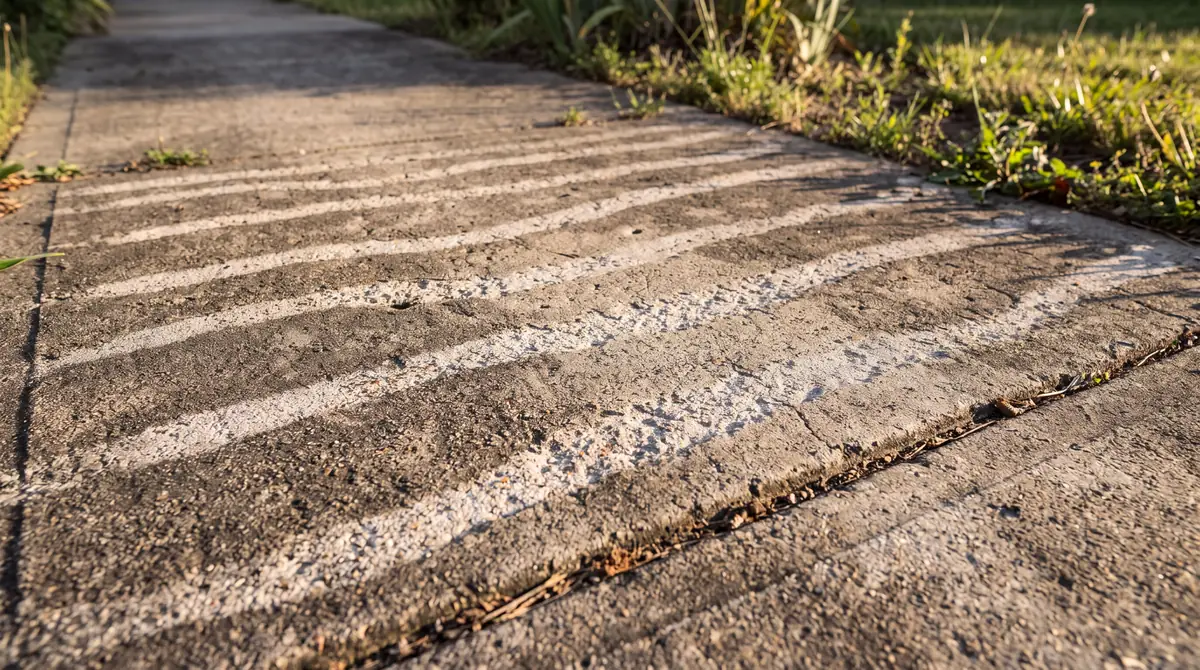
Wand stripes. Arcs and overlapping tiger stripes where the operator worked too close and the pressure varied with the swing of the arm. Visible for years and brutally obvious once oil goes on.
Gouged edges and lifted fasteners. Board ends, the arris of each board, and any area around a countersunk screw are already weaker. The jet digs in there first, opens up end grain, and starts the rot cycle.
The deck that prompted this article was a 48 square metre spotted gum deck in Wahroonga. The owner had hired a machine, used the red tip, and turned a 10-year-old deck into something that needed a full 80-grit sand before oil. The sanding cost more than a proper clean and oil would have.
What cleaning method actually works on grey, mouldy timber?
The method that works is chemistry plus dwell time plus a gentle rinse. We apply a sodium percarbonate deck cleaner, let it work for 10 to 15 minutes, agitate with a stiff deck brush along the grain, then rinse with a fan tip at low pressure. The oxygen cleaner lifts the grey oxidised fibre and kills surface mould without stripping colour from the timber.
Here is our step sequence on a typical 40 to 60 square metre deck.
| Step | What we do | Time | Notes |
|---|---|---|---|
| 1. Pre-wet | Hose the deck and surrounding plants with plain water | 5 min | Wet timber absorbs cleaner evenly; wet plants shrug off overspray |
| 2. Apply cleaner | Sodium percarbonate at 60 to 80 g per litre of warm water, pump sprayer | 10 min | Work in shade if possible so it does not dry out |
| 3. Dwell | Leave to work, keep damp | 10 to 15 min | Re-mist any patches that start drying |
| 4. Agitate | Stiff synthetic deck brush along the grain | 15 to 20 min | This is where the grey comes off, not in the rinse |
| 5. Rinse | 40-degree fan tip, 600 to 900 psi, 300 mm off the boards, along the grain | 15 min | Low pressure, high water volume |
| 6. Brighten | Oxalic acid at 50 g per litre, 5 min dwell, rinse | 15 min | Neutralises alkalinity, lifts tannin stains, returns warm colour |
| 7. Dry | Minimum two dry days in summer, three to four in winter | 48 to 96 hrs | Under 15 percent moisture before oiling |
The brightening step is the one most people skip, and it matters twice over. Percarbonate is alkaline and darkens tannin-rich hardwoods. Oxalic acid brings the pH back to neutral so the oil cures properly, and it dissolves the black iron tannate stains around nail heads. For a heavily mould-affected deck under trees in Turramurra or Pymble, we do the percarbonate step twice rather than reach for higher pressure.
Need this done properly? Request a quote or call 0494 810 609. We service the Upper North Shore, Northern Beaches, Lower North Shore and Eastern Suburbs.
Which products should you avoid on a timber deck?
Avoid household chlorine bleach, caustic soda, and any "wood stripper" you do not fully understand. Chlorine bleach at the strengths people use (often neat from the bottle) breaks down lignin, the glue that holds timber fibres together. The deck looks whiter for a week and then goes dry, fuzzy and grey faster than before.
Caustic soda strippers have a place when you are removing a failed film-forming coating, but they must be neutralised with acid afterwards and they will burn plants, hands and eyes. We use them perhaps three times a year, always with a neutralising step, never on a deck that only needs a clean.
Household detergents leave surfactant residue that stops oil penetrating. If you have already used dishwashing liquid, rinse until the water runs clear.
If the boards are Western Red Cedar or treated pine, be aware that these softwoods furr at pressures as low as 600 psi. We brush and rinse those with a garden hose only.
When does a deck need sanding instead of cleaning?
A deck needs sanding when the surface is already furred, when there is a failed film coating (varnish or a "decking paint") peeling in sheets, or when previous owners have left it so weathered that the top 1 mm is checked and splintering. Cleaning will not fix these. It will make them look worse by exposing them.
A quick test. After cleaning and drying, run your palm along the boards. If it catches fibres, it needs a sand. If it is smooth and merely pale, oil will bring it back.
Sanding a deck properly means a drum or orbital floor sander at 60 then 80 grit, then edging by hand. Expect a sand and oil to cost roughly double a clean and oil. The deck looks new, but a fraction of a millimetre of timber is gone each time, so it is a once-a-decade job.
How do you look after a deck between professional cleans?
Between cleans, sweep weekly, keep the gaps clear of leaf litter with a putty knife, and hose it down with plain water after a windy week near the coast, because salt on timber draws moisture and speeds up greying. Move pot plants every few months to avoid permanent wet rings.
Keep oil on it. Oil, not a film coating, is the right finish for exterior decking in Sydney because it wears away rather than peeling. A penetrating decking oil at 12 to 18 month intervals is the single biggest factor in how long a deck lasts. WoodSolutions, the Forest and Wood Products Australia resource, has good plain-language guidance on exterior timber finishes at woodsolutions.com.au (accessed October 2026).
If your deck sits over soil with poor airflow underneath, it will rot from below no matter how good the top looks.
A note on runoff. Dirty rinse water should stay out of the stormwater drain, which in most Sydney councils runs straight to a creek or the harbour. We direct it onto lawn or garden beds and keep percarbonate away from fish ponds. Sydney Water's outdoor water guidance is at sydneywater.com.au (accessed October 2026), and councils such as Ku-ring-gai and Northern Beaches publish stormwater pollution rules (accessed October 2026).
What to do next
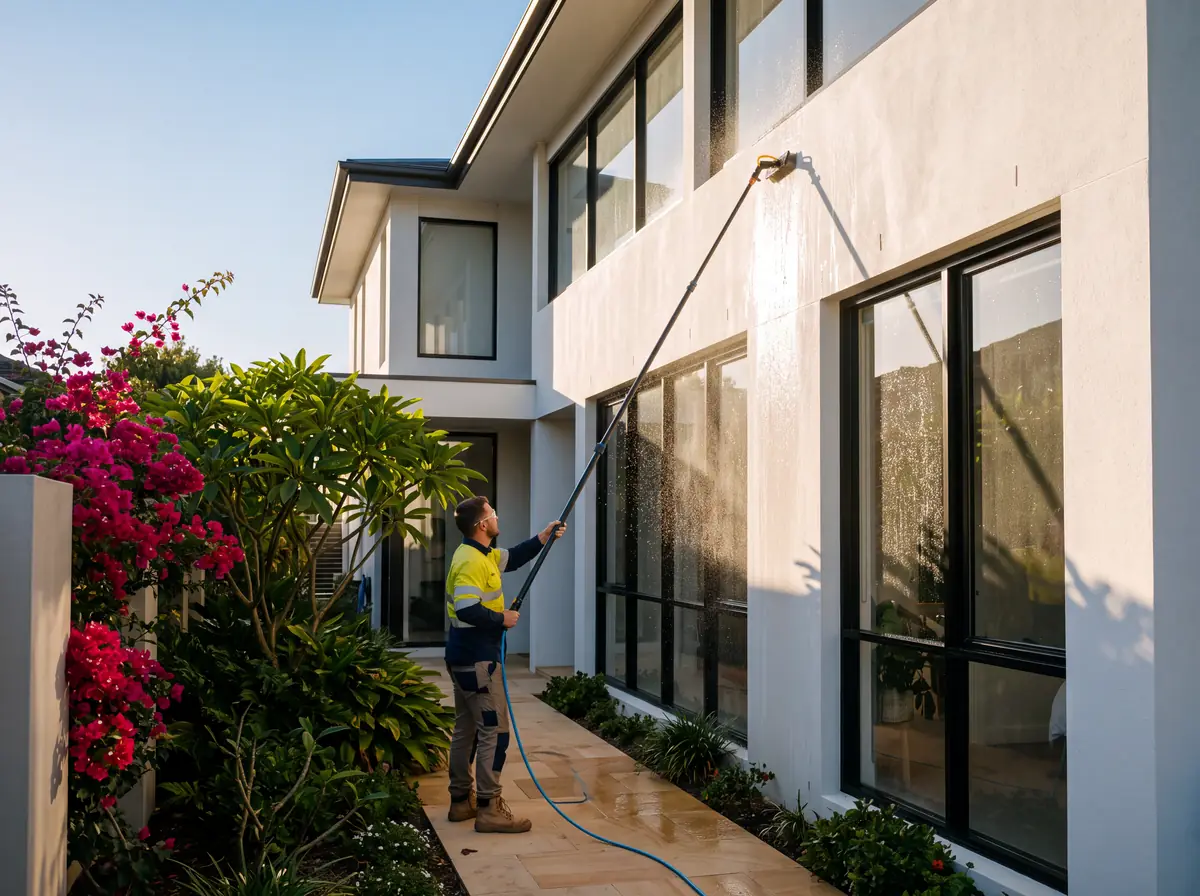
If your deck is grey, slippery or growing black in the gaps, it almost certainly needs a chemical clean rather than more pressure. Have a look at our deck and patio cleaning page for what a full clean and oil involves, or if the whole house exterior needs attention at the same time, house washing can be combined on the same visit. For driveways and paths that genuinely do suit higher pressure, see pressure cleaning.
We do most of our deck work across the Upper North Shore, where tree cover makes mould the main enemy, and the Northern Beaches, where salt is. Send us a few photos and the approximate size and we will come back with a fixed price.
Related services: Deck & Patio Cleaning, House Washing, Pressure Cleaning. Areas: Upper North Shore, Northern Beaches.