Wash water from a basement car park is trade waste, and it must go either to the sewer under a Sydney Water trade waste consent or off site through a licensed liquid waste contractor. It must never reach the stormwater system, and the owners corporation shares responsibility with the contractor if it does. The reliable way to meet that obligation is a cleaning method that recovers the water as it is used.
I manage the strata and commercial program for our team and spend a good part of each week on car parks across the Eastern Suburbs, Rhodes and the Parramatta River corridor. This article sets out what the rules are, what to ask a contractor before they start, how water recovery works, and what a compliant clean costs.
Why is car park wash water classed as trade waste?
Because of what is in it. A basement car park floor accumulates engine oil, hydraulic fluid, fuel, tyre rubber, brake dust containing copper and zinc, road grime and, in Sydney's older buildings, silt from groundwater seepage. Add a degreaser and a pressure washer and that mixture becomes a liquid that is a long way from clean rainwater.
Sydney Water (accessed October 2026) defines trade wastewater as any liquid waste from a business or commercial activity, which includes cleaning of common property, and requires consent before it enters the sewer. The NSW Environment Protection Authority (accessed October 2026) administers the Protection of the Environment Operations Act 1997 (accessed October 2026), under which allowing polluted water to enter a stormwater drain is an offence with substantial penalties for both corporations and individuals.
In many Eastern Suburbs buildings from the 1970s and 1980s the basement floor waste is not a sewer connection at all. It runs to the street drain and then to the Cooks River or the Parramatta River, and the only way to know is to check the hydraulic drawings or have the drain traced with dye.
What should a strata manager check before booking a car park clean?
Ask where the water is going before you ask what it costs. A contractor who cannot answer that question in one sentence is planning to let it run to the nearest drain. The checklist we send to committees before every car park program:
- [ ] Confirm whether the car park floor wastes connect to sewer or stormwater (hydraulic plan, building manager or dye test)
- [ ] Locate any trade waste consent held for the building and note the conditions on it, including the arrestor service interval
- [ ] Confirm the contractor's method is water recovery, or sewer discharge under the building's consent, in writing
- [ ] Obtain the contractor's public liability certificate at $20 million and their liquid waste disposal docket from a previous job
- [ ] Agree who pays for the arrestor or sump pump-out, and whether the contractor's price includes it
- [ ] Agree on a resident notification period, usually seven days, and a plan for vehicles that are not moved
- [ ] Confirm the degreaser is biodegradable and ask for the safety data sheet
- [ ] Record the start and finish photographs and the waste docket in the strata records
This documentation matters for more than compliance. Under the Strata Schemes Management Act, administered by NSW Fair Trading (accessed October 2026), the owners corporation must maintain common property, and the car park is both a maintenance item and a slip hazard. The records are what you produce if an owner slips on an oil patch or a council officer asks where last year's wash water went.
How does water recovery car park cleaning work?
A water recovery system cleans and vacuums in the same pass. The surface cleaner, which is a rotating head inside a shroud, runs at around 3,000 psi with hot water at 80 degrees, and a vacuum ring on the shroud draws the water and loosened grime straight back to the truck. Nothing reaches a drain.
A typical 60-bay residential basement in Bondi Junction or Meadowbank takes a crew of three around seven hours. The sequence:
- Notification and vehicle management (day minus seven). Signage goes up and the strata manager emails residents. We clean around any car not moved and note the bay number for the report.
- Pre-sweep and drain protection (60 minutes). Loose debris is swept and bagged, every floor waste is sealed with a drain cover, and the arrestor is inspected.
- Degreasing (90 minutes). Oil spots are pre-treated with a biodegradable alkaline degreaser and left for 15 to 20 minutes. Heavy drips under long-term parked vehicles may need a second application.
- Hot water recovery clean (4 hours). The surface cleaner works in overlapping passes at 80 degrees, with the vacuum running. Ramps, wheel stops and column bases are done with a hand lance and a wet vacuum.
- Line marking and signage wipe-down (30 minutes). Numbers and arrows are cleaned with a soft brush so they are not lifted.
- Disposal and reporting (same day). Recovered water is taken to a licensed liquid waste facility and the docket is attached to the completion report with before and after photos of each level.
Where a building has a valid trade waste consent and a serviced arrestor, we can discharge to sewer instead, which is cheaper. We still cover any stormwater grate and we still pump the arrestor afterwards.
Need this done properly? Request a quote or call 0494 810 609. We service the Eastern Suburbs, Ryde and Parramatta River, and the Lower North Shore.
What does a compliant car park clean cost?
We price every job on request after measuring the surfaces, and the figure is fixed in writing before we start; call 0494 810 609 for a quote. 50 and $5.50 depending on oil loading. Discharge to sewer under an existing consent brings the price down by roughly 15 percent.
Indicative breakdown for a single-level 60 bay basement in the Eastern Suburbs, water recovery method:
| Item | Typical cost |
|---|---|
| Crew of three, hot water recovery unit, seven hours | $1,900 |
| Biodegradable degreaser and consumables | $150 |
| Liquid waste transport and disposal, around 2,000 litres | $350 |
| Arrestor or sump pump-out | $400 to $650 |
| Completion report with photographs and waste dockets | Included |
A quote of $900 for the same car park is a quote for flooding the floor and letting it find the nearest drain. The saving is real right up until the first fine or the first slip claim, and the committee should understand the difference before approving it.
What mistakes do we see in strata car parks every month?
The first is the pit that nobody has pumped in five years. The clean goes well, the arrestor is already full of silt, and the first storm backs oily water up the floor waste into the lift pit.
The second is residents told to move cars on a Saturday morning and told nothing else. Thirty percent do not move, and the committee ends up paying for a second visit. A seven day notice with a bay-by-bay plan gets that figure under 10 percent.
The third is cleaning line marking with a turbo nozzle. The paint lifts, the bays are illegible and the owners corporation has a line marking invoice on top of the cleaning one.
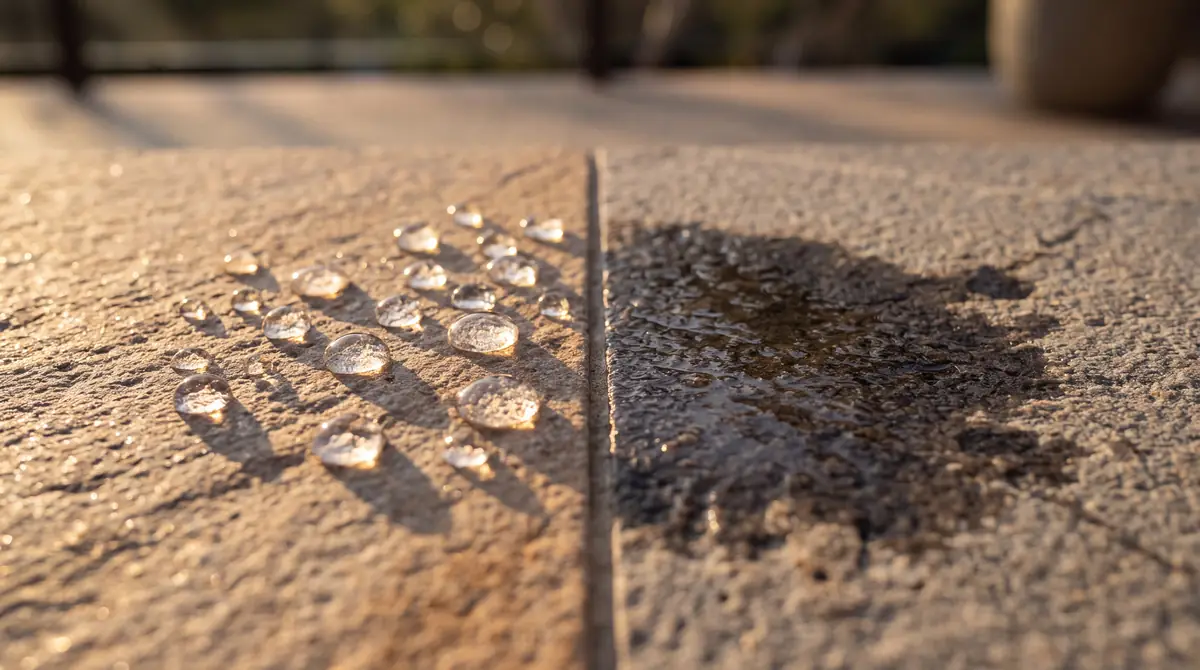
The fourth is treating a sealed car park like an unsealed one. Concrete that has been sealed cleans at lower pressure and lower temperature, and the sealer lasts years longer if the cleaner knows it is there.
What to do next
Find the hydraulic plan for the basement and confirm where the floor wastes go. Then pull the most recent arrestor service record from the strata files. Those two documents decide which cleaning method is available to you and what the quote should include.
Book a car park clean with water recovery as part of a broader strata cleaning program, and if the slab has never been protected ask about concrete sealing to make the next clean faster. We manage car park programs from Ashfield to Rhodes, with more detail on the Eastern Suburbs page.
Related services: Car Park Cleaning, Strata Exterior Cleaning, Concrete Sealing. Areas: Eastern Suburbs.