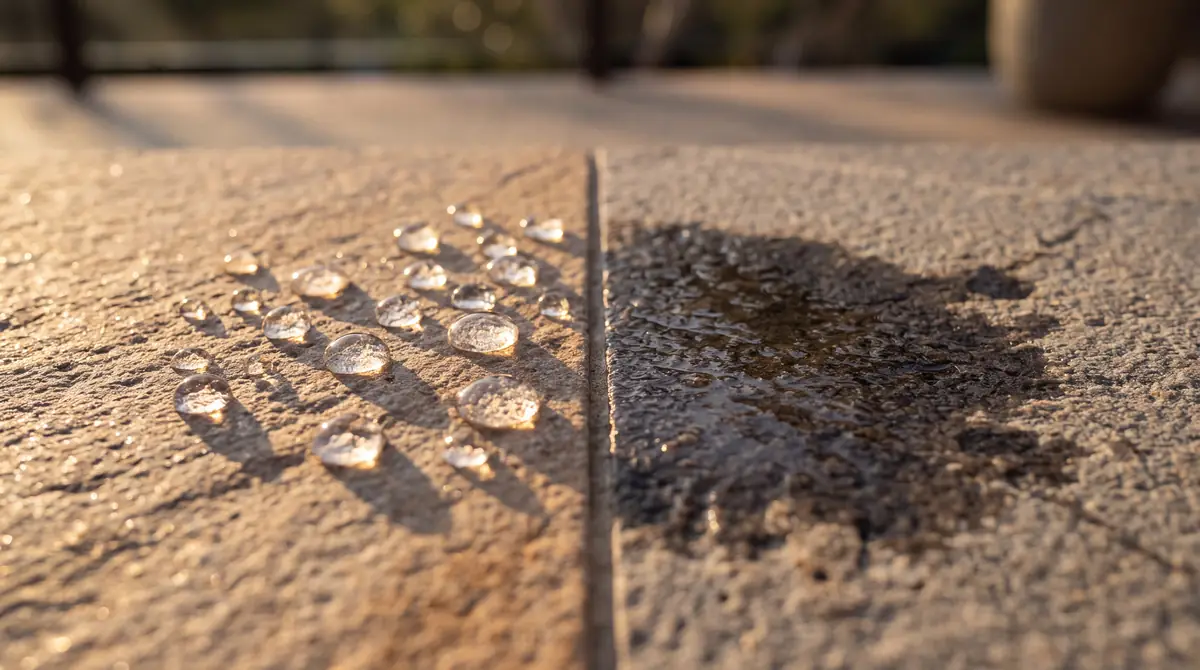
Graffiti removal looks simple from the footpath. Someone turns up with a pressure washer and a bottle of solvent, the tag disappears, and the building manager ticks it off. Then the wall dries and there is a pale rectangle where the tag used to be, or a grey shadow of the letters that never quite goes away. That is ghosting.
I run our strata and commercial programs, and repeat graffiti on the same three or four walls is the most common recurring item on the schedules I look after in the Eastern Suburbs and Eastern Suburbs. This is how we take it off without leaving a mark.
Why does graffiti removal leave ghosting?
Ghosting happens for two reasons. Either the paint has penetrated a porous surface and the removal left pigment in the pores, or the removal was aggressive enough to strip years of grime and the top layer of the substrate along with the paint, so the cleaned patch no longer matches the wall.
The shadow is worst on sandstone, unsealed render and soft brick, especially once the tag has baked in for weeks. The clean patch happens whenever someone pressure washes one square metre of a wall that has not been washed in 10 years. On a tired rendered wall in Bondi Junction or Newtown, the clean patch is often more visible than the tag was.
A third cause is chemical. Strong solvents can soften acrylic render paint and smear the graffiti pigment into it, and caustic strippers on brick leave efflorescence weeks later.
Avoiding all three means matching the method to the wall and feathering the result into the surrounding surface.
How do you remove graffiti from each surface?
The method depends on whether the surface is painted or bare, how porous it is, and how long the graffiti has been there. We test a small patch every time, because the paint used by the tagger changes.
| Substrate | Fresh graffiti (under 1 week) | Aged graffiti (weeks to months) | Pressure | Ghosting risk and how we manage it |
|---|---|---|---|---|
| Painted acrylic render | Citrus or glycol-ether based gel remover, 5 to 10 min dwell, soft brush, warm water rinse | Same remover, longer dwell, two passes; repaint if pigment has bonded to the paint film | Under 500 psi | Moderate. Clean the whole wall panel to the nearest corner or expansion joint, or repaint the panel |
| Bare cement render | Alkaline gel remover, 10 to 15 min, agitate, rinse | Poultice overnight, then low-pressure hot water | 800 to 1,200 psi hot water | High. Shadow likely; whole-panel clean and anti-graffiti coating recommended |
| Face brick, hard-fired | Solvent gel, 10 min, nylon brush, hot water rinse | Hot water at 80 to 90 degrees with gel, two to three passes | 1,000 to 1,500 psi hot | Low on hard brick. Keep pressure off mortar joints |
| Soft or heritage brick | Poultice only, 12 to 24 hr, gentle rinse | Repeat poultice; accept residual shadow over face loss | Under 600 psi | High. Face loss from pressure is permanent, shadow fades with weathering |
| Sandstone | Paper-pulp or clay poultice with solvent, 12 to 24 hr, rinse with low pressure and plenty of water | Repeat poultice up to three times; micro-abrasive only as a last resort by a stone specialist | Under 500 psi | Very high. Heritage items need approval; never blast |
| Colorbond or metal | Citrus remover on a cloth, rinse immediately | Same; test for coating softening first | Hose only | Low, but solvents left on dull the finish |
Hot water is the quiet hero on brick and render. A unit running at 80 to 90 degrees Celsius with moderate pressure lifts graffiti that cold water at twice the pressure leaves behind, with far less damage to the surface.
Poultices are the hero on sandstone. The paste holds the solvent against the stone long enough to soften the paint, then absorbs it as it dries, drawing it out of the pores rather than pushing it deeper. On a sandstone boundary wall in Paddington last winter, three overnight poultice applications removed a month-old tag with no visible shadow in raking light.
Need this done properly? Request a quote or call 0494 810 609. We service the Eastern Suburbs, Eastern Suburbs, Lower North Shore and Ryde to Parramatta River.
What should a strata committee do when graffiti appears?
The committee should photograph it, report it, and get it removed within 72 hours. Fresh paint lifts with gentler methods, and walls that are cleaned quickly get tagged less, because a wall that is clean again within two days is a poor investment of a tagger's time.
Our standard advice to schemes.
- Photograph the graffiti with something for scale. Insurance and council programs both ask.
- Report it to the police online portal if it is offensive or part of a pattern.
- Check whether the council will remove it. Woollahra, Waverley and Randwick councils run removal programs for walls visible from public land; Randwick's is at randwick.nsw.gov.au (accessed October 2026). Council crews use general-purpose methods, so for heritage sandstone or a freshly painted facade a specialist is the better choice.
- If the wall is heritage-listed or in a conservation area, check approval requirements before using anything stronger than water. Heritage NSW maintenance guidance is at environment.nsw.gov.au/topics/heritage (accessed October 2026).
- Book removal with a brief that says the whole panel is to be blended rather than the tag alone.
- If the wall has been hit twice in a year, budget for an anti-graffiti coating.
NSW Fair Trading sets out the owners corporation's duty to maintain common property, including external walls, at fairtrading.nsw.gov.au (accessed October 2026). Graffiti sits squarely within it.
How do anti-graffiti coatings change the picture?
Anti-graffiti coatings stop paint entering the pores of the wall, which removes the main cause of shadow ghosting. Sacrificial coatings are a clear wax-like layer washed off with the graffiti using hot water, then reapplied. Permanent coatings are a cured clear layer cleaned with a mild solvent, typically lasting five to ten years.
For strata schemes we usually recommend a sacrificial coating on rendered and brick walls facing a lane or railway corridor, because it is cheaper, breathable and invisible. Permanent coatings suit smooth painted render on a main street frontage where the building manager wants a two-minute wipe-off.
We price every job on request after measuring the surfaces, and the figure is fixed in writing before we start; call 0494 810 609 for a quote.
Sandstone is the exception. Most anti-graffiti coatings reduce breathability and can cause spalling as moisture is trapped behind them. On heritage sandstone we prefer a breathable water-repellent impregnator chosen with a stone specialist, and accept that removal will still need a poultice.
What mistakes do we see every week?
The one we see most is a general contractor using the same cold-water pressure washer and one proprietary remover on every wall in the building. Painted render gets stripped to the bare coat, soft brick loses its face, and sandstone gets a permanent shadow surrounded by a pressure-cleaned halo.
Others from recent months.
- Painting over graffiti on bare render with a mismatched colour, which makes the next removal harder.
- Treating only the letters and leaving a tag-shaped clean zone on a dirty wall.
- Caustic paint stripper on brick, with efflorescence blooming a fortnight later.
- Letting solvent runoff enter the street gutter, which is a stormwater offence in every Sydney council area.
- Ignoring etched glass graffiti until it is on 10 panels instead of one. A film protects the rest.
What to do next
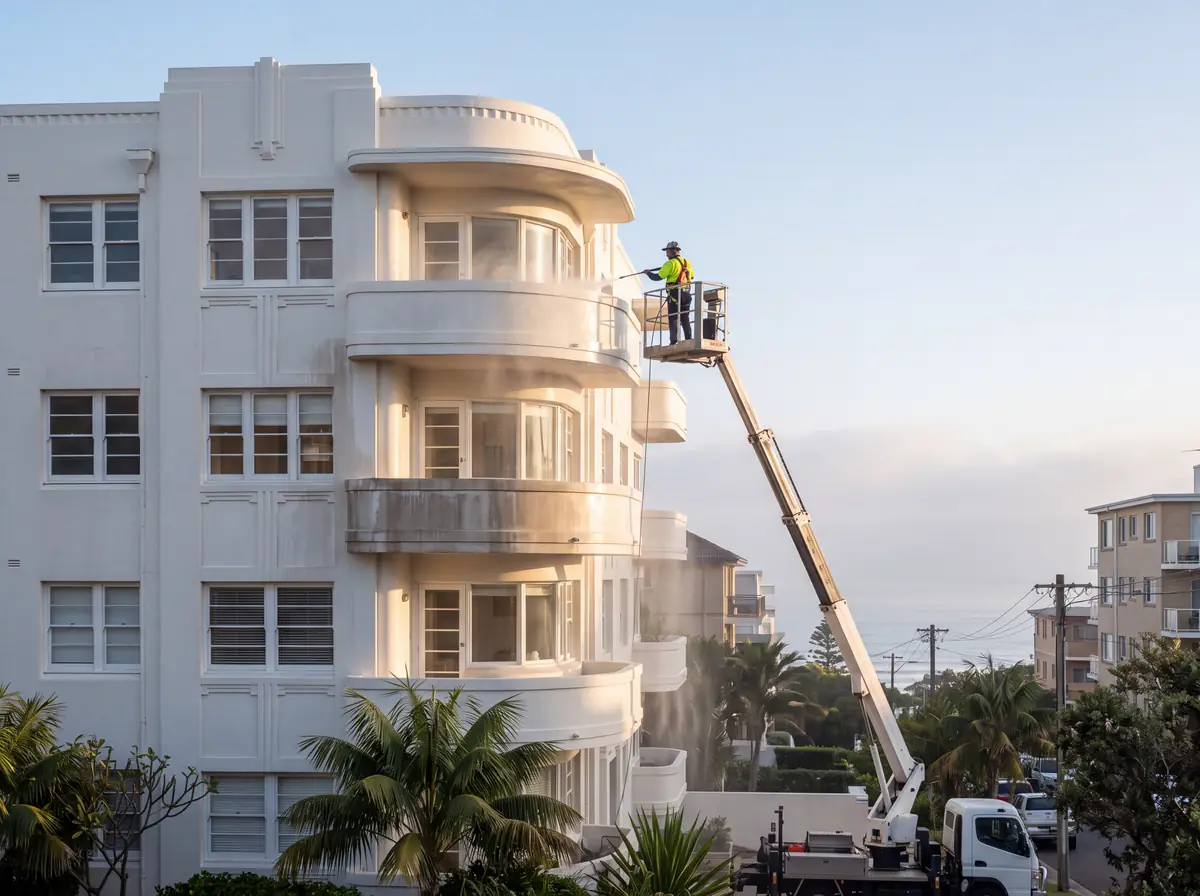
If your building has a wall that keeps getting hit, or a tag someone has already tried and failed to remove, see our graffiti removal page for the substrate methods above, our strata cleaning page for how removal fits into a scheduled program, and building washing for whole-facade work that blends a repeat-target wall back into the building.
We look after schemes across the Eastern Suburbs and Lower North Shore. Send a photo and the address and we will tell you whether the wall needs a clean, a blend or a coating.
Related services: Graffiti Removal, Strata Exterior Cleaning, Building Washing. Areas: Eastern Suburbs.