
Exterior cleaning in a heritage conservation area is allowed without approval when it is genuine maintenance, meaning the method removes dirt and growth without removing or altering original fabric. Soft washing render, washing glass and rinsing paintwork fit that definition. Sandblasting, high pressure washing of sandstone or face brick, chemical paint stripping and anything involving the mortar joints do not, and in Woollahra, Hunters Hill and the City of Sydney those should go past the heritage officer first.
Before I moved into cleaning and sealing I worked as a stonemason, and a good part of that time was spent repairing damage that cleaners had done to Victorian terraces and Federation villas. This article sets out what the three councils expect, which methods are safe on each old surface, and how we approach a heritage job from the first site visit.
What counts as maintenance in a heritage conservation area?
Maintenance is work that keeps a building in good condition without changing its appearance or material. The exempt development provisions in the State Environmental Planning Policy for exempt and complying development, published through the NSW Department of Planning (accessed October 2026), treat minor maintenance as not requiring consent, but the exemptions narrow sharply for heritage items and in conservation areas.
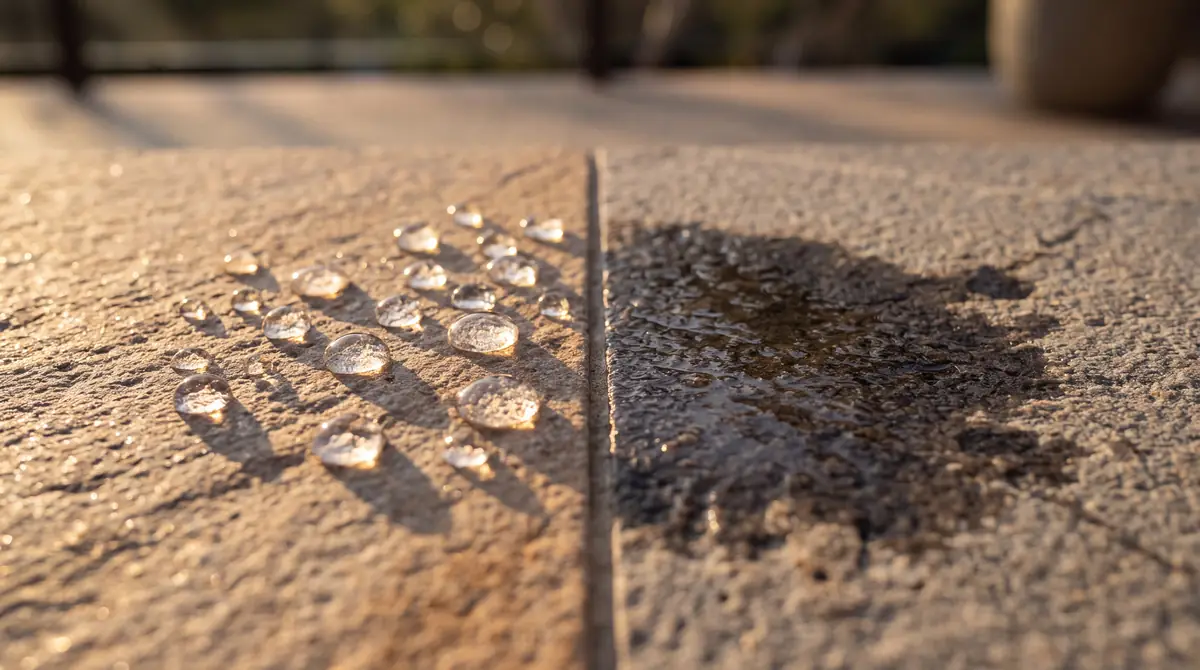
The practical test we apply is whether the surface will be measurably different afterwards, beyond being clean. Washing lime-rendered walls with a soft wash at 300 psi leaves the render intact. Blasting the same wall at 3,000 psi removes the lime wash and opens the render, which is an alteration. Removing paint from face brick, even with a chemical stripper, changes the fabric and the streetscape and is firmly in development application territory.
Heritage NSW (accessed October 2026) publishes maintenance guidance that follows the Burra Charter principle of doing as much as necessary and as little as possible. Woollahra Council's heritage pages at woollahra.nsw.gov.au and the Hunters Hill Council site at huntershill.nsw.gov.au (accessed October 2026) both encourage owners to speak with the heritage advisor before works, and the advisory service is free. Paddington sits within the City of Sydney, whose heritage pages live at cityofsydney.nsw.gov.au (accessed October 2026).
Which cleaning methods are safe on each heritage surface?
Every surface on an old building has a different tolerance, and the methods that are fine on a 1990s rendered house will strip a Hunters Hill sandstone cottage in an afternoon. This is the decision table we work from.
| Surface | Safe method | Never | Check with council if |
|---|---|---|---|
| Sydney sandstone (Hunters Hill, Woollahra, Paddington) | Water mist, soft nylon brush, clay poultice for staining, maximum 500 psi fan rinse | Pressure washing, acid, wire brush, sandblasting, sealers that form a film | Any consolidant or biocide program, or the stone is an individually listed item |
| Face brick, Victorian and Federation | Dry brush, low pressure rinse under 600 psi, no detergent needed | Pressure washing (removes the fired skin), acid wash, paint removal | Removing paint, repointing, efflorescence treatment with chemicals |
| Lime render and lime wash (Paddington terraces) | Soft wash at 200 to 300 psi, pH neutral detergent, biocide at 1 percent for mould | High pressure, strong alkaline strippers | Repair or recoating of render |
| Painted timber (fretwork, verandahs, window frames) | Hand wash with sponge and mild detergent, rinse with hose | Pressure washing (drives water into joints) | Repainting in a different colour |
| Cast iron lace | Soft brush, hand wash, immediate dry | Pressure washing, abrasives | Any repair or removal for restoration |
| Slate roofing | Leave alone unless moss is lifting slates; then hand removal | Walking on slates, pressure washing | Any slate replacement |
| Marble and encaustic tile verandahs | pH neutral cleaner, soft pad, rinse | Acid, bleach, high pressure | Regrouting or relaying |
Dark patina on sandstone deserves a note. Owners often ask us to bring the stone back to the colour of a freshly cut block. We decline, because the weathered skin is the stone's protection, and the uniform honey colour lasts about three years before the fresh face starts shedding sand onto the garden path.
How do we clean a heritage home in Woollahra or Hunters Hill?
We start with a survey, not a pressure washer. A typical Paddington terrace takes half a day to assess and two days to clean; a large sandstone villa in Hunters Hill can take a week. The sequence is the same for both.
- Documentation (day one, 2 hours). Every elevation is photographed and the surfaces are mapped. We note previous repairs, cracks, loose render, soft stone and areas of lead paint, which we test with a swab kit on any paintwork that may predate 1970.
- Test patches (day one, 2 hours). Each cleaning method is trialled on a 300 mm square in an inconspicuous spot and left for 24 hours before we assess it. On sandstone we trial water misting alone first; on render we trial the lowest pressure that lifts the soiling.
- Containment (day two, 1 hour). Garden beds are covered, stormwater pits are bunded and runoff is captured. Lead paint residue and biocide are not permitted to enter the drainage system under council stormwater rules.
- Cleaning (day two onwards). Render and paintwork are soft washed with a 10 to 15 minute dwell and rinsed at 200 to 500 psi. Sandstone is misted for 20 to 40 minutes to soften soiling, brushed, and rinsed. Stains such as rust from old fixings are drawn out with a poultice left on for 24 to 48 hours.
- Sign-off (final day). Afterwards we photograph every elevation again and hand you a before and after record. If the council has asked for evidence that no fabric was removed, those photographs and the test patch notes are what they want to see.
Need this done properly? Request a quote or call 0494 810 609. We service the Eastern Suburbs, Lower North Shore and Eastern Suburbs.
What goes wrong when heritage homes are cleaned the wrong way?
The most common damage we are asked to repair is sandstone that has been pressure washed. The face is rough, the arrises are rounded and the surface sheds grit for years afterwards. We have inspected 1880s stonework in Hunters Hill that lost a visible 3 to 5 mm of face in one afternoon.
Second is face brick cleaned with hydrochloric acid to remove efflorescence. The acid dissolves the lime mortar, burns the brick face and leaves white tide marks worse than the original problem. Lime mortar should be repointed by a mason, never dissolved by a cleaner.
Third is lead paint washed into the garden. We see it in Paddington every year, usually on timber verandahs and under eaves. A single terrace can shed several hundred grams of lead paint flake under pressure.
Fourth is a quick wash before auction that lifts loose render and exposes the brick underneath. That is no longer maintenance, and the vendor now has a council conversation on top of a repair bill.
What does heritage exterior cleaning cost in Sydney?
We price every job on request after measuring the surfaces, and the figure is fixed in writing before we start; call 0494 810 609 for a quote. The price reflects hand work and time, not machinery.
The council side is cheaper than people expect. Heritage advisory consultations in all three council areas are free, and where consent is needed the application fee is modest compared with the cost of repairing stripped stone.
What to do next
Find out which category your home falls into by searching the heritage schedule of the local environmental plan on the council website. Then walk the house and photograph the surfaces you are worried about, because the heritage officer will ask for photos before an advisory meeting.
Book a heritage house wash for render and paintwork, sandstone cleaning for stone elements, or building washing for terraces held in strata. We work across Woollahra, Paddington, Double Bay and Bellevue Hill, with more detail on the Eastern Suburbs page.
Related services: House Washing, Sandstone Cleaning, Building Washing. Areas: Eastern Suburbs, Lower North Shore.