Sydney sandstone is one of the easiest surfaces in the city to ruin with a pressure washer and one of the most rewarding to clean properly. After nine years working with it, first as a stonemason and now cleaning and sealing it, I can tell you that nearly every damaged wall we are asked to repair was cleaned by someone in a hurry. This guide explains what we do instead.
Why is Sydney sandstone so easy to damage?
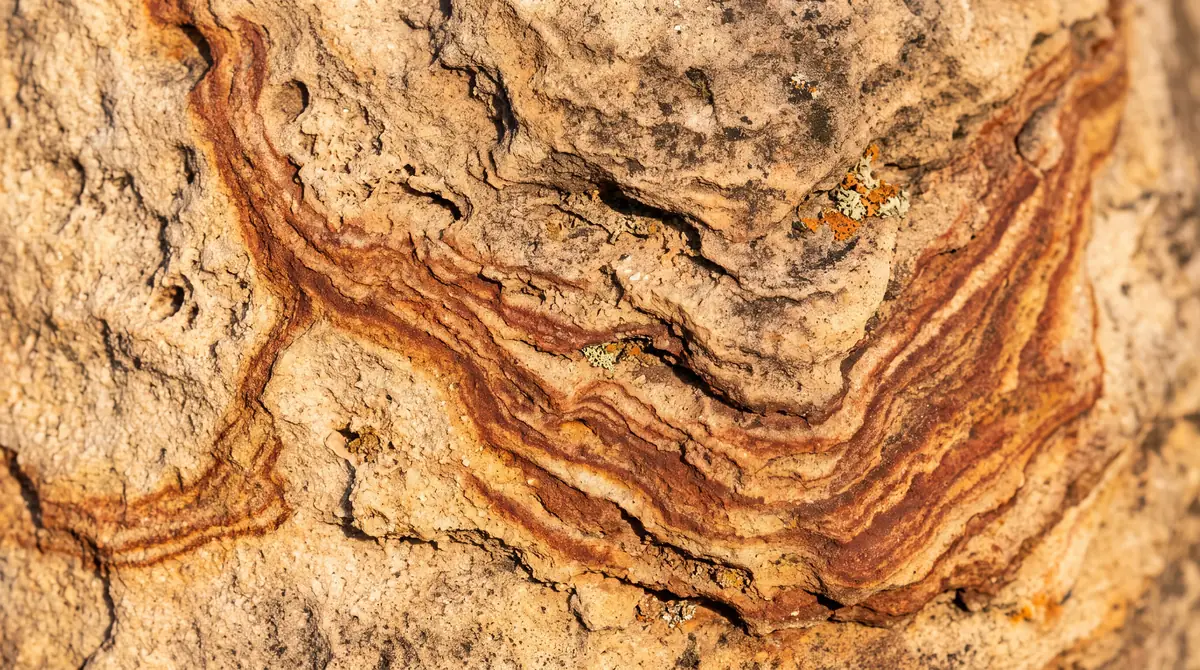
Hawkesbury sandstone is a soft, porous sedimentary stone held together by a clay and silica binder. Pressure above roughly 800 psi, aggressive acids and film-forming sealers all attack that binder. Once the surface skin is gone, the stone erodes faster, holds more water and grows more mould than before.
The stone you see on walls in Mosman, Woollahra and Paddington came from quarries at Pyrmont, Maroubra and the Hawkesbury, and its grain is not uniform. Some blocks are dense and yellow, others are soft and iron-stained, and the two can sit side by side in one wall. A pressure setting that leaves one block untouched will strip the face off its neighbour.
Sandstone also wicks water. A wall at Point Piper that sits over a damp garden bed draws ground moisture up through the stone and deposits salts on the face as it dries. Those salts crystallise in the pores and push grains apart, a process called salt attack. Cleaning without understanding this cycle treats the symptom and leaves the cause.
Heritage NSW publishes maintenance guidance for traditional building materials, and its position matches ours: use the gentlest method that works, test first, and never seal with a product that stops the stone breathing. See Heritage NSW (accessed October 2026).
What is the safest way to clean sandstone?
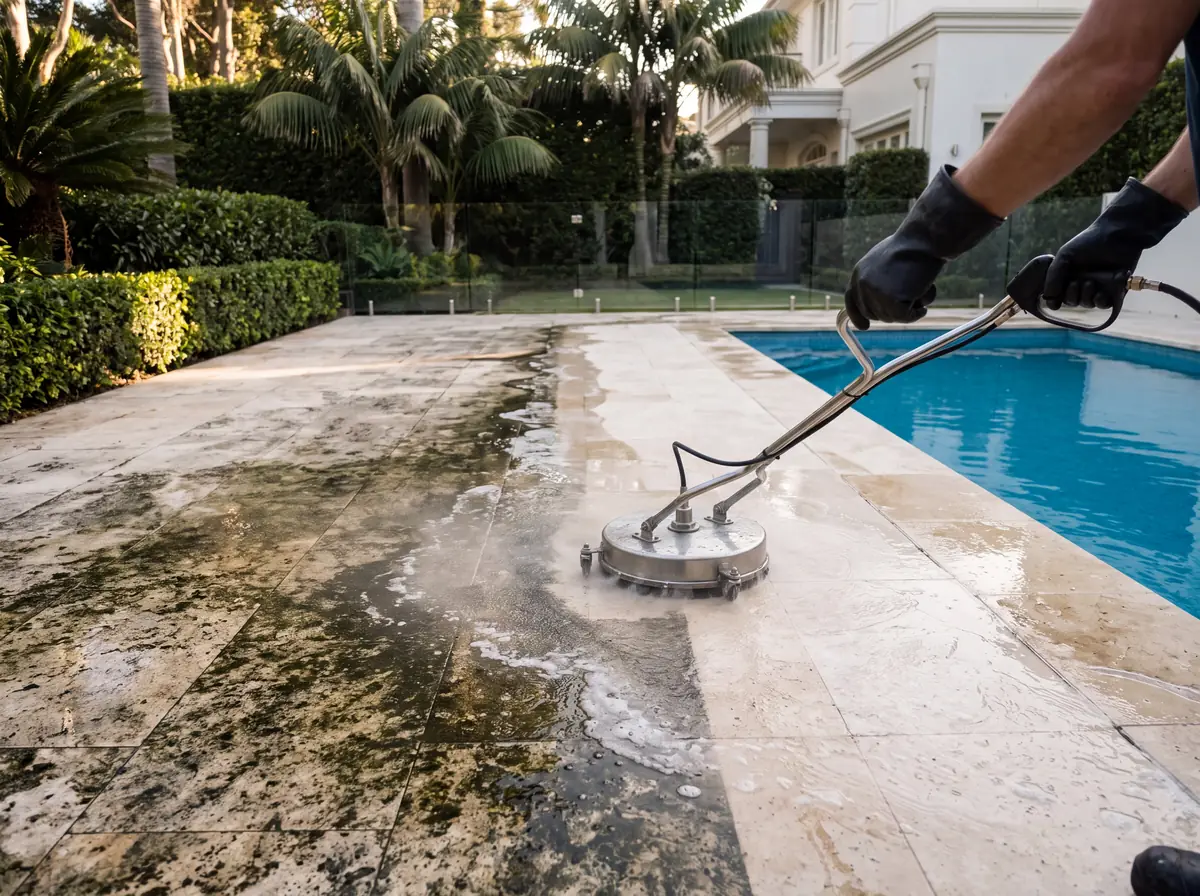
Low-pressure chemical cleaning is the safest method for most sandstone in Sydney. We apply a measured biocide, let it dwell, then rinse at garden-hose pressure. The chemistry kills algae, lichen and mould at the root. Mechanical pressure plays a minor role and never does the primary work.
Our standard sequence on a residential wall or terrace runs like this:
- Test patch (day one, 20 minutes). We choose a hidden corner, apply the planned solution and rinse. If the test raises grains or changes colour, we drop strength and try again.
- Pre-wet and protect (15 minutes). Garden beds are flushed with fresh water and sheeted. Adjacent timber and metal are covered.
- Biocide application (30 to 60 minutes). Sodium hypochlorite at 1 to 2 percent with a surfactant, or a quaternary ammonium product on heritage work, is applied from the bottom up so runs do not streak the dry stone.
- Dwell (15 to 20 minutes). The solution is kept wet. In summer we work in shade or early morning so it does not dry on the face.
- Rinse (30 to 60 minutes). Fresh water at under 500 psi through a 40 degree fan tip, held 400 to 500 millimetres from the face, worked top down.
- Spot work. Rust, tannin and old oil stains are treated separately with poultices rather than more pressure.
Rinse water carrying biocide is captured with drain covers and a recovery vacuum rather than let run to the street, which is what the Sydney Water Water Wise Guidelines (accessed October 2026) expect of commercial operators.
On a 90 square metre sandstone terrace in Vaucluse last autumn, that sequence took one technician a full day. The owner had been quoted three hours by a pressure-cleaning operator. The difference in time is the difference in result.
How do you remove specific stains from sandstone?
Each stain type on sandstone has a different chemistry, so a single cleaner rarely removes all of them. Biological growth responds to biocides. Iron staining needs a reducing poultice. Tannin from leaf litter lifts with mild oxidisers. Oil needs a solvent poultice. Pressure makes all four worse.
| Stain | Cause | What we use | Dwell | What goes wrong with pressure |
|---|---|---|---|---|
| Black or green growth | Algae, lichen, mould | Sodium hypochlorite 1 to 2 percent, or quaternary ammonium | 15 to 20 min | Growth returns in months because roots survive |
| Orange or brown blotches | Iron in the stone oxidising | Oxalic or citric acid poultice, 20 percent clay base | 4 to 24 hours | Stain spreads and stone surface pits |
| Grey-brown streaks | Tannin from gum trees | Dilute hydrogen peroxide | 30 to 60 min | Streaks remain, surface roughens |
| Dark patches near paths | Oil, barbecue fat, sunscreen | Solvent-based poultice | 24 to 48 hours | Oil is driven deeper into the pores |
| White crusty bloom | Salt efflorescence | Dry brushing, then repeated fresh-water poultices | Repeated | Salts dissolve, migrate inward and re-crystallise |
Acid is the product people reach for most and misuse most. Hydrochloric acid, sold as brick cleaner, dissolves the natural iron compounds in sandstone and leaves a permanent yellow or orange wash. We use it on sandstone in exactly zero situations.
Need this done properly? Request a quote or call 0494 810 609. We service the Eastern Suburbs, Lower North Shore, Upper North Shore and Northern Beaches.
Which mistakes do we see every week on sandstone?
The same five errors account for most of the repair work we quote. Each one is avoidable, and each one is more expensive to fix than the original clean would have cost. We photograph them because owners rarely believe how quickly a wall deteriorates once the face is gone.
Zero-degree or turbo nozzles. These cut channels into soft blocks in seconds. A retaining wall in Cremorne we assessed in March had visible wand lines on every course after a single clean, and the only remedy is professional redressing by a mason.
Cleaning in full sun. Chemicals dry before they work, leaving tide marks and crystallised residue. We schedule north and west faces for early morning.
Film-forming sealers. Glossy acrylic or "wet look" sealers block vapour movement. Moisture and salt build behind the film, the surface blisters and sheets off, taking several millimetres of stone with it. Heritage NSW and every stonemason I have worked with say the same thing.
Metal brushes. Steel wire leaves fragments that rust and stain within weeks. Use nylon or natural bristle only.
Ignoring the water source. Cleaning a wall that is wicking ground water gives you a clean wall for six months. Fixing drainage or installing a damp-proof course gives you a clean wall for a decade.
Should sandstone be sealed after cleaning?
Yes in most residential settings, provided you use a penetrating, breathable sealer and wait until the stone is dry. We take a moisture reading before sealing and want the stone below 5 percent, which takes five to seven days after cleaning in winter and two to three days in summer.
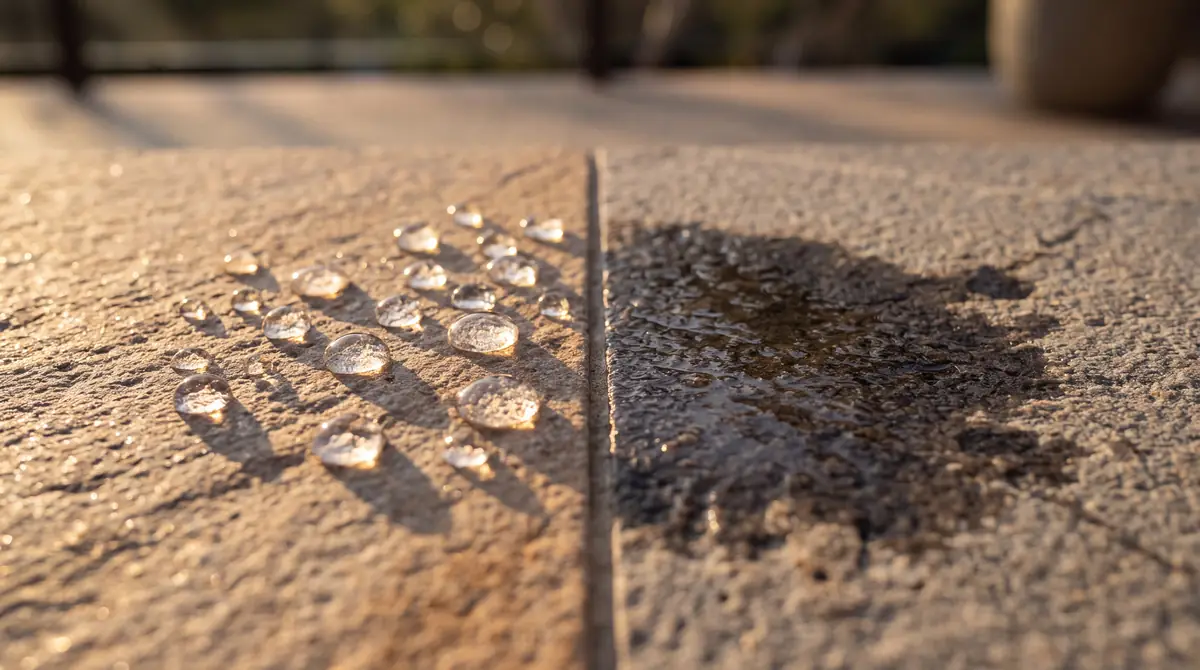
Penetrating silane or siloxane sealers soak into the pores, repel liquid water and let vapour escape. They leave no sheen and need reapplication every four to six years on paving and eight to ten years on walls. We apply them with a low-pressure sprayer in two wet-on-wet coats and wipe any surplus before it dries.
Sealing is not always the right call. A heritage facade in Hunters Hill with original tooling marks is better left unsealed and cleaned on a cycle, because any sealer changes how the stone weathers. We say so when that is the case.
What to do next
Walk the stone on your property after rain and look for green film, dark shadows under copings and any white bloom. Photograph it. If a previous clean has left wand marks or a glossy surface, that changes the scope and we need to see it before quoting.
- Read how we approach sandstone cleaning for walls, paving and facades.
- Compare it with our general stone cleaning service for bluestone and granite.
- See what breathable stone sealing involves and when we recommend it.
- We work across the Eastern Suburbs and the Lower North Shore, where most of Sydney's residential sandstone sits.
Related services: Sandstone Cleaning, Stone Sealing, Natural Stone Cleaning. Areas: Eastern Suburbs, Lower North Shore.