Most driveway damage we are asked to repair was done by a pressure washer, not by traffic or weather. The seven mistakes below account for nearly all of it, and three of them, zebra striping, surface etching and the wrong nozzle, are visible from the street on driveways across Sydney. Each is avoidable with the right equipment, the right distance and a decision about sealing made before the first pass.
Over 11 years I have cleaned and sealed driveways from Pymble to Bondi Junction, and the inspection before a job tells the same story again and again. This article explains each mistake, how to recognise it, and the process we use so that a clean driveway is also an undamaged one.
Why does pressure washing damage concrete and pavers?
Concrete is strong in compression but its surface is a thin skin of cement paste only a few millimetres thick, and a concentrated water jet removes that paste faster than most people realise. Once the paste is gone the sand and aggregate beneath are exposed, the surface is rougher and more porous, and dirt, oil and algae take hold far faster than before.
Pavers have the same vulnerability in their face and an extra one in their joints, where the jointing sand that locks the pavement together washes out in seconds. Stamped and coloured concrete carries its colour in a surface hardener or a sealer, so the paste is the finish. Guidance from Cement Concrete and Aggregates Australia (accessed October 2026) on residential concrete makes the point that surface durability depends on curing and protecting that skin, and a pressure washer used badly undoes both in an afternoon.
What are the seven pressure washing mistakes we see every week?
Zebra striping from a wand instead of a surface cleaner
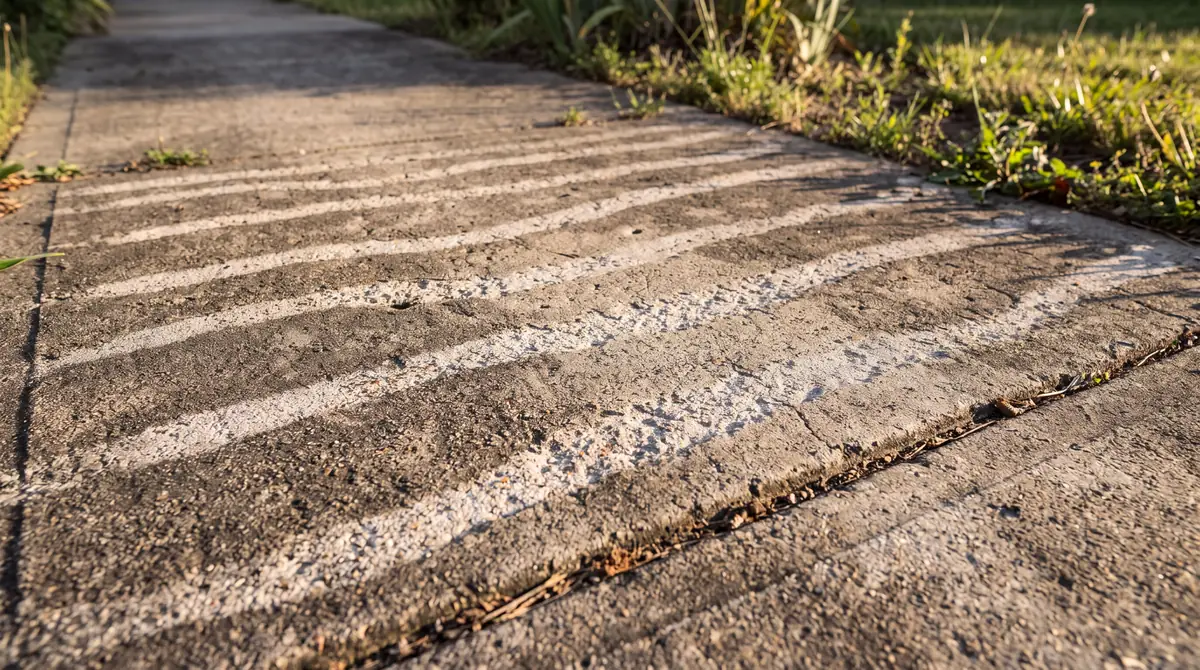
Zebra striping is the pattern of light and dark bands left when a driveway is cleaned with a hand wand in overlapping sweeps. Each pass is cleaner in the middle than at the edges, and the operator never gets the overlap even. A surface cleaner, which is a rotating bar with two or more nozzles inside a shroud, cleans an even circle at constant height and removes the problem completely.
Etching the surface by getting too close
Etching happens when the nozzle is held too close and the jet cuts into the cement paste. It shows as a lighter, rougher patch, often in the exact shape of a sweep or a circle where the operator paused. On exposed aggregate it dislodges stones. Once etched, a surface cannot be unetched. The fix is grinding, a resurfacing compound or a tinted sealer, all of which cost more than the clean. We keep a surface cleaner at a fixed 30 to 40 mm off the slab and a wand, when we must use one, at no closer than 300 mm.
Using the wrong nozzle
A zero degree or turbo nozzle concentrates the full force of the machine onto a point the size of a 5 cent coin. It is useful for chewing gum and nothing else on a driveway. A 15 degree tip is still too aggressive for most concrete. We run 25 degree nozzles in the surface cleaner and a 40 degree tip on the wand for edges and rinsing. Nozzle choice matters more than the machine's pressure rating.
Running too much pressure for the finish
Not all concrete is equal. Plain broomed concrete from the 1990s handles 3,000 psi. Stencilled and stamped finishes common in the inland Upper North Shore carry their colour in a thin surface layer and should stay under 2,000 psi. Old concrete in Eastern Suburbs terraces with 60 years of weathering may spall at 1,500 psi. We test a 500 mm square in a corner before every job and adjust from there.
Using acid or the wrong chemicals
Hydrochloric acid, sold at hardware stores for cleaning concrete, dissolves the paste as well as the stain. It also kills lawn edges and is illegal to let into the stormwater system. The alkaline degreaser that oil stains need and the sodium hypochlorite that algae needs are both safe on concrete at the right dilution, and both must be contained. Sydney Water's Water Wise Guidelines, published at sydneywater.com.au (accessed October 2026), permit hosing hard surfaces only in limited circumstances, and every Sydney council prohibits detergent runoff reaching the street drain.
Blasting the joints out of pavers
Running a wand along the joint lines between pavers removes the jointing sand in a single pass, and often the bedding sand under the edges too. Pavers then rock, crack at the corners and sink at the wheel tracks. We work a surface cleaner diagonally across the joints and re-sand with washed jointing sand or a polymeric sand before sealing.
Cleaning without sealing
A pressure clean opens the pores of the concrete, and a driveway that is left unsealed afterwards picks up oil, tyre marks and algae faster than it did before the clean. It then gets pressure washed again next spring, loses more paste, and the cycle continues. Sealing within two to five days of the clean, once the slab is dry, is what breaks it.
Need this done properly? Request a quote or call 0494 810 609. We service the inland Upper North Shore, Eastern Suburbs and Upper North Shore.
How do we pressure clean a driveway without damaging it?
We use a surface cleaner with 25 degree nozzles at a fixed height, pressure matched to the finish, chemistry applied before the water rather than instead of it, and a sealer afterwards. A standard 60 square metre double driveway takes two technicians around three hours for the clean and a second visit of two hours for sealing.
| Step | What we do | Time | Setting |
|---|---|---|---|
| Inspect and test patch | Identify finish, cracks, existing sealer, oil | 20 minutes | 500 mm square at low pressure |
| Pre-treat | Alkaline degreaser on oil, 1 to 2 percent hypochlorite on algae | 30 minutes dwell | Applied at 60 psi |
| Clean | Surface cleaner in overlapping circles, with the fall | 90 minutes | 2,000 to 3,000 psi, 25 degree tips |
| Edge and detail | Wand at 300 mm for edges, expansion joints, kerb | 30 minutes | 40 degree tip |
| Rinse and recover | Fresh water rinse, wash water directed to lawn or captured | 20 minutes | Low pressure |
| Dry | Slab moisture under 5 percent before sealing | 2 to 5 days | Weather dependent |
| Seal | Penetrating or acrylic sealer, two coats | 2 hours | Second coat within manufacturer window |
On steep Pymble driveways where everything falls to the street, wash water is captured with a vacuum unit and the kerb line is sandbagged.
What does it cost to clean, seal or repair a Sydney driveway?
We price every job on request after measuring the surfaces, and the figure is fixed in writing before we start; call 0494 810 609 for a quote. Repairing damage from a bad pressure wash costs more than either.
One Bondi Junction driveway we resurfaced cost a few hundred dollars to pressure wash and many times that to repair.
What to do next
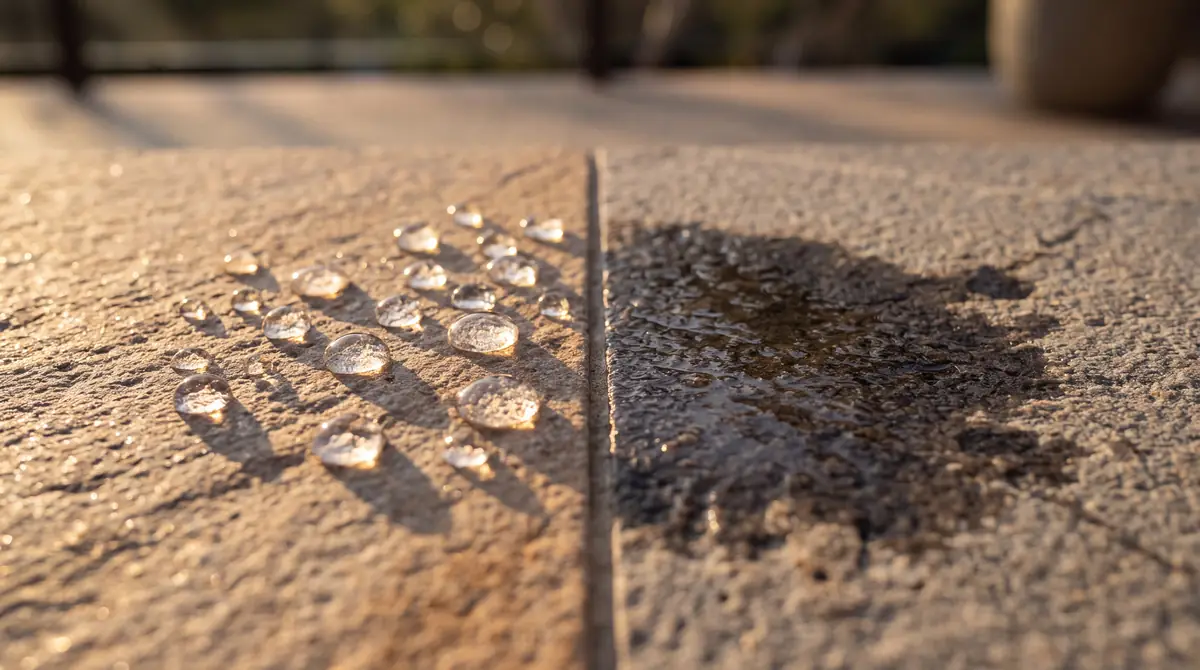
Walk the driveway after rain and look for areas that darken unevenly, stripes that follow a wand pattern, or exposed stone in patches. Then pour a cup of water on a dry section; if it soaks in within a minute, the slab is unsealed and the next clean should include sealing.
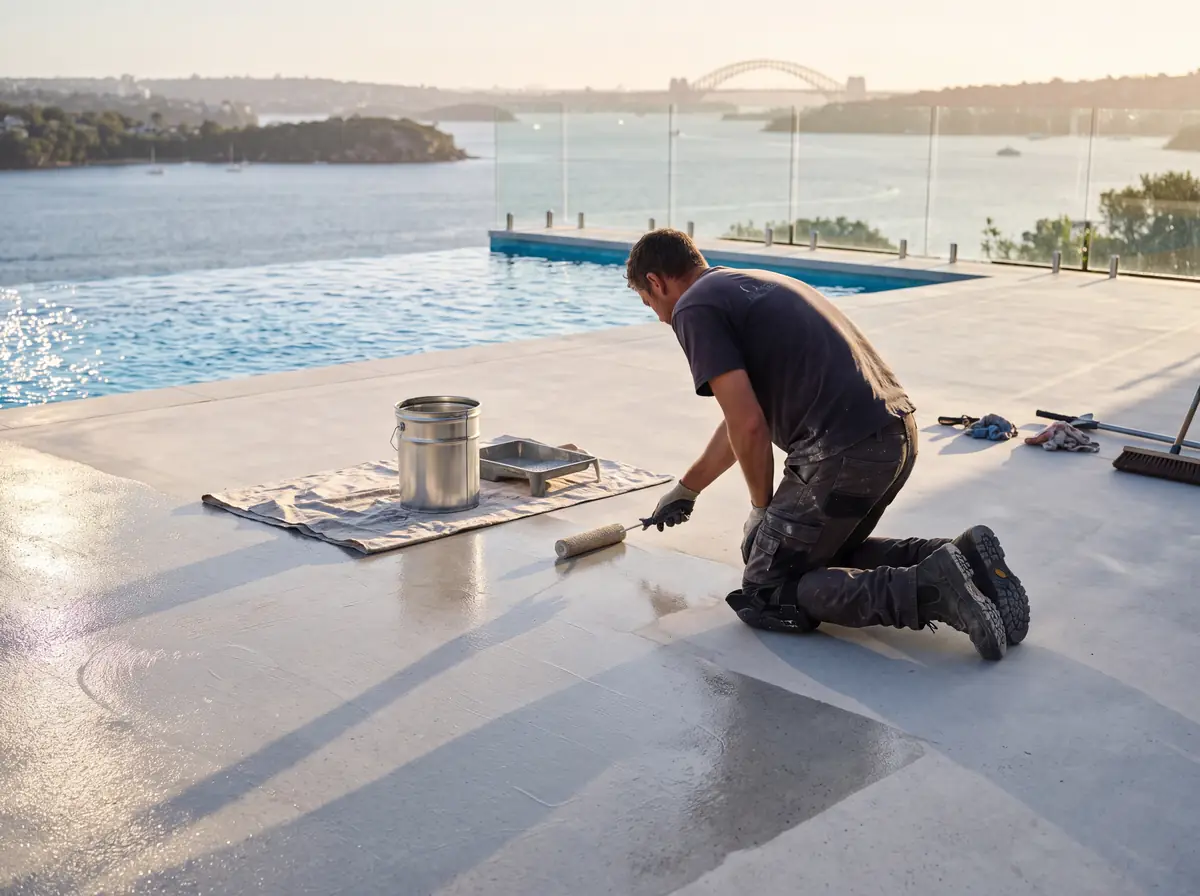
Book a driveway clean with a surface cleaner, and ask for driveway sealing or concrete sealing in the same quote so the slab is protected while the pores are open. We work from Pymble and Pymble through to Rouse Hill, with more on the Upper North Shore page.
Related services: Driveway Cleaning, Driveway Sealing, Concrete Sealing. Areas: Eastern Suburbs.