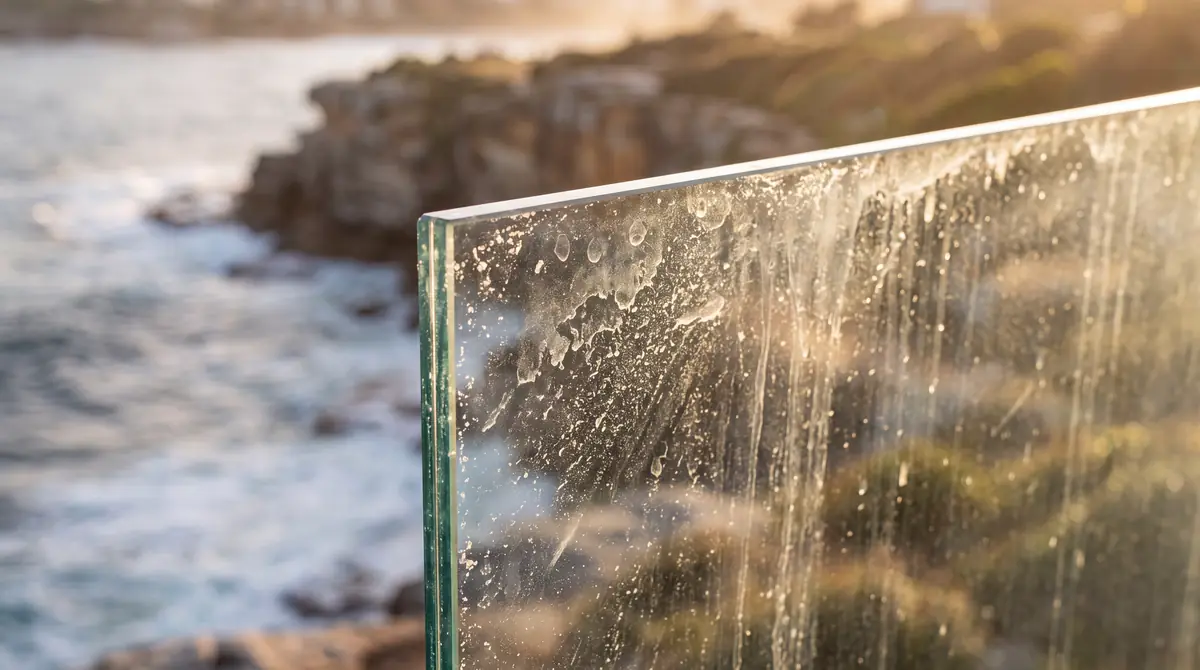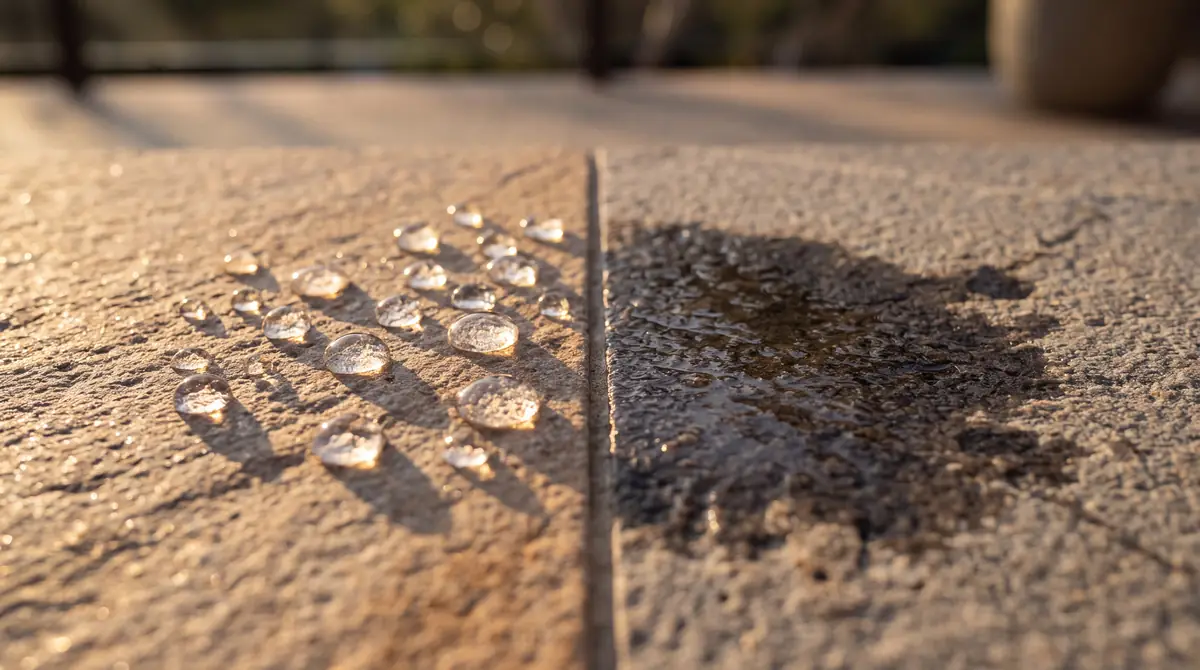

Pure water window cleaning works because water filtered to 0 parts per million of dissolved solids leaves nothing behind when it dries. Spots and streaks on glass are minerals, so if you remove the minerals before the water touches the window, the glass can be rinsed and left wet with no need to squeegee. It is also the method that handles salt-laden coastal glass better than anything else we use.
We have run water-fed pole systems on the Northern Beaches and across the Eastern Suburbs for most of the last 11 years, from beachfront apartments in Manly to three-storey homes above Tamarama. This article explains the science in plain terms, where the method excels, where it does not, and what a pure water clean costs.
What is pure water and how is it made?
Pure water is ordinary mains water that has had its dissolved minerals removed by a combination of reverse osmosis and deionising resin. Sydney tap water typically carries somewhere around 80 to 150 parts per million of dissolved solids depending on the supply zone, figures that Sydney Water publishes in its water quality reporting (accessed October 2026). Our systems bring that to 0 before it reaches the brush.
The process on our vans has three stages. A sediment and carbon filter removes particles and chlorine first. A reverse osmosis membrane then rejects roughly 95 to 98 percent of the dissolved minerals. A final deionising resin vessel polishes what is left down to 0 parts per million. We check the output with a handheld meter at the start of every job and after every tank refill, because resin exhausts without warning and water at 15 parts per million will leave faint marks on dark glass.
The water travels up a carbon fibre pole to a soft brush head with jets, and the operator scrubs the glass and frames from the ground before rinsing from top to bottom.
Why does pure water leave no streaks when tap water does?
Streaks and spots are mineral deposits, and pure water has no minerals to deposit. When a drop of tap water dries on glass, the calcium, magnesium and silica it carried stay behind as a white ring. When a drop of pure water dries, there is nothing in it, so there is nothing left on the glass.
Pure water also cleans more actively than tap water. Water with no dissolved content is hungry for ions, so it draws dirt, salt and mineral film off the surface more readily. That is the reason a pure water rinse removes a salt haze that a squeegee and bucket only smear around.
The squeegee method works differently. It relies on the operator physically removing all the water from the glass before it dries, which is why traditional cleaning streaks on hot days or in wind, when the water dries faster than the blade moves. Pure water removes the race against evaporation.
Where is pure water better than a squeegee, and where is it worse?
Pure water wins on exterior glass above ground level, on salt-affected coastal windows, on frames and sills, and on large expanses of glass such as balustrades and skylights. The squeegee wins on interior glass, on heavily soiled first cleans where the operator needs to feel the surface, and on removing things that are stuck rather than sitting on the glass.
| Situation | Pure water pole | Squeegee and bucket |
|---|---|---|
| Ground floor exterior | Good | Good |
| Second and third storey exterior | Best, no ladder needed | Needs ladder or scaffold |
| Beachfront glass with salt film | Best, salt dissolves and rinses | Smears salt, needs multiple passes |
| Frames, sills, tracks | Rinsed as part of the job | Usually skipped |
| Interior glass | Impractical, too much water | Best |
| Glass with silicone smear, paint or sticker residue | Will not remove it | Scraper and detail work |
| Hard water etching | Will not remove it | Needs restoration product |
| Glass balustrades, pool fences | Best | Slow |
| Oxidised aluminium frames (older coastal units) | First clean may streak from frame runoff | Same problem |
The frame point is worth emphasising on the coast. Twenty year old powder-coated or anodised frames in Dee Why or Coogee carry a chalky oxide layer that washes down the glass for hours after any clean. The first visit involves repeated rinsing of the frames; from the second visit onward the result is clear.
Need this done properly? Request a quote or call 0494 810 609. We service the Northern Beaches, Eastern Suburbs and Lower North Shore.
How do we clean coastal windows with pure water?
A two-storey home with around 30 windows takes two technicians around two and a half hours. A six-storey strata block in Bondi with 120 panels takes two days. Each window gets the same treatment.
- Meter check (2 minutes per tank). Output water is tested and must read 0 parts per million before we start.
- Frame and sill scrub (1 minute per window). The brush works the top frame, sides and sill first, so dirt from the frame is loosened before the glass.
- Glass scrub (1 to 2 minutes). Overlapping passes with the brush jets running, corners and edges worked twice.
- Rinse (1 minute). Jets lifted 50 mm off the glass, rinsed in a slow descending pass. On salt-heavy glass we rinse for twice as long as the scrub.
- Leave to dry. No wiping. On a warm day the glass is clear within 10 minutes.
- Second visit allowance for first cleans. Beachfront glass that has not been cleaned in a year or more gets a 20 minute re-rinse of frames and glass before we leave.
The safety case for the method is a big part of why we use it. Working from the ground removes the ladder from most jobs, which aligns with the hierarchy of controls that SafeWork NSW applies to work at heights (accessed October 2026). Our poles are non-conductive but we still maintain exclusion distances from overhead power lines and never work a pole within 3 metres of a service line.
What does pure water window cleaning cost in Sydney?
We price every job on request after measuring the surfaces, and the figure is fixed in writing before we start; call 0494 810 609 for a quote. Interior glass by squeegee is added on request.
Frequency changes the economics. A beachfront home in Palm Beach or Bronte cleaned every eight weeks stays clear and each visit is quick. The same home cleaned once a year needs the extended first-clean process every time. Most of our coastal clients settle on a six to eight week cycle for exteriors, and strata committees generally run quarterly.
What to do next
Walk outside in the morning when the sun is low and look across the glass rather than through it. A grey haze that follows the shape of the window is salt. White rings that stay after rain are mineral spots. Either one is a sign the glass is overdue, and salt left on glass for months will start to etch it.
For houses, book residential window cleaning. For apartment blocks and office buildings, see strata window cleaning and commercial window cleaning. We cover Manly to Palm Beach, with more on the Northern Beaches page.
Related services: Residential Window Cleaning, Strata Window Cleaning, Commercial Window Cleaning. Areas: Northern Beaches, Eastern Suburbs.